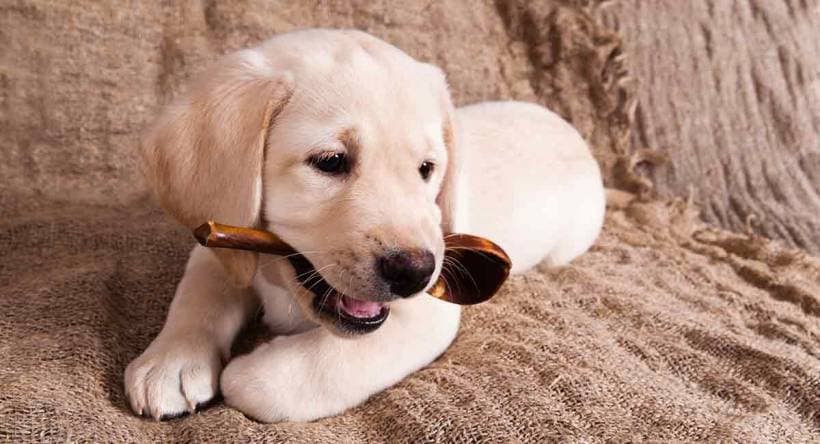
Moving into a new home is a major change for a puppy. Familiar littermates, smells and routines disappear at once. Keep the first days calm and predictable, allowing time to explore a small safe area rather than introducing every room, visitor and activity immediately.
Prepare a comfortable base
Choose a quiet resting space where the puppy can still feel connected to the household. Provide washable bedding, suitable toys and easy access to water. Keep the area away from direct heat, exposed cables and anything that can be chewed or swallowed.
A pen or an open crate can be introduced with food and voluntary exploration. It should become a comfortable place, not a punishment. Ensure any enclosure is secure and suitable for the puppy's size, without gaps that could trap a head or limb.
Whether dogs are allowed on furniture is a household choice, not a test of dominance. Agree on the rules and provide an inviting alternative if a sofa is off limits. Clean bedding whenever soiled rather than relying on a fixed interval.
Keep feeding familiar
Ask the breeder or rescue for the exact food and routine the puppy knows. Continue that diet initially unless your veterinarian advises otherwise, and make later changes gradually. Choose a complete puppy food suitable for growth and expected adult size.
Young puppies usually need several measured meals through the day. The appropriate schedule depends on age, size and health; leaving a bowl of dry food does not solve every problem of availability. Raw meat and fish are not necessary, and improvised recipes can be unbalanced.
Build a toilet routine
Take the puppy to an appropriate toilet area after waking, eating, playing and at other frequent intervals. Wait calmly, then reward promptly after it finishes. Watch for sniffing, circling and restlessness rather than expecting it to ask clearly from the first day.
Accidents are part of learning. Clean them thoroughly with a pet-safe product and review supervision or timing. AVSAB's housetraining guidance explains why punishment can teach a puppy to hide instead of helping it understand where to go.
There is no guaranteed age by which every puppy will be reliable. If pads are needed temporarily, keep the location consistent and plan the transition to the intended long-term toilet area. Ask about safe outdoor access while the vaccination course is underway.
Help the puppy settle
For the first nights, keep the sleeping area close enough that you can hear and respond to toilet needs. Gradually adjust the arrangement as confidence develops. Persistent crying warrants a check for discomfort or a practical need rather than automatic abandonment to "cry it out."
Introduce the puppy's name and simple cues in tiny, rewarding sessions. Provide ample rest and supervise interactions with children and other pets. Separate animals when you cannot oversee them, even if the first meeting seemed friendly.
Arrange a veterinary visit with the puppy's records, and confirm identification, vaccinations and parasite care. Start practicing very brief, comfortable separations while you are home. A predictable routine and manageable experiences create a stronger foundation than trying to accomplish all training in the first week.