
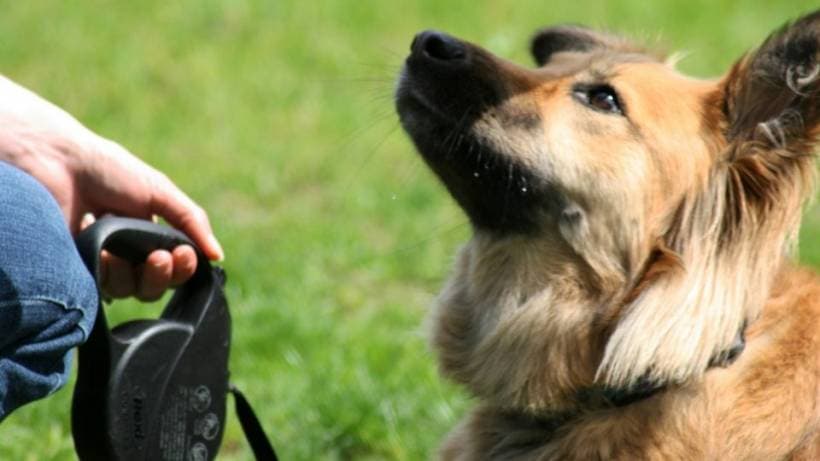
Successful dog training begins with understanding what the dog can do in the current situation. A dog that responds in a quiet room may struggle beside traffic or another animal. That is a reason to adjust the exercise and practice gradually, rather than assume that the dog is deliberately refusing to cooperate.
Build a useful relationship
Provide suitable exercise, rest, enrichment and predictable care. A dog that is tired, frightened, in pain or overwhelmed may find learning difficult. Training works best when its basic needs are met and it has a clear opportunity to succeed.
Breed can offer clues about likely interests, but it does not determine every individual's behavior. Mixed-breed dogs are not inherently unpredictable, and a pedigree does not guarantee a particular temperament. Learn the actual dog's preferences, sensitivities and history.
A scent hound following a trail or a young terrier investigating movement is displaying behavior that may be strongly rewarding. Rather than trying to overpower that interest, use management and practice to teach useful alternatives. Secure equipment and an appropriate environment are essential while skills develop.
Reward the behavior you want
The AVSAB humane-training statement recommends reward-based methods. Food, play and access to an enjoyable activity can help make a behavior worth repeating. Choose a reward the dog values and deliver it promptly after the desired action.
Teach one clear cue for each task and use it consistently. Repeating a word many times while becoming louder rarely makes the lesson clearer. If the dog does not respond, reduce the difficulty, check whether it understands the cue and reward a simpler successful step.
Keep sessions short enough that both you and the dog can stay engaged. Several brief opportunities during the day may be more useful than one long lesson. Finish while the task is still manageable, and give the dog time to rest afterward.
Prevent avoidable mistakes
Put shoes, food and other tempting items out of reach while teaching appropriate chewing and settling. Management is part of training, not an admission of failure. A young dog cannot be expected to know which objects are valuable to people.
If the dog picks up something unsuitable, avoid chasing or grabbing it in a way that creates conflict. Teach exchanges and a release cue using safe items in calm practice. Dangerous swallowed objects or suspected poisoning require veterinary advice rather than a training exercise.
Do not hit, shake by the collar, pin or frighten the dog. Punishment can increase fear and may suppress warnings without resolving the underlying problem. A dog that growls around an object needs a safe management plan and qualified help, not a confrontation to establish authority.
Practice beyond the classroom
Begin in a quiet place with few distractions. Once the dog understands the task, change one feature at a time: the room, your position, the duration or the level of distraction. Expect to make the exercise easier again in a new setting.
For example, a recall practiced indoors should not immediately be tested off lead beside wildlife. Use a secure area or suitable long line and reward returning before introducing harder situations. Protect the dog and surrounding animals while reliability develops.
Ask household members to agree on cues and routines. If jumping sometimes earns enthusiastic attention and sometimes produces scolding, the dog receives a confusing lesson. Teach and reward an alternative greeting that everyone can support.
Measure progress fairly
Record small improvements rather than comparing your dog with another animal in class. Note where the skill works, what reward was used and which distractions made it harder. This gives you a practical starting point for the next session.
Progress is rarely perfectly steady. A change in health, routine or environment can affect behavior. If a previously reliable dog suddenly struggles, review those factors before increasing demands. Pain and illness can appear as reluctance to sit, walk or be handled.
Choose help carefully
Ask a prospective trainer how they respond when a dog makes a mistake or becomes frightened. Look for clear explanations, humane methods and a willingness to adjust the plan. Avoid promises of instant results or claims that every problem is caused by a dog trying to dominate its family.
For aggression, severe fear, separation distress or sudden behavior change, start with veterinary advice and an appropriately qualified behavior professional. Ordinary obedience practice may be useful, but it is not a substitute for assessment of the underlying problem.
Training should make everyday life easier for both dog and caregiver. Useful goals include walking comfortably, settling, coming when called and accepting routine care. Clear practice, realistic expectations and consistent rewards provide a stronger foundation than force or blame.


