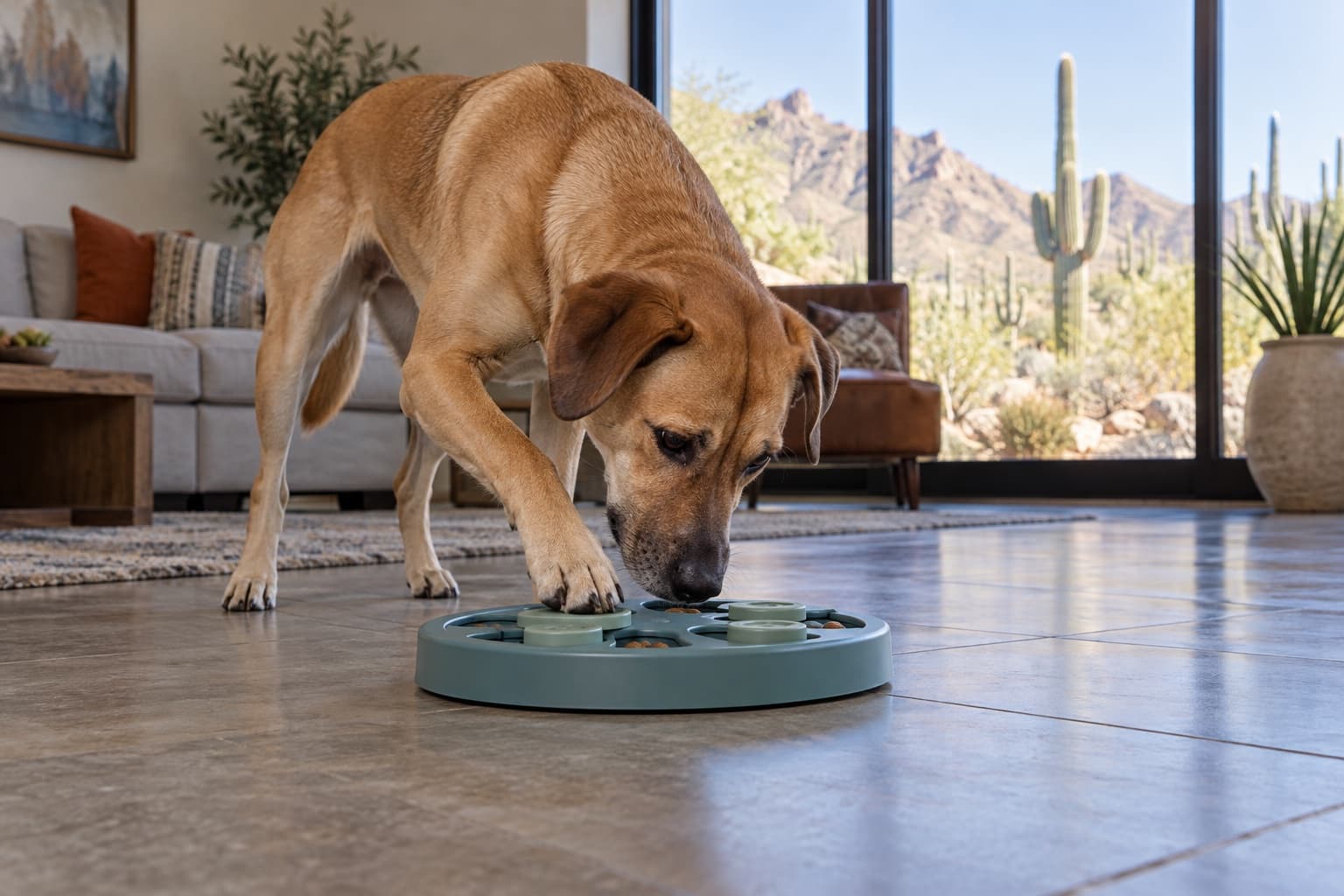
A dog that seems tired, itchy or reluctant to eat may have many possible problems. Symptoms are clues, not a diagnosis. A wet nose does not prove good health, and a dry nose alone does not establish illness. Notice changes from your dog's usual appetite, activity, drinking and toileting, then share them with your veterinarian.
Travel sickness and itching
Drooling, lip licking, restlessness and vomiting during a journey can accompany motion sickness or travel anxiety. Ask your vet about a plan before the next trip. Secure the dog appropriately, keep the vehicle comfortable and build positive associations with short, manageable journeys. Never leave a dog in a parked car or give human travel tablets without veterinary instructions.
Itching, repeated paw licking and ear discomfort can have several causes, including parasites, infections and allergies. Sneezing or watery eyes alone cannot distinguish them. Food allergy is not diagnosed by changing brands at random; a vet may recommend a controlled diet trial. Bring details of all foods, treats and medications to the appointment.
Nasal discharge and low energy
Persistent, bloody or one-sided nasal discharge needs assessment. Difficulty breathing is urgent. Avoid treating a dog with human cold remedies, which may contain unsuitable ingredients. A pet that is unusually quiet or weak should not simply be given vitamins: pain, infection and internal disease can look similar at home.
Record when a change began and whether it is getting worse. A short video of an intermittent cough or unusual movement can help, provided filming does not delay care. Mention recent boarding, travel, contact with other animals and any possible access to rubbish or toxins.
Parasites and prevention
Intestinal worms and heartworms are different parasites, with different tests and prevention plans. An annual dose of an unspecified worming medicine is not a universal solution. Your veterinarian can match parasite control to the dog's age, weight, location and exposure. Bring a stool sample when requested and use products only as directed.
Regular examinations, appropriate vaccination, dental care and a balanced diet support health. Keep a written record of preventive treatments so doses are neither missed nor duplicated. Store medicines away from pets and check before combining products.
When to seek urgent help
AAHA's emergency guidance highlights breathing difficulty, abnormal gum color, serious weakness and persistent vomiting or diarrhea as concerning signs. Collapse, seizures, suspected poisoning or a swollen abdomen with repeated unsuccessful retching also require immediate veterinary advice. Do not wait for a routine appointment if your dog is deteriorating.
Call ahead when possible and bring relevant packaging after suspected exposure. Avoid forcing food or water into an unwell dog. Early assessment is more useful than guessing which common disease best matches an online description.