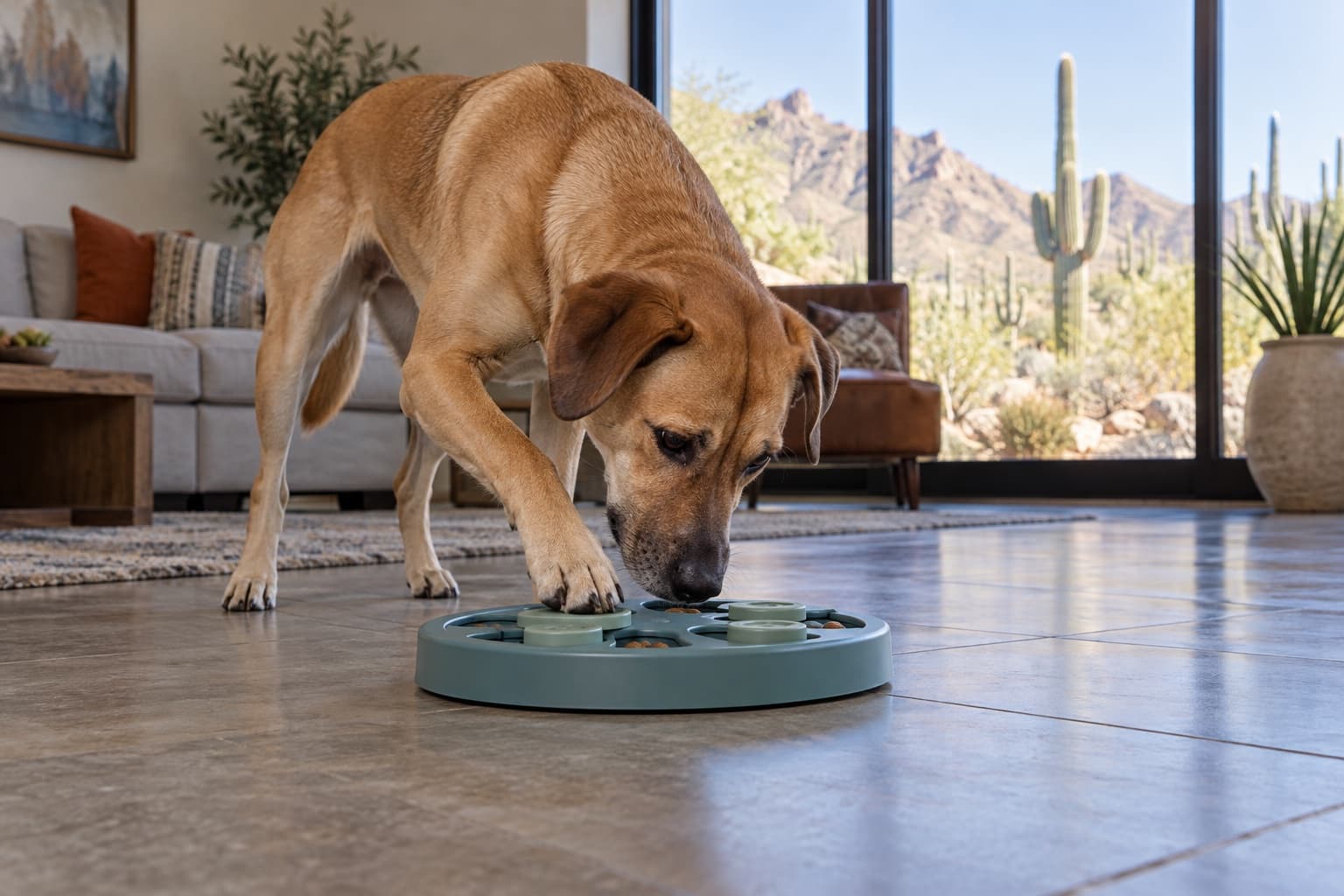
A new dog needs time to learn where it is safe to sleep, eat and explore. Whether you bring home a puppy or an adult, a calm beginning is more useful than a busy welcome party.
Set up a manageable space
Provide a comfortable bed, clean bowls, suitable toys and secure walking equipment. Remove medicines, cleaning products, loose wires and small objects that could be swallowed. Check doors, gates and balcony access, and use barriers to limit rooms that cannot yet be supervised safely.
A resting area should offer privacy without isolating the dog from appropriate companionship. Introduce a crate or pen positively if using one; it should not become a place of punishment or a substitute for toilet breaks. Keep children and visitors from disturbing the dog while it sleeps.
Keep the first days simple
Allow exploration at a comfortable pace and maintain a familiar suitable food initially. Avoid overwhelming the dog with repeated handling or introductions. If there are resident animals, use separate spaces and gradual contact rather than expecting immediate friendship.
Record appetite, toileting and sleep so you can notice changes. A shy dog may need longer to approach, while a confident puppy still needs rest. Do not assume the behavior seen on the first day represents the animal's permanent personality.
Arrange health care promptly
Collect vaccination, parasite-treatment, medication and identification records. Schedule an initial veterinary visit and discuss the next steps based on age, history and local risks. The Merck Veterinary Manual's puppy-care guidance covers the importance of individualized early care.
Do not follow a fixed instruction to wait until three months for every first vaccine or give every booster at the same interval regardless of the product. Ask how to balance safe social experiences with infection prevention. Keep contact details for urgent care where everyone can find them.
Teach through everyday opportunities
Offer frequent toilet trips and reward the correct place promptly. Clean accidents and adjust supervision instead of shouting or rubbing the dog's nose in a puddle. Teach a few useful skills such as coming towards you, resting on a mat and accepting a harness in short sessions.
Use consistent cues and rewards across the household. Adults remain responsible even if a child helps with care. Supervise interactions and avoid expecting a dog to understand a long explanation of rules before it has had a chance to learn them.
Build a sustainable routine
Introduce brief comfortable absences gradually and arrange help when necessary. A young puppy cannot simply adapt its physical needs to an entire working day. Persistent pacing, barking or attempts to escape deserve assessment and support.
Review the plan as the dog settles and grows. Reliable care includes exercise, enrichment, veterinary attention and undisturbed rest, as well as affection. Small successful experiences help the new arrival feel secure and make daily life easier for everyone.