A safe car setup keeps the dog secure and prevents distraction to the driver. Choosing a hatchback or estate car does not by itself solve the problem: the restraint, its installation and the space available all matter. A seat cover protects upholstery, but it is not crash protection.
Choose equipment with evidence
Consider a suitable travel harness, carrier or crate designed for vehicle use. The Center for Pet Safety publishes independently evaluated products and test information. Check the exact model, size, weight limits and installation instructions rather than assuming every item described as a dog seat belt has equivalent performance.
Use the manufacturer's approved attachment method and avoid improvised extensions. Never attach a crash restraint to a neck collar. Secure luggage and other loose objects too. The dog should not travel on the driver's lap, near the pedals or loose in the cabin.
A barrier may help prevent a dog entering the front, but it is not automatically a complete restraint system. Plan the arrangement around both the vehicle and the animal, and review it as a puppy grows. Allow enough space for a comfortable position without sacrificing secure installation.
Build familiarity in stages
Start with calm time near the parked car, then comfortable entry and short periods inside. Reward relaxed behavior and progress towards brief journeys. A dog that is frightened or nauseated does not necessarily improve by being taken on a long trip until it gives up protesting.
Keep bedding familiar and the car well ventilated. Watch for drooling, repeated lip licking, restlessness or vomiting. Discuss motion sickness and anxiety with your veterinarian; medication, when appropriate, must be prescribed for the individual. Do not buy an arbitrary sedative or use human travel remedies without advice.
Manage the journey
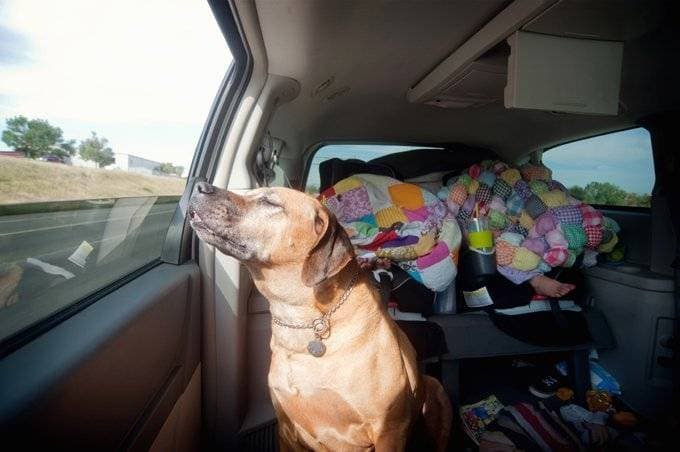
Keep the dog's head inside the vehicle. An open window can allow escape or expose eyes and the face to debris, regardless of whether the dog appears to enjoy it. Adjust ventilation without creating an opening through which the animal can climb or fall.
Plan breaks for water, toileting and a short walk on longer trips. Attach the walking lead before opening doors or releasing the travel restraint, and stop only in a safe place. Check identification details before departure and carry water, waste bags and necessary medication.
Ask about meal timing if your dog gets sick; a fixed fasting rule is not appropriate for every puppy or medical condition. Drive smoothly when possible, but use a secure setup that does not depend on never needing to brake suddenly.
Temperature and emergencies
Never leave a dog unattended in a parked car. Shade or a slightly open window does not reliably prevent dangerous temperatures. Keep veterinary and emergency contacts accessible, especially when traveling far from home.
If the dog develops breathing difficulty, severe weakness or signs of heat distress, stop safely and seek urgent veterinary advice. A good journey is one planned around the animal's safety and comfort, not simply one that leaves the seats clean.