
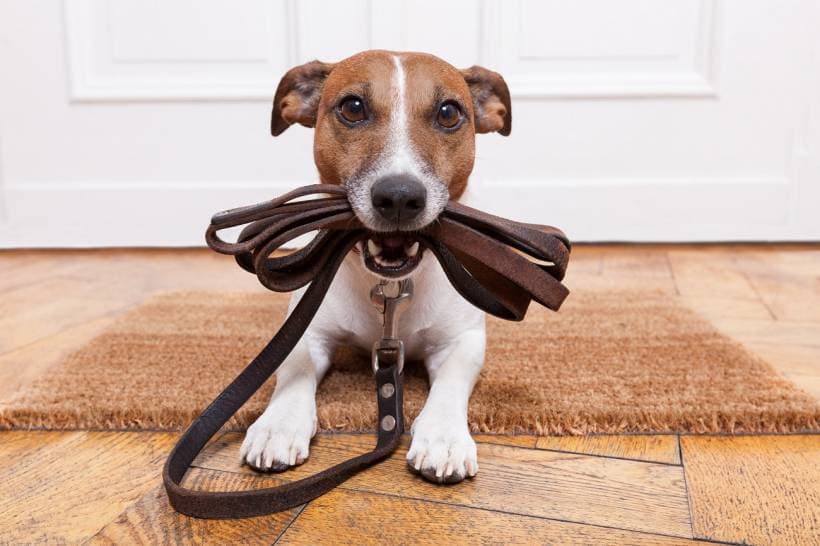
A collar, harness and lead are practical tools for identification and safe movement. They do not teach walking skills by themselves. A puppy may accept new equipment quickly or need several short sessions, and there is no fixed three-day deadline that applies to every dog.
Begin with fit and comfort
Choose equipment appropriate to the dog's size and body shape. Check that it is secure without pinching, rubbing or restricting movement, and reassess fit regularly as a puppy grows. Ask a qualified trainer or veterinary professional for help if the dog can slip out or seems uncomfortable.
A flat collar may carry identification, while a well-fitted harness can be useful for walking. The best arrangement depends on the individual and any medical concerns. Do not use equipment to deliver painful corrections or assume that a stronger restraint replaces teaching.
Introduce one small step at a time
Place the item where the dog can investigate it and reward calm interest. Progress to brief contact, then fastening for a moment, before building duration. If the dog freezes, scratches frantically or tries to escape, check fit and reduce the difficulty rather than distracting it through every sign of distress.
Practice during quiet moments, not only when you are rushing out. Keep sessions short and remove equipment according to a safe routine. Pay attention to snagging risks during unsupervised time, play with other dogs or crate use, and seek advice about suitable identification arrangements.
Add the lead in a safe space
Attach the lead indoors or in a secure enclosed area and invite the dog to take a few steps with you. Reward movement towards you and keep the lead loose where possible. The American Veterinary Society of Animal Behavior recommends reward-based teaching rather than force.
If the dog stops, wait, make the task easier or encourage a small movement with a reward. Do not drag it across the floor or pull repeatedly at its neck. Refusal may reflect fear, unfamiliarity, pain or an interesting distraction rather than stubbornness.
Avoid leaving a trailing lead where it could catch on furniture or wrap around legs. Any such practice needs close supervision and a safe setup. Never rely on stepping on a loose lead to prevent a puppy reaching a road.
Teach a loose lead
Reward the dog near you before tension develops. Begin with a few steps, turn gently and reward again. Increase distance gradually and practice in different quiet settings before expecting the same behavior among people, dogs and traffic.
A normal walk can include sniffing and exploration within safe limits. It does not need to be an uninterrupted formal heel. If the dog pulls towards something, stop or create distance and restart when it can respond. Repeated jerks make the experience uncomfortable without clarifying the desired position.
Manage biting or playing with the lead
A puppy may grab the lead when excited, tired or frustrated. Pause calmly and offer an appropriate toy or simpler activity before the behavior escalates. Review whether the walk is too long or overwhelming. Avoid turning the lead into a tug contest.
Do not drop the lead outdoors to make it uninteresting. Maintain secure control and move to a safe place to reset. Reward letting go and walking calmly, then keep the next stretch short enough to succeed. Persistent guarding or biting deserves professional guidance.
Build confidence outside
Choose a quiet route initially and let the dog observe at a comfortable distance. Keep early outings manageable and follow veterinary advice on puppy exposure and local infection risks. A lead does not require the dog to greet every person or animal encountered.
Check paws, skin and equipment contact points after walks. If discomfort or fear continues, seek help with fit, health and training rather than tightening the equipment or demanding faster progress. Patient practice turns walking gear into a familiar part of shared activity.


