Outdoor toilet training works best when you make the right choice easy for your puppy. Young dogs have limited bladder control and need many chances to go. Accidents are information about the routine, not disobedience. A predictable schedule, close supervision and prompt rewards are more useful than scolding.
Choose a safe place first
Ask your vet where your puppy can safely toilet while completing its vaccination course. The answer depends on local disease risk and access to a private, clean area. Puppies are not fully vaccinated at one month old, and a single universal age for unrestricted outdoor access is inappropriate.
If a temporary indoor toilet is necessary, use a consistent location away from bedding and food. Choose a surface your puppy can use safely, and keep the route obvious. A high-rise apartment, disability or limited access may justify a longer-term indoor option; it is a practical arrangement, not a training failure.
Offer frequent opportunities
Take the puppy to the chosen spot after waking, meals, drinking and active play, as well as at regular intervals while awake. Sniffing, circling or suddenly leaving a game can signal urgency. Very young puppies may also need overnight trips, so plan who will respond.
Use a leash where appropriate and keep the outing calm. Wait without constant talking or play. As the puppy starts, you can quietly add a cue such as “go toilet.” Give a small reward immediately after finishing while still at the spot, rather than after returning indoors.
What if nothing happens?
Return inside for a short period of close supervision, then try again. Avoid giving the puppy free access to several rooms before it has toileted. A nearby playpen can help when you cannot watch continuously, provided it offers enough space and does not force the animal to soil its bed.
If using a crate, introduce it gently as a resting place. It is not a way to make a puppy hold on beyond its physical ability. Arrange a caregiver or suitable toilet setup when your absence is longer than the puppy can manage.
Handle accidents calmly
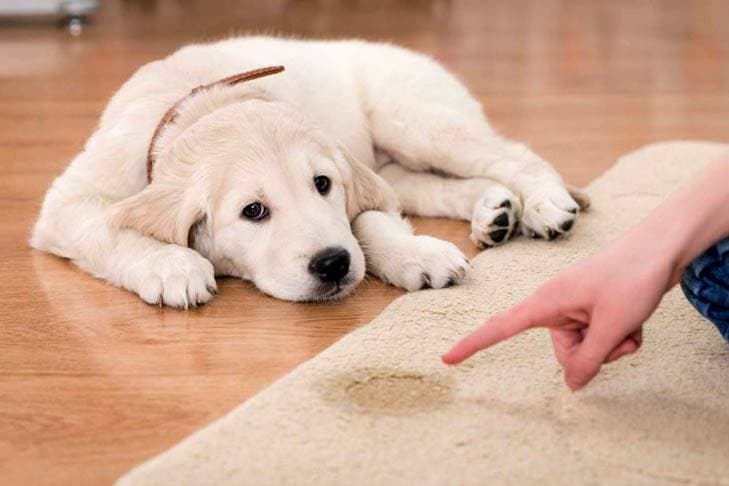
If you catch the puppy starting indoors, gently guide it outside if that is practical, then reward completion there. If you discover the mess later, simply clean it. Rubbing the nose in it, shouting or expressing anger cannot explain where the puppy should have gone.
Use a pet urine cleaner as directed and prevent access until the area is ready. The American Veterinary Society of Animal Behavior recommends reward-based training. The lesson you want is “this place brings a reward,” not “hide from people when I need to go.”
Keep a useful record
For a few days, note waking, meals, successful trips and accidents. If accidents cluster before the evening walk, bring that trip forward. If they happen after vigorous play, add a break then. Change the schedule based on the puppy you have rather than a rigid age formula.
Teach a simple door signal by rewarding approaching the door or touching a bell before an outing. Do not scrape the puppy’s paw against the door. A signal helps communication but cannot replace scheduled opportunities during early learning.
For a move from an indoor pad to an outdoor spot, reward successful outdoor trips and reduce reliance on the pad gradually. Keep the instructions the same across caregivers. VCA’s housetraining guide offers additional context. Plan ahead for rain and late-night access so the preferred toilet location remains practical when conditions change.
Know when to seek help
Sudden regression, frequent tiny urinations, pain, unusual thirst or diarrhea warrant veterinary advice. Training does not treat illness. Keep rewarding successes as freedom increases, and add rooms gradually. Several good days are progress, but they do not mean a young puppy can already follow an adult dog’s routine.


