Choosing a cat works best when you start with daily life rather than a photograph. How much time can you offer for play and grooming? Is your home busy or quiet? Can every family member give a cat space when it wants to rest? Breed descriptions can suggest tendencies, but they cannot promise the personality of an individual kitten.
An adult cat from a rescue or a responsible breeder may offer a clearer picture of temperament than a very young kitten. Ask how the cat behaves in familiar surroundings, how it responds to handling and whether it has experience with children or other animals. A suitable match does not have to have a pedigree.
Oriental: company and interaction
The Oriental has a slender outline, large ears and a wide variety of coat colors. CFA's Oriental profile describes a people-oriented breed with a strong interest in household activity. Think about whether you enjoy an involved companion and can provide play, climbing space and regular attention.
Asian and Oriental are not interchangeable breed labels. Registration systems use names precisely, so check what an advertisement actually means. If you spend long periods away, ask about the individual cat's experience of being alone and arrange care that meets its needs. A second cat is not automatically a compatible companion.
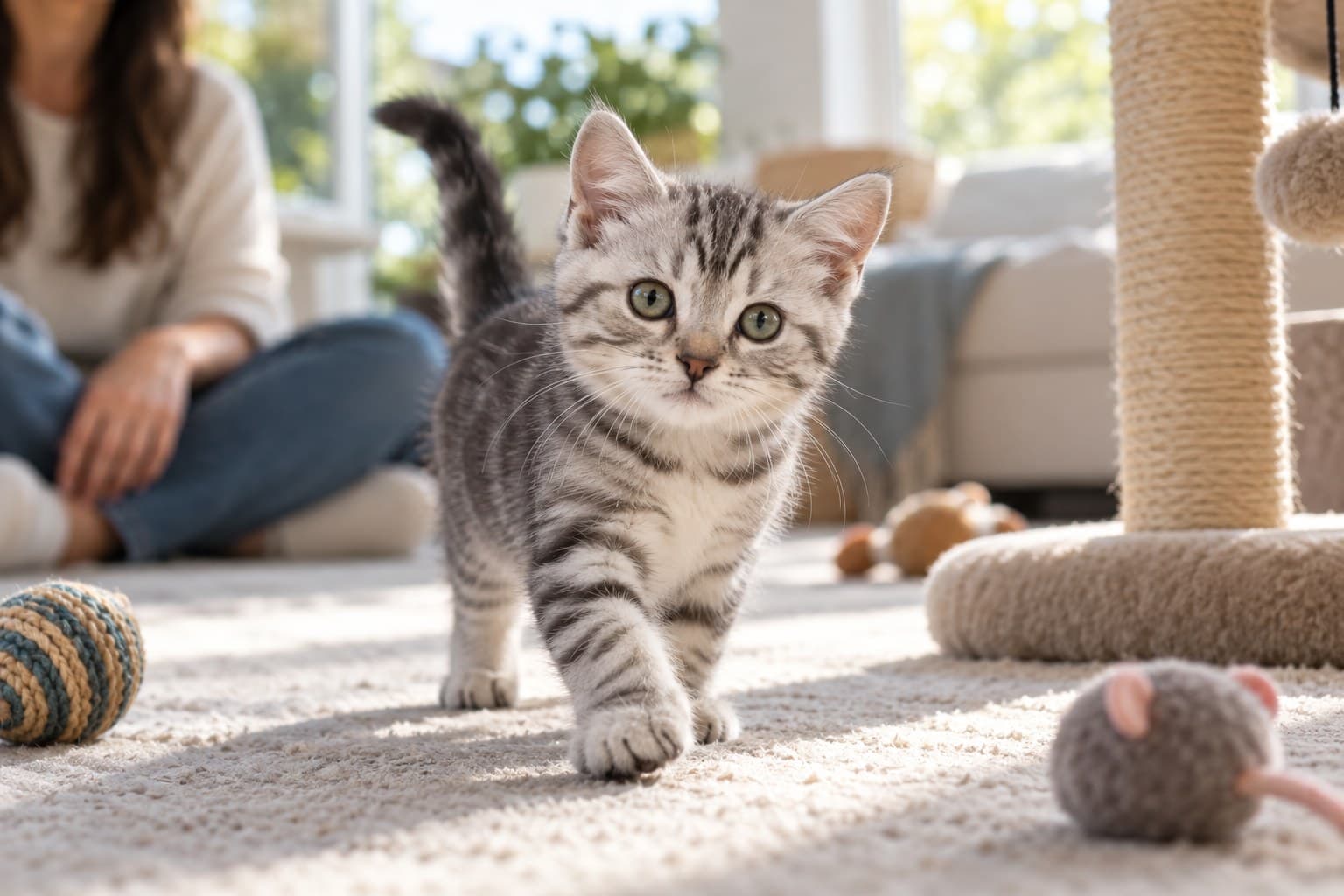
American Shorthair: more than a short coat
The American Shorthair is a distinct pedigreed breed, not simply another name for every shorthaired cat. Its sturdy appearance should not be confused with a need for extra food. Regular play and body-condition checks remain part of care, even when a cat seems easygoing.
A short coat generally takes less daily work than a long one, but all cats still need attention to teeth, claws and skin. Ask to see the cat interact naturally rather than assuming a breed label proves it will welcome a dog or enjoy a child's lap.
Birman: blue eyes and white gloves
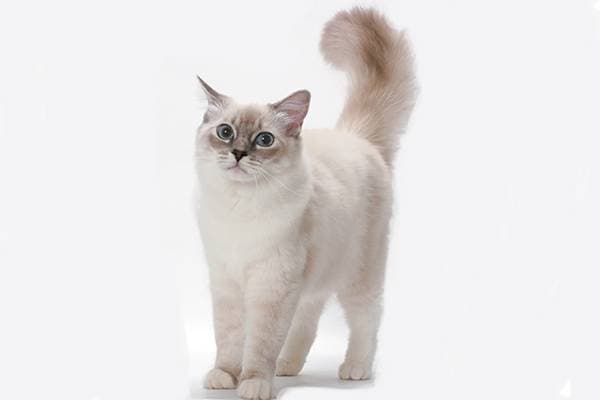
The longhaired, pointed cat with blue eyes and white feet is the Birman. It should not be confused with the Burmese, which is a separate shorthaired breed. CFA's Birman profile explains the breed's distinctive appearance. Correct identification matters when researching care and checking a seller's claims.
Plan regular combing and gentle handling, even if the coat seems easier to maintain than some other long coats. Inspect areas where friction can produce tangles. Affectionate behavior does not mean a cat enjoys being picked up at every opportunity, so watch the individual's response.
Sphynx: little hair, meaningful care
A Sphynx may have a fine down rather than being completely bare. Limited hair does not make it maintenance-free or reliably suitable for someone with allergies. Ask about skin care, ear care, comfortable room temperatures and the parents' health screening before choosing one.
Avoid direct sun exposure and use only products approved for the cat by a veterinary professional. A dramatic appearance is not a reason to give an animal as an unexpected gift. Everyone responsible for care should understand the practical routine in advance.
Ragdoll: gentle handling still matters
Ragdolls are often described as relaxed companions, but no breed is guaranteed never to scratch or bite. Pain, fear and unwanted restraint can change any cat's response. Teach children to let the cat approach and to stop when it moves away.
A large, soft-coated cat needs comfortable grooming, appropriate play and a safe environment. Do not assume a tendency to relax when handled makes the cat defenseless or removes its need for choices. Ask about the individual animal rather than expecting it to behave like a toy.
Siamese: communication and involvement
Siamese cats are known for their pointed coloring and often vocal, interactive style. Consider whether you enjoy a cat that takes an active interest in household life. Provide several ways to play, investigate and rest near people without having to be handled.
Travel tolerance cannot be predicted from breed alone. Some cats cope with carefully introduced transport, while others are distressed by it. Plan a dependable caregiver for trips and practice carrier comfort at home so necessary veterinary journeys are less difficult.
Abyssinian: room to explore
CFA describes the Abyssinian as an active, curious cat with a ticked coat. This makes it a poor choice to select solely because you want a quiet ornament for the sofa. Secure climbing furniture, interactive games and safe exploration can help meet an energetic individual's needs.
Activity does not equal a fixed preference for water, outdoor life or constant handling. Let the cat show you which games it enjoys. Rotate toys and supervise anything with strings or small parts that could be swallowed.
Exotic: a shorter coat is only part of the picture
The Exotic is related to the Persian and has a shorter coat, but a shorter coat does not remove all care needs. Look at comfortable breathing, eye health and overall function rather than choosing the flattest face. Ask for veterinary advice about recurring tearing or noisy breathing.
Set aside time for grooming and daily interaction. A cat described as calm still needs exercise and an interesting environment. If a seller claims the cat needs almost no attention, ask for a detailed account of its actual daily routine.
Maine Coon: plan for a substantial cat
Maine Coons can be large, with a long coat and prominent tail. Choose sturdy furniture, an adequately sized carrier and litter trays that allow comfortable turning. Growth and final size vary; an exceptionally heavy cat is not automatically a healthier or better example of the breed.
Request relevant parental screening information and discuss what follow-up care may be needed. A reputation for hardiness is not a health guarantee. Introductions to dogs, cats and children should be gradual and supervised, regardless of the breed's social reputation.
Persian: daily coat attention
A Persian's long coat needs a dependable grooming routine. CFA's Persian profile is a useful starting point for understanding the breed, but meeting well-cared-for adults will help you judge the work involved. Tight mats should be handled professionally rather than cut out close to the skin.
Choose for comfortable function as well as appearance. Daily play, weight management and veterinary care remain necessary for a quiet cat. Before making a decision, compare the needs of the actual cat with your ordinary week, including busy days and holidays. A good match is one whose needs you can meet consistently.