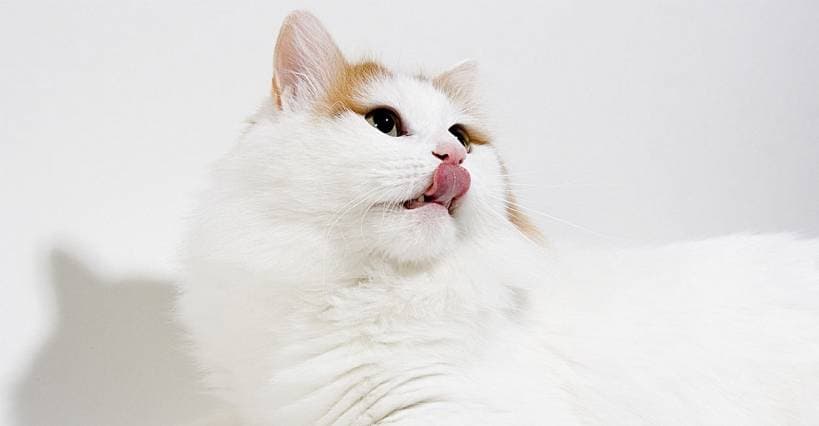
The Turkish Angora is an elegant cat associated with Ankara, historically called Angora, in Turkey. It is a distinct breed from the Turkish Van. A white long-haired cat is not automatically an Angora, and a pedigree Angora need not have been born in Turkey. Registration and reliable ancestry records matter if breed identity is important to you.
More than white fur and different-colored eyes
The Cat Fanciers' Association recognizes Turkish Angoras in several colors and patterns. White coats and odd-colored eyes are well-known features, but neither is required of every member of the breed. Eye color does not establish temperament or guarantee a particular hearing ability.
The breed has a graceful outline, a silky coat and a plumed tail. Exact size and coat fullness vary with the individual and age. Avoid making a purchase based on an unusually tiny size or a dramatic photograph without meeting the cat and discussing its care needs.
Ask about hearing
Congenital deafness can occur in white cats and is associated with pigmentation genetics. Cornell's information on white cats explains the increased risk, especially where blue eyes are present. This is a risk association, not proof that all white, blue-eyed cats are deaf or that every odd-eyed cat is deaf in exactly one ear.
Ask whether hearing has been assessed and whether a BAER test is appropriate. A cat deaf in one ear may respond to everyday sounds, so a casual clap test is not a dependable way to establish hearing in each ear. A deaf cat can enjoy a good quality of life with thoughtful indoor management and safe communication.
Coat care should be comfortable
Brush gently and check behind the ears, beneath the legs and around the tail for tangles. A silky coat with little undercoat can still mat, particularly if the cat is unwell or less able to groom itself. Do not assume that the breed's coat is impossible to tangle.
Introduce grooming in short sessions with rewards, and seek help for mats close to the skin. Unnecessary vitamin supplements, including fat-soluble vitamins, are not a safe remedy for shedding. A suitable complete diet should provide needed nutrients; excessive shedding, bald patches or sore skin deserve veterinary assessment.
Match the individual to your home
Many Angoras are active and curious, but no breed description guarantees a cat will tolerate being picked up, welcome strangers or get along with every pet. Offer climbing places, scratching surfaces and secure windows. Provide a quiet retreat where visitors and children do not follow the cat.
Introduce other animals gradually with separate resources. Teach carrier entry and other useful behaviors through small rewarded steps rather than relying on claims that a clever cat will understand everything immediately. Arrange companionship and care around your real schedule.
Choose with records and support
Ask a breeder or rescue about medical history, hearing, social experiences and any inherited health concerns in the family. Review the agreement and collect vaccination, parasite-treatment and identification records. An early veterinary appointment helps establish a plan suited to this particular cat.
Appearance may first draw you to a Turkish Angora, but comfortable care, reliable information and compatibility are better foundations for a lasting match.