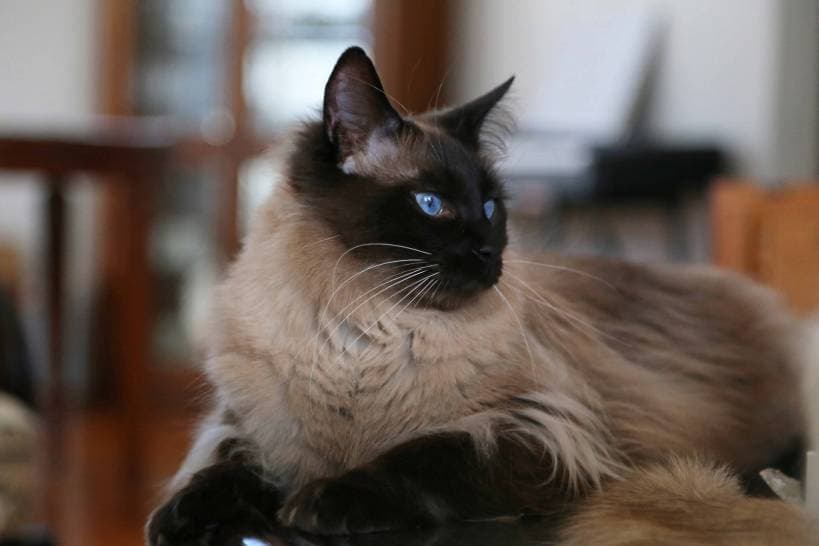
The Balinese is a longhaired relative of the Siamese, with an elegant body, blue eyes and a plumed tail. Despite its name, the modern breed was developed outside Bali. The name evokes graceful movement rather than documenting an origin on the Indonesian island.
A recognizable appearance
The Cat Fanciers' Association's Balinese profile describes a silky coat and colorpoint pattern. The ears, face, legs and tail are darker than the main body. Permitted colors and naming conventions can vary between registries, so check the standard relevant to the cat's records.
Balinese are generally slender and athletic, but an adult weight cannot be reduced to a tiny fixed range that applies to every individual. Assess body condition and growth with a veterinarian. A fine frame should not be confused with being underweight.
Company and activity
Many Balinese cats are vocal, curious and interested in what their people are doing. Provide daily play, climbing opportunities and safe places to watch household activity. A cat may enjoy learning simple behaviors with rewards, but training should remain voluntary and brief.
Prepare for periods when the household is busy or away. Enrichment and a reliable carer are important, and another cat is not automatically a substitute for human attention. Introduce new animals gradually with separate resources and room to retreat.
Children should interact gently under supervision and allow the cat to leave. A breed described as affectionate does not necessarily enjoy being carried or held tightly. Individual preferences matter more than a promise of universal friendliness.
Grooming and comfort
The coat is often easier to manage than a very dense long coat, but it still deserves regular checks and gentle combing. Look for tangles and changes in skin or grooming behavior. Lack of a heavy undercoat does not mean all grooming is unnecessary.
Most cats do not need frequent baths. Use a cat-appropriate product if bathing is needed, and dry gently. Clothing is not routine care for a healthy indoor Balinese; comfortable room conditions and bedding are usually more useful than dressing the cat without a clear need.
Food and preventive health
Feed a complete diet suitable for life stage, measure portions and keep fresh water available. Arrange dental care, vaccinations and parasite prevention with your veterinarian. A history of living indoors does not erase hunting behavior or make loose small pets safe companions.
Before acquiring a kitten, ask about the parents' health, relevant screening and the kitten's veterinary records. No breed is guaranteed to be free of inherited disease or to be hypoallergenic. The right match combines a healthy start with a household prepared for an active, social cat. A stable scratching post and a sheltered sleeping place are just as important as active games. Rotate safe toys to maintain interest, and make sure the cat can rest away from noise when it chooses.