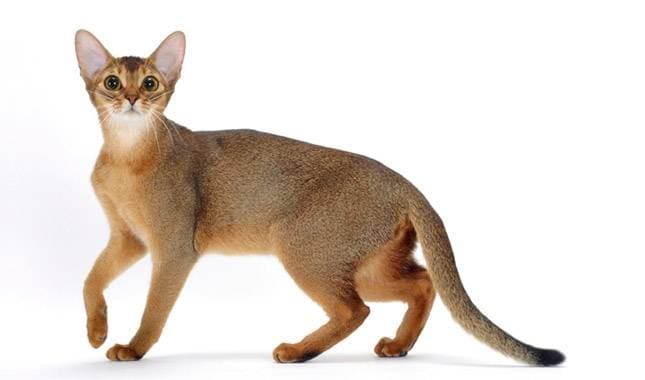
The Abyssinian is an athletic, shorthaired cat known for its ticked coat and alert expression. Many are active and curious, often preferring to participate in household life rather than remain still on a lap. Individuals vary, so meet cats and discuss their habits before choosing one.
History with some uncertainty
The Cat Fanciers' Association's Abyssinian profile discusses the breed's development and the stories surrounding its origins. Accounts often mention a cat called Zula brought to Britain from Abyssinia, but that story does not establish a complete ancestry for today's breed.
Claims that all modern Abyssinians descend from one recorded cross, or were brought to Britain by the Romans, should not be treated as settled facts. The name and resemblance to ancient artwork are not substitutes for documented pedigrees or genetic evidence.
Coat and appearance
The ticked pattern consists of bands of color along individual hairs, producing a distinctive overall effect. The cat has a balanced, muscular body, large ears and expressive almond-shaped eyes. Exact color terminology and standards should be checked with the relevant registry.
A short coat still benefits from gentle brushing or combing appropriate to the individual. There is no rule that it must be groomed only with a hand. Check skin, claws, teeth and ears as part of regular care, and investigate sudden coat changes.
Make activity safe and rewarding
Provide stable climbing furniture, scratching surfaces and interactive play. Secure windows and keep fragile or dangerous objects away from favorite high places. Curiosity can lead a cat into cupboards, laundry appliances or open bags, so check before closing them.
Use toys rather than hands as play targets and put strings away after supervised sessions. Brief reward-based training or food puzzles can offer interest. Give the cat choices and stop when it disengages instead of turning play into a compulsory exercise.
Companions and health
An Abyssinian is not automatically safe with every dog or cat. Use gradual introductions, separate resources and protected resting areas. Children need guidance on gentle contact and should allow the cat to move away.
Ask breeders about inherited conditions and appropriate screening. UC Davis's information on feline pyruvate kinase deficiency describes a genetic condition relevant to Abyssinians and several other breeds. Discuss actual results and family history rather than relying on a general claim of good health.
Feed a complete diet, monitor weight and maintain preventive veterinary care. Litter size and maternal behavior vary; neither can be guaranteed by breed. Responsible ownership focuses on the individual cat's welfare throughout life, whether or not breeding is ever considered.