A cat that urinates or defecates outside the litter box needs investigation, not punishment. Hitting, shouting, withholding food, shutting the cat on a balcony or bringing in a dog to frighten it can worsen fear and does not explain where to toilet. House soiling is not evidence that a cat is uncivilized, spiteful or trying to rule the household.
Start by separating possible medical problems from preferences and environmental stress. More than one cause can be present at the same time. A previously reliable cat that begins having accidents should be assessed rather than simply retrained. Record when the problem started, what the deposits look like and whether anything changed at home.
Check health first
Cornell's guide to house soiling explains that medical and behavioral factors can affect litter-box use. Pain, urgency or difficulty reaching a tray may make a familiar arrangement unsuitable. Tell your veterinarian about changes in thirst, appetite, stool or urine, and whether the cat strains, cries or repeatedly visits the box.
Repeated attempts to urinate with little or no urine can indicate a life-threatening blockage, particularly in male cats. Seek emergency veterinary care immediately rather than waiting for a training method to work. Do not assume straining is constipation or give leftover medication without professional guidance.
Offer a comfortable tray
Choose a box large enough for the cat to turn and dig comfortably. An expensive or enclosed design is not automatically better. Some cats prefer an open tray with an easy exit; cats with reduced mobility may need a lower entrance. Keep the box stable and check that approaching it does not involve a slippery floor or difficult jump.
Provide multiple boxes in separate useful locations. A common starting point is one per cat plus an additional box, adjusted to the household. Several trays side by side may function as one resource if another animal can block access to the entire area. Spread them out so that a cat has genuine choices.
Think about litter and location
Many cats prefer a fine, unscented litter. Strong fragrance may appeal to a person while discouraging the animal. If changing products, offer a new option alongside the familiar one where possible instead of abruptly removing the only accepted material. Watch which box the cat actually uses before deciding what it likes.
Place trays in quiet, accessible areas away from food and water. Avoid a location where a washing machine suddenly starts, children interrupt the cat or another pet can corner it. Keep doors open when they control access. In a multi-level home, a convenient box on more than one floor may be helpful.
Maintain the routine
Scoop regularly and wash boxes with suitable mild products, rinsing and drying well. Avoid strongly scented cleaners. Clean accidents thoroughly with a product appropriate to the surface and pet environment, following its instructions. Masking a smell for people may not remove the cues that draw a cat back to the same area.
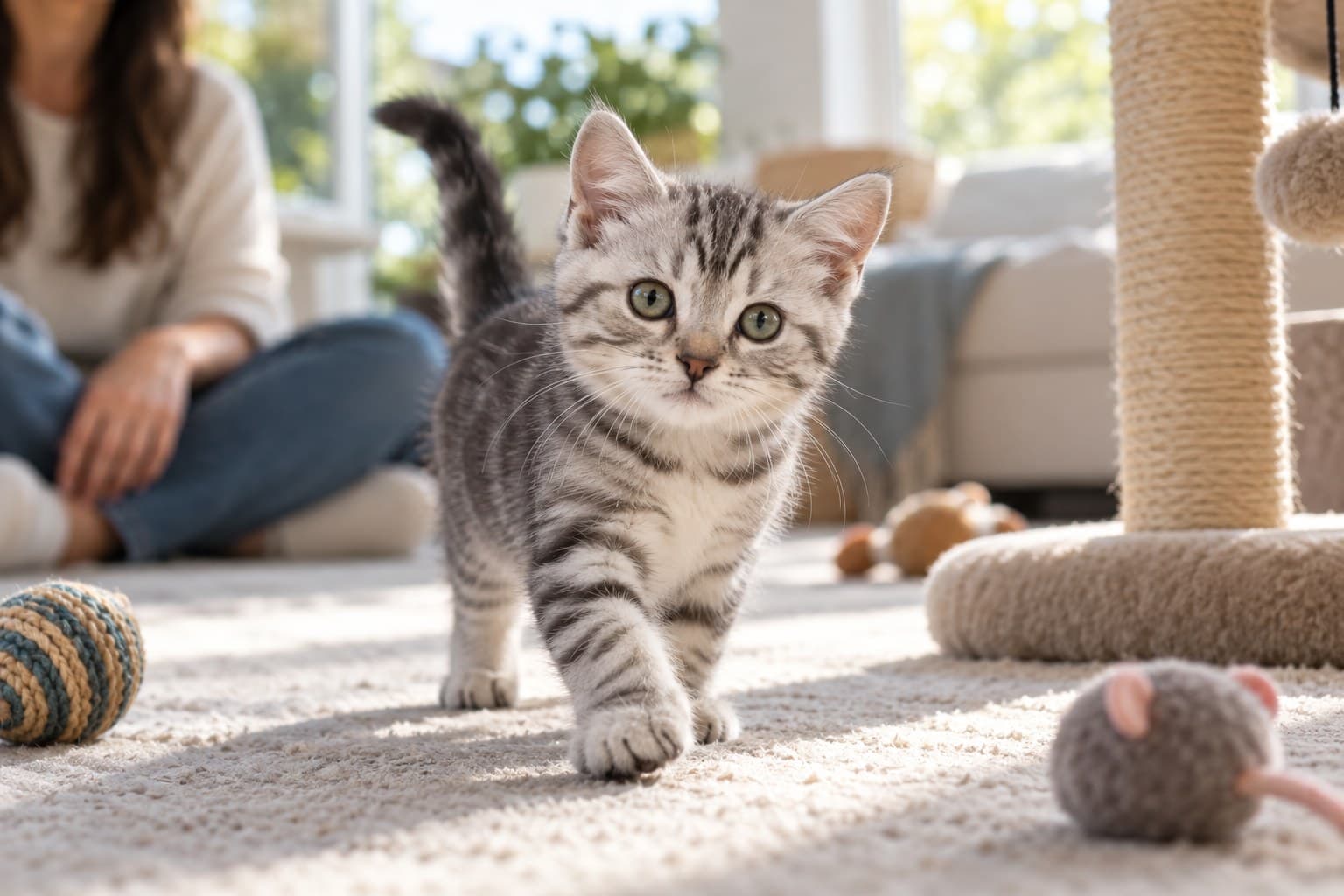
Do not carry a frightened cat to a tray and hold it there. For a new kitten, make the box easy to find and allow calm exploration. Keep initial access to the home manageable while providing food, water, bedding and play space separately. Expand the area gradually as the kitten becomes comfortable.
Reduce social pressure
Watch for staring, chasing or doorway blocking between cats. Conflict may be subtle and can occur even without a fight. Separate resting places, feeding stations and escape routes help prevent one animal from controlling another's access. A new pet should be introduced gradually rather than placed beside the resident cat's resources.
Urine marking and ordinary toileting are not identical behaviors, although an owner may encounter both. Describe the posture and location of deposits to your veterinarian instead of guessing the motive. Reproductive status, stress and medical issues may all be relevant to the assessment.
Review progress patiently
Keep a short diary of box use, cleaning, household changes and any symptoms. Make thoughtful changes rather than replacing every part of the setup at once. Reward relaxed interactions and leave the cat undisturbed while toileting; a noisy celebration beside the tray may be unwelcome.
If the problem continues after medical assessment and practical changes, ask for a qualified feline behavior referral. Some cases need a coordinated medical and behavioral plan. A cat can learn new routines at different ages, but progress depends on comfort and access. The aim is to make the appropriate place safe and appealing, while finding and treating the reason it was being avoided.
A household floor plan can help identify access problems. Mark each tray, closed door and narrow passage, then consider the route from each resting place. This often reveals a practical obstacle that is easy to miss when judging the boxes alone.