Felinology is the study of cats, a term used in contexts ranging from breed characteristics to behavior and biology. For an owner, the most useful knowledge is information that improves everyday welfare. Folklore about nine lives expresses admiration for feline agility, but cats are not protected from falls, traffic, poisoning or other hazards by extraordinary powers.
A quick reflex is not a guarantee of escape. Secure windows, balconies and other risky areas rather than relying on a cat to judge every situation correctly. Seek veterinary advice after a suspected injury even if the animal initially appears quiet; a calm appearance does not always establish that it is unharmed.
Human-age charts have limits
Tables comparing a cat's age with a person's are rough illustrations, not exact biological conversions. Cats mature quickly early in life and age at different rates thereafter. One formula cannot account for genetics, illness, body condition and environment, and a birthday does not predict a precise change in personality or ability.
The AAHA/AAFP life-stage definitions distinguish kittens under one year, young adults from one through six years, mature adults from seven through ten, and seniors over ten. These categories help organize care; they do not mean every cat becomes frail at the same age. A healthy older cat still benefits from play, choice and social contact.
Kittenhood and young adulthood
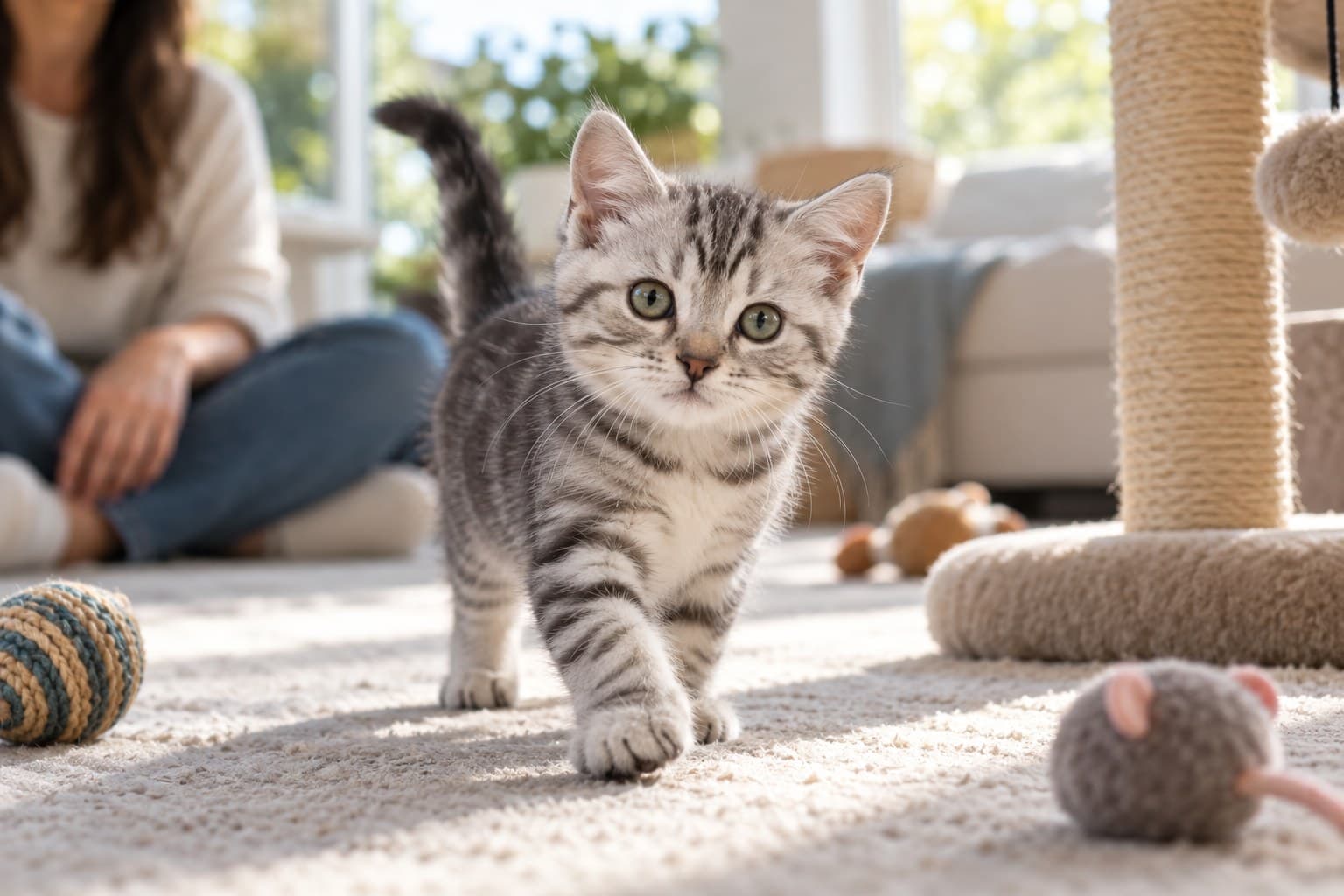
Young kittens need appropriate nutrition, warmth, preventive care and gentle exposure to normal household life. Ask a veterinarian about vaccination, parasite prevention and reproductive planning. Sexual maturity may occur before the first birthday, so waiting until a cat looks fully grown is not a reliable way to prevent an unintended litter.
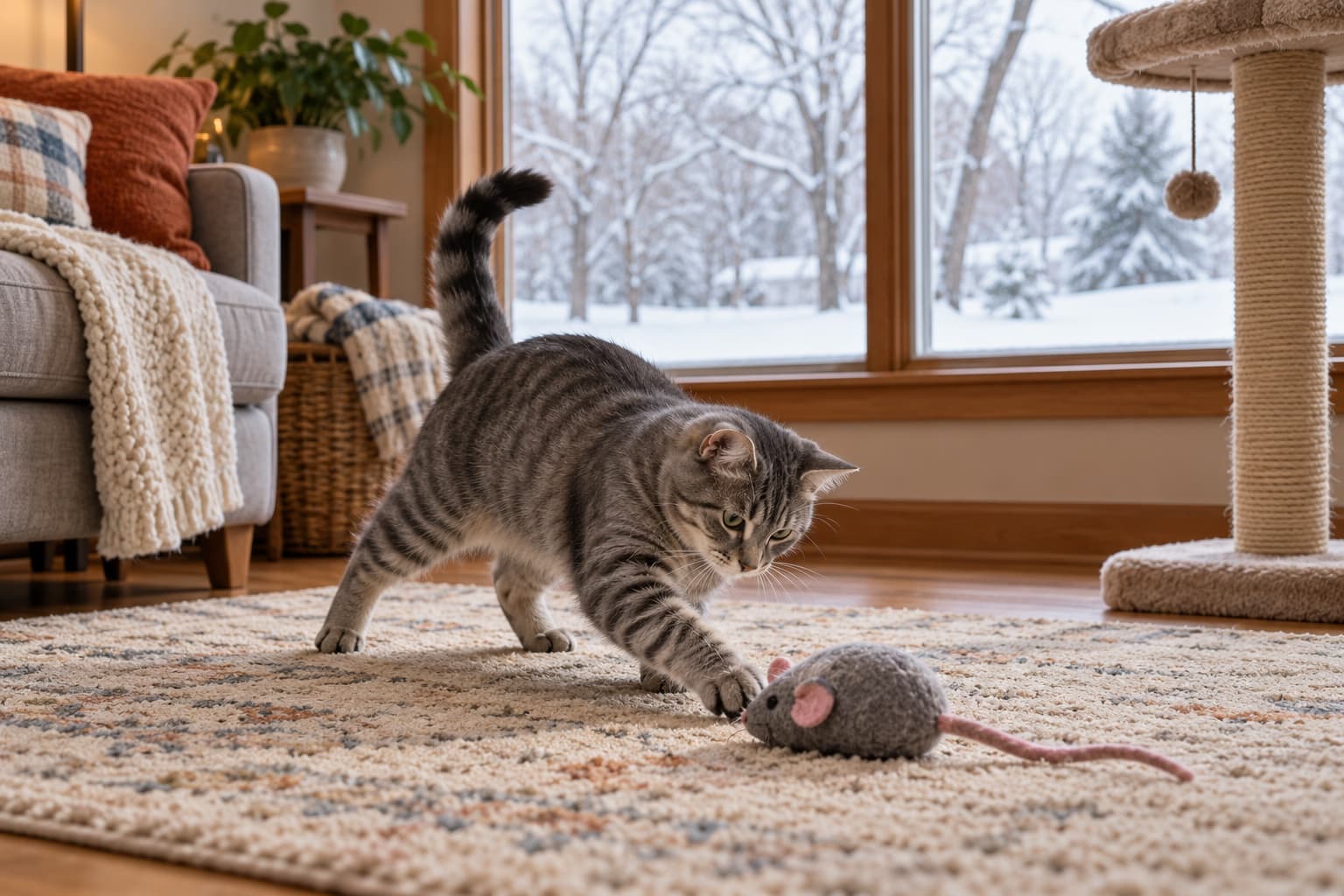
Build positive routines for handling, grooming and carrier travel. Provide safe toys and scratching surfaces, and reward useful behavior. Older cats can learn too; early practice is helpful without implying that learning closes at a fixed age. Adjust activities to the individual rather than demanding identical milestones from every kitten.
Mature and senior care
Track weight, appetite, thirst, toilet habits and mobility. A change may be gradual enough to miss without a simple record. Reluctance to jump, a less tidy coat or altered social behavior should not automatically be dismissed as normal aging. Ask your veterinarian about examination frequency and any screening appropriate to the cat's history.
Make resources easy to reach. Comfortable bedding, stable steps where suitable and accessible litter boxes can support independence. Keep food changes purposeful: an age label alone does not establish the best diet for every cat, especially when medical conditions are present. Seek an individual plan rather than adding supplements indiscriminately.
Think in terms of quality of life
Longevity records are exceptional cases, not promises for a breed or lifestyle. Daily comfort, appropriate treatment and early attention to changes matter more than converting years into a dramatic human equivalent. Understanding life stages helps owners adapt care while continuing to treat the cat as an individual.