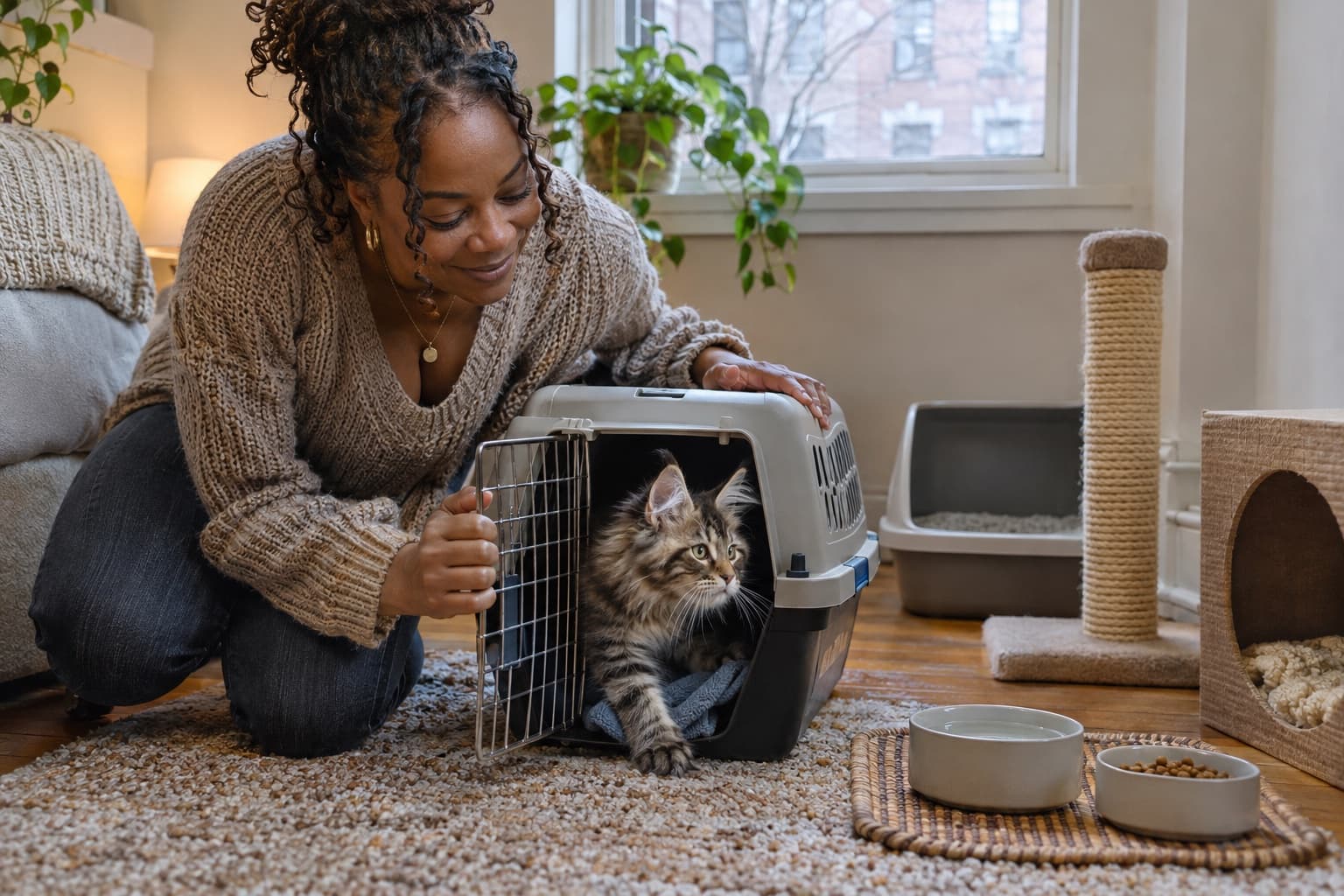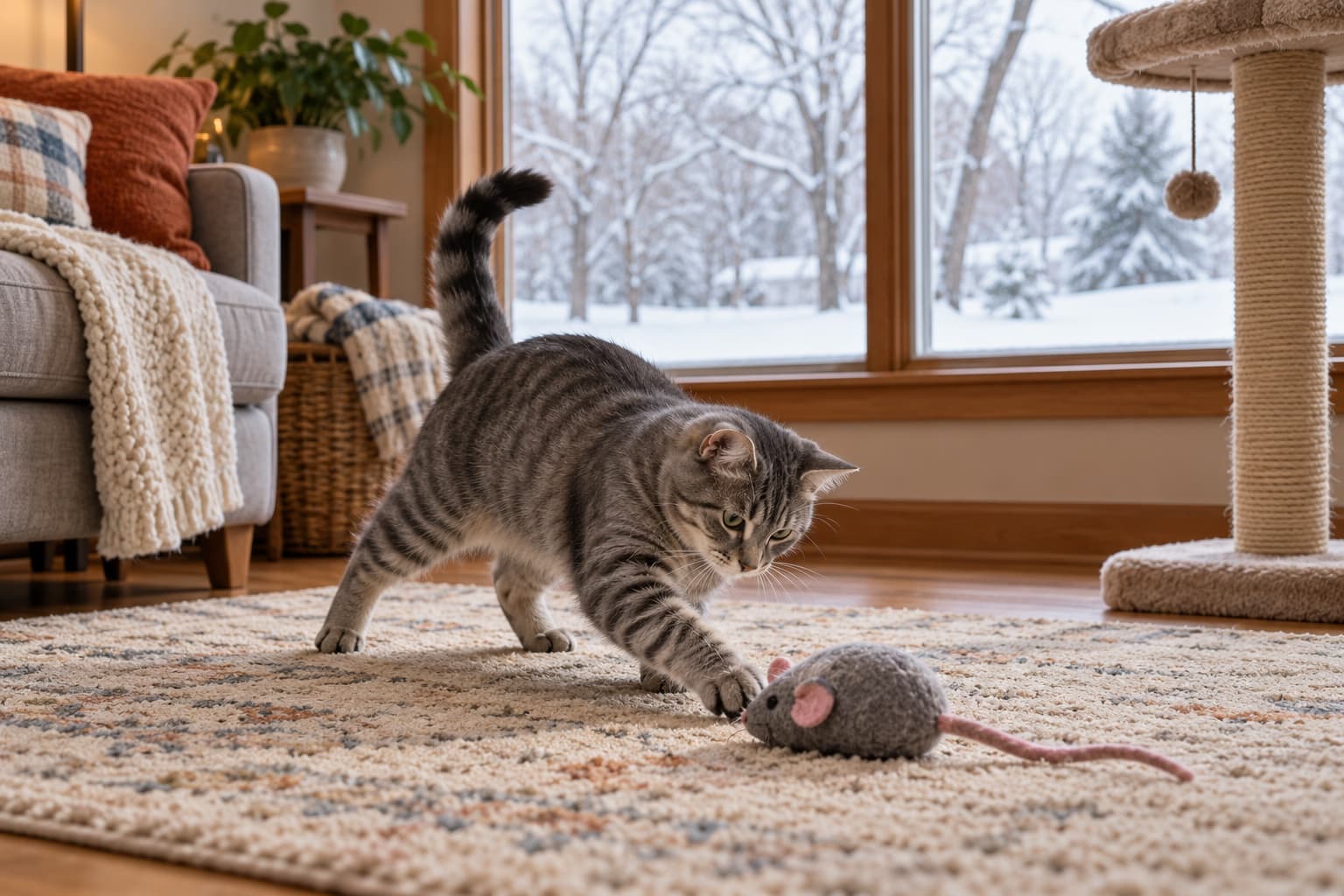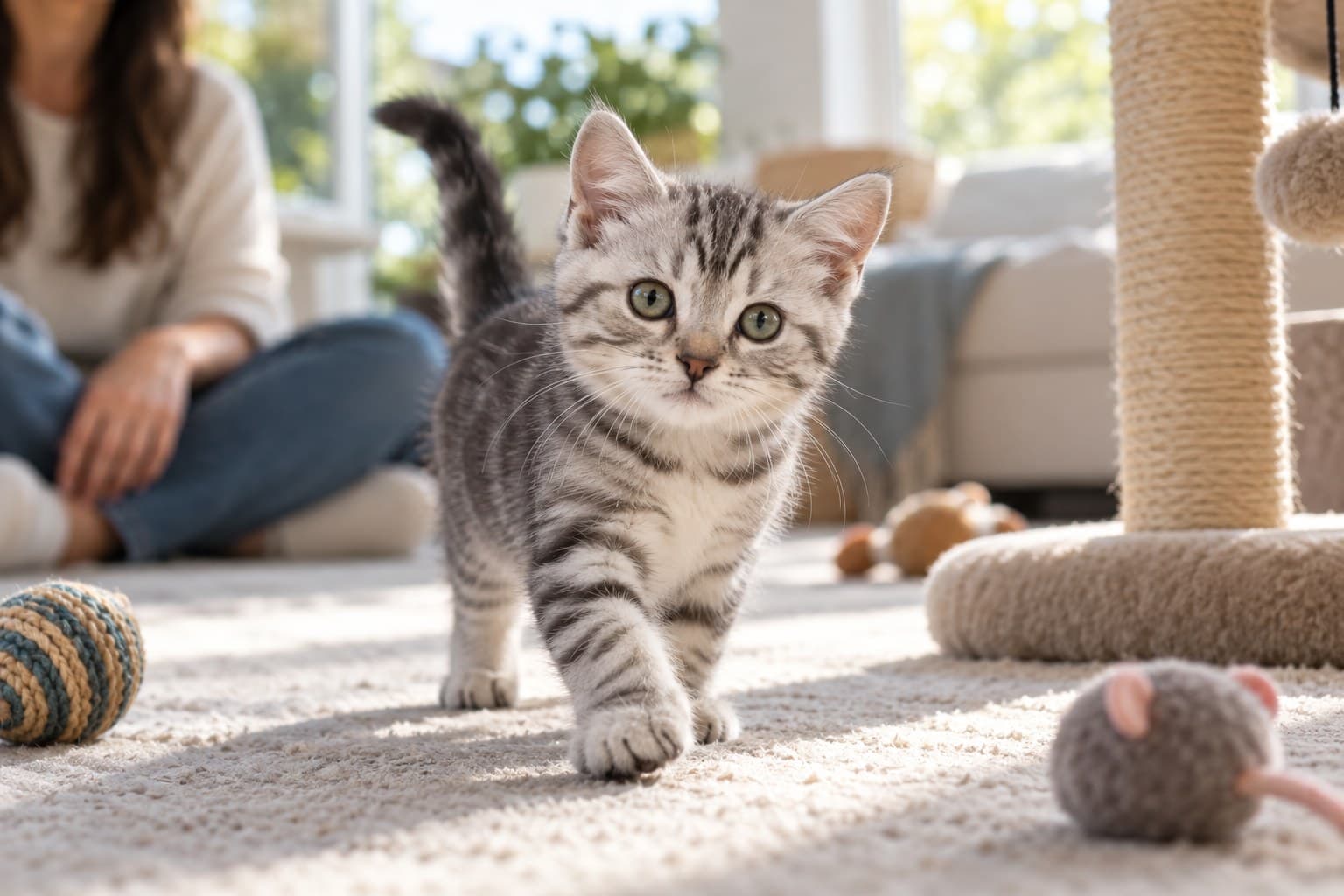

The Chartreux is a French breed recognized for its blue-gray coat, sturdy build and copper-to-gold eyes. It is sometimes called the Cartesian cat, but stories linking its origin directly to monks should be treated as tradition rather than a complete documented history. A blue coat alone does not establish that a cat is a Chartreux.
The CFA Chartreux profile describes a distinctive breed with a dense coat and a substantial body. Males are generally larger than females, but size varies. Kitten eye color develops with age; a fixed promise that every kitten will reach its final shade at three months is too precise. Show standards describe breeding and exhibition criteria, not a cat's worth as a companion.
Personality without guarantees
Chartreux are often described as quiet companions, yet individuals differ in confidence, playfulness and preference for contact. A cat that rests nearby may enjoy company without wanting to be held. Let it approach and move away freely, and give children guidance about gentle interaction. No breed is guaranteed to welcome every child or other animal.
Provide climbing places, scratching surfaces and short play sessions with safe toys. A reputation for hunting does not mean a pet should be exposed to wildlife, traffic or poisons. Indoor enrichment and secure outdoor options can offer exploration while keeping daily care predictable.
Coat and handling
Check the dense coat regularly and use gentle tools suited to its texture. Frequency depends on shedding and the individual coat, rather than one compulsory interval for every cat. Ask a groomer to demonstrate technique if needed. Stop when handling becomes uncomfortable and introduce new tasks gradually with rewards.
Most healthy cats do not need routine baths. Inspect ears, eyes and skin without assuming that self-grooming resolves every problem. Persistent discharge, odor, soreness or a change in grooming deserves veterinary advice. Do not put cotton swabs deep into the ears or apply household products to irritated skin.
Health and choosing a cat
Dental care matters, but teeth are not the breed's only possible health concern. Arrange preventive veterinary care and discuss any screening records provided by the breeder. A pedigree or an attractive coat cannot guarantee lifelong health. Ask about relatives, the kitten's development and support after placement.
Avoid relying on an old universal price range. Costs vary by country, seller and circumstances, and the purchase fee is only part of ownership. Budget for food, equipment, routine care and unexpected treatment. A responsible decision combines clear records with an individual cat whose needs fit the home you can provide.
Keep a simple record of appetite, activity and litter-box habits so that changes are easier to describe at appointments.