Some cats are known for ears or tails that differ from the familiar upright ears and long tail. These traits do not all arise from the same genetic changes, and they should not be treated as harmless simply because a breed standard describes them. Ask about health as carefully as appearance.
Scottish Fold
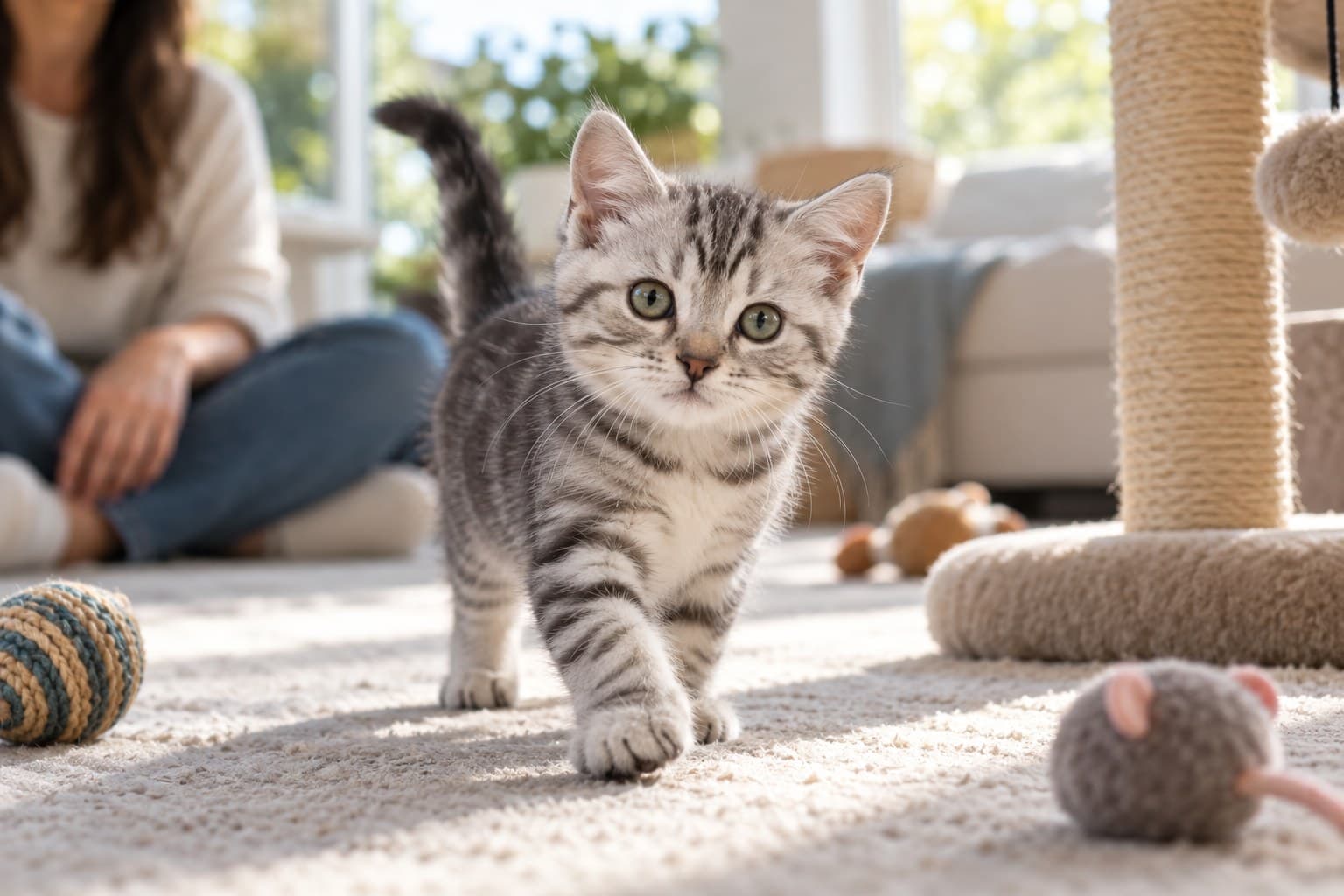
The folded ear is associated with a TRPV4 variant affecting cartilage. UC Davis Veterinary Genetics Laboratory explains its link to osteochondrodysplasia. Cats with one copy can be affected, while two copies generally produce more severe disease; mating to a straight-eared cat does not guarantee healthy folded-ear offspring.
Reluctance to jump, stiffness or an unusual resting posture may deserve veterinary assessment. Do not assume that avoiding heights is always a normal, healthy breed habit. Never pull or bend the tail to test a cat's flexibility.
Curled ears and the Elf name
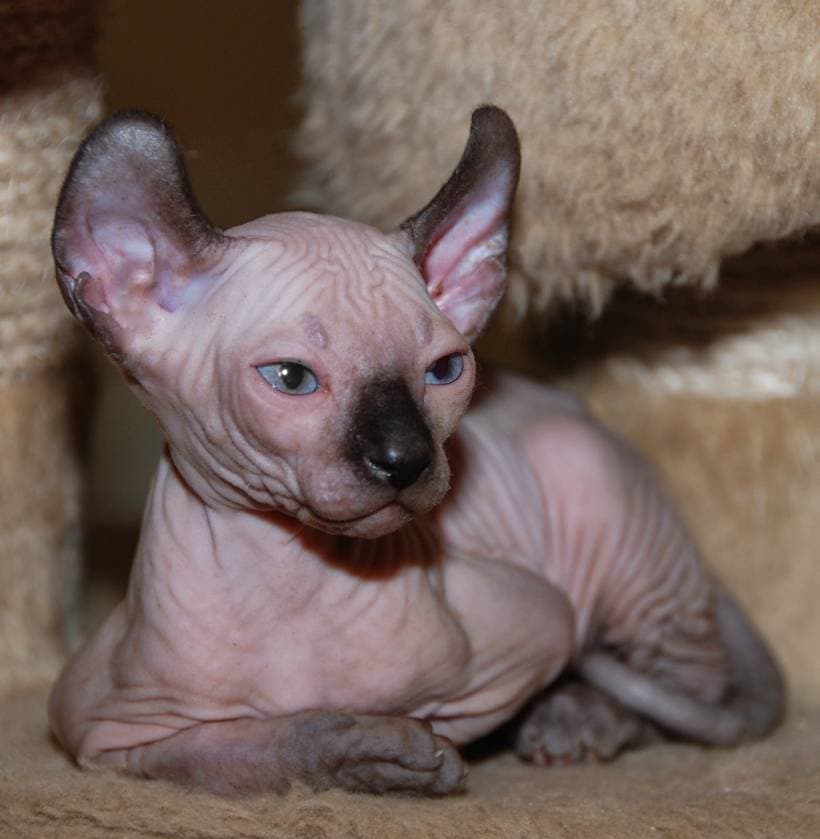
American Curls have ears that curve backward, a different feature from the Scottish Fold's forward fold. The name Elf is used for cats developed from Sphynx and American Curl ancestry. Registration and show status should be checked directly with the relevant registry rather than inferred from an advertisement.
Little or no visible coat does not eliminate grooming or allergy concerns. Protect exposed skin from unsuitable temperatures and sunlight, and obtain veterinary advice about skin or ear irritation. A novel appearance does not guarantee compatibility with every person or pet.
Karelian Bobtail
The Karelian Bobtail is a short-tailed type described in World Cat Federation standards, including a shorthair standard. It should not be confused with the differently named Kurilian Bobtail. Accurate identification matters when discussing ancestry and registration.
A pompom-like tail is a description of appearance, not a complete health assessment. Ask for records and watch normal movement, toileting and comfort rather than judging a cat only by its outline.
Manx
Manx cats can have different tail lengths, including no visible tail. Tail reduction in this breed can be associated with spinal and neurological problems, sometimes called Manx syndrome. It is therefore inaccurate to promise that all tailless cats need no special consideration.
Ask about veterinary assessment and any difficulty with movement, bowel or bladder control. A full or partial tail does not make a cat less deserving of a home, and extreme taillessness should not be valued above health.
Japanese Bobtail
The Japanese Bobtail has a naturally short tail and occurs in both shorthaired and longhaired varieties. It is distinct from the Manx, and the two should not be given the same genetic explanation. Coat care still matters; a short coat is not a promise of no shedding.
For every cat, provide comfortable resources, suitable play and gentle handling. Choose an individual whose needs you can meet, and seek veterinary advice for new pain, stiffness or toileting changes regardless of breed.