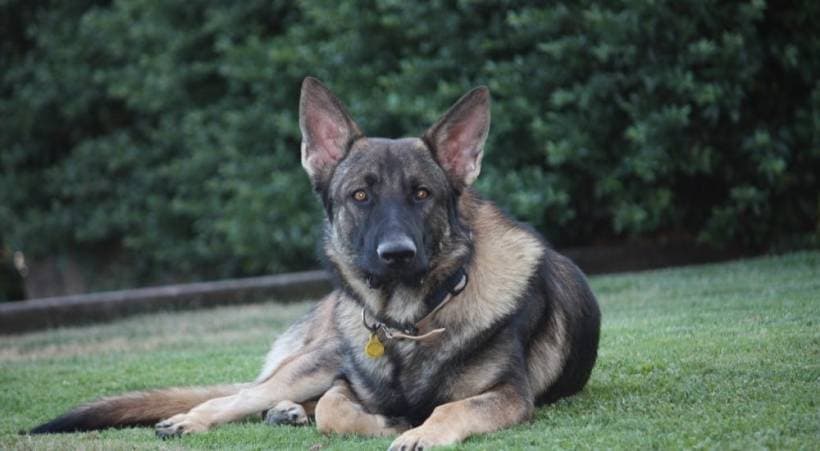
German Shepherds can be enthusiastic learners, but training works best when the dog understands the task and feels safe. Intelligence does not remove the need for patient teaching. Puppies and adults may need different starting points.
Begin with trust and manageable tasks
Give a new dog time to learn the home routine. Provide comfortable rest, predictable meals and suitable activity before expecting polished obedience. Start in a quiet place with a simple skill, such as turning toward its name or stepping onto a mat.
Do not roll a puppy onto its back to test submission or determine whether it will challenge a leader. Resistance may reflect fear or discomfort, and forced restraint is not a reliable temperament test. A German Shepherd does not need to accept physical intimidation before it can learn.
The American Veterinary Society of Animal Behavior recommends reward-based training. Avoid tools or methods intended to cause pain or fear. If the dog is worried, increase distance from the difficulty and arrange qualified help rather than escalating pressure.
Use rewards with clear timing
Choose a reward the dog values in that setting: a small food piece, a toy game or permission to investigate an interesting smell. Mark the desired action promptly with a consistent word or trained marker, then provide the reward. Timing helps the dog connect its behavior with the result.
Food used in lessons counts toward daily intake. Do not skip necessary meals to create hunger, and do not assume training must always happen immediately after a large meal. Choose a comfortable time and keep the task easy enough for the dog to engage.
When teaching a new skill, reward successful attempts reliably. Later, vary rewards thoughtfully as the behavior becomes established, while continuing to acknowledge good responses. Randomly withholding rewards from a confused beginner is not a route to automatic obedience.
Keep sessions short and useful
A few successful repetitions may be enough, especially for a puppy. End before frustration builds and return later. Twenty minutes is not a required minimum, and concentration varies with age, health, surroundings and the difficulty of the task.
Practice useful skills during ordinary life. Reward waiting calmly while a door opens, checking in on a walk and resting while you sit nearby. These small moments can be more valuable than a long formal session that the dog struggles to complete.
Balance learning with sleep, sniffing and age-appropriate exercise. A dog that becomes frantic or mouthy may need a break rather than harder work. Sudden difficulty with a previously easy action can indicate pain and deserves veterinary attention.
Share consistent household cues
More than one person can train and care for a German Shepherd. Agree on cue words, reward timing and household rules so that the dog receives consistent information. Children can participate in suitable exercises with adult supervision, but should not be responsible for managing risky behavior.
Write down a few priorities instead of trying to teach everything at once. Recall, loose-leash walking, comfortable handling and settling are useful foundations. Progress one step at a time and record the settings in which the dog succeeds.
Add distractions gradually
A response learned in the kitchen may not yet work near another dog or wildlife. Practice in a slightly harder setting, then return to an easier step if needed. Use a leash or long line where safety requires it; do not test recall beside a road.
Social experiences should be calm and controlled. A suitable puppy class can help when its health precautions and teaching methods fit veterinary guidance. Ask how the instructor handles fear and mistakes before enrolling, and avoid classes that force dogs into overwhelming contact.
Build a safe companion
Do not assume a German Shepherd will protect a household correctly without training or encourage it to threaten visitors. Specialist protection work is different from everyday companion skills. For family life, prioritize calm routines, secure boundaries and predictable handling.
If fear, guarding or aggression appears, consult a veterinarian and a qualified behavior professional. Training should improve comfort and safety for the dog and household, with realistic expectations rather than promises that breed loyalty will solve every problem.