Dog bites can occur in many situations, including familiar homes. Fear, pain, guarding and overwhelming interactions can contribute.
Prevention begins with distance, supervision and respect for a dog's signals. The American Veterinary Medical Association's dog bite prevention guidance emphasizes responsible care and understanding behavior rather than judging risk from breed alone.
Avoid putting a dog under pressure
Do not approach an unfamiliar dog that is tied up, behind a fence, eating, sleeping or caring for puppies. A dog with limited room to escape may react defensively. Ask the handler before approaching, and accept that the dog may not want to interact even if the person agrees.
Allow a willing dog to approach without leaning over it, hugging it or putting your face near its face. Do not offer a hand directly into its space as a compulsory greeting. If it turns away, withdraws or becomes still, stop the interaction and give it room.
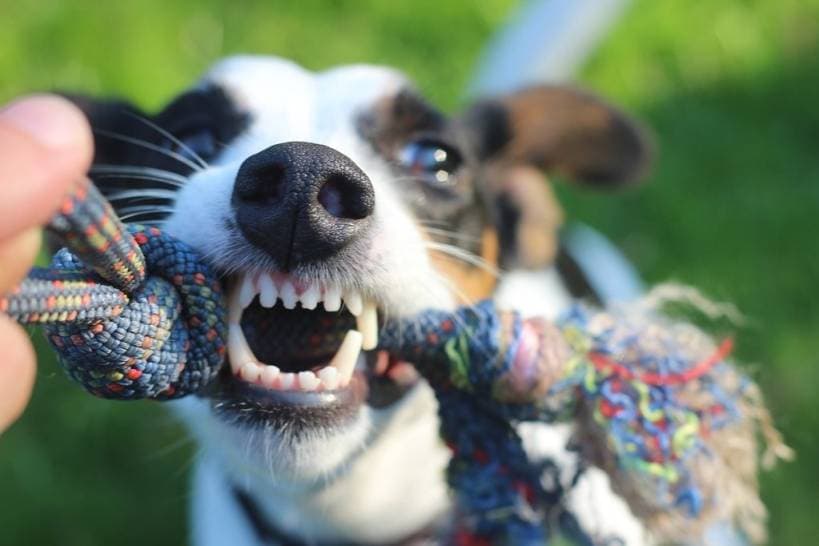
Stiff posture, growling, a fixed stare, lip lifting or attempts to move away deserve attention. A wagging tail alone is not proof of friendliness. Some dogs give subtle warnings that people miss, and a painful or frightened animal may react quickly.
If an unfamiliar dog approaches
Stay as calm as you can and avoid running, shouting or waving your arms. Stand still initially, angle your body slightly away and avoid staring directly into the dog's eyes. Do not try to pat, feed or command an animal that is threatening you.
When there is space to leave, move away slowly without sudden movements. Use a solid barrier such as a gate, door or parked vehicle if one is safely available. Do not approach the dog to retrieve a dropped object; belongings can be recovered later.
If you are cycling, avoid racing past a dog that is pursuing you when stopping can be done safely. A bicycle may help create a barrier between you and the animal. Keep your focus on reaching safety, rather than trying to frighten or overpower it.
During an attack
Put an object such as a bag, jacket or bicycle between yourself and the dog's mouth if you can do so safely. Do not deliberately offer an arm, grab the jaws or attempt neck-breaking maneuvers. Such techniques are unreliable and can increase injury.
If knocked down, curl into a ball and protect your head, neck and ears with your arms while remaining as still as possible. The CDC's guidance on dogs describes this protective position. Call for emergency assistance when someone is in immediate danger.
Do not place your hands between fighting dogs or grab collars in the middle of a fight. Bystanders can be bitten when animals redirect their attention. Keep children away and seek help from emergency services or animal control as appropriate to the situation.
After a bite
Once safe, wash a minor wound thoroughly with soap and running water. Apply gentle pressure with a clean cloth for bleeding. Seek medical advice promptly for broken skin, and urgent care for severe bleeding, deep wounds or significant injury. A clinician can assess infection, tetanus and rabies exposure risks.
If possible without approaching the dog again, obtain the handler's contact information and details of the animal's vaccination history. Record the location and circumstances. Follow local reporting requirements, especially if the dog is unknown or further people may be at risk.
Make family interactions safer
An adult should actively supervise children with dogs, including a familiar family pet. Separate them with a secure barrier when supervision is not possible. Teach children to leave dogs alone around food and rest, and to ask an adult before approaching any unfamiliar animal.
Owners should address growling, snapping or sudden changes in behavior with a veterinary assessment and suitable professional support. Punishing warnings can make a dog's discomfort harder to recognize. A practical management plan protects people while the underlying problem is investigated.