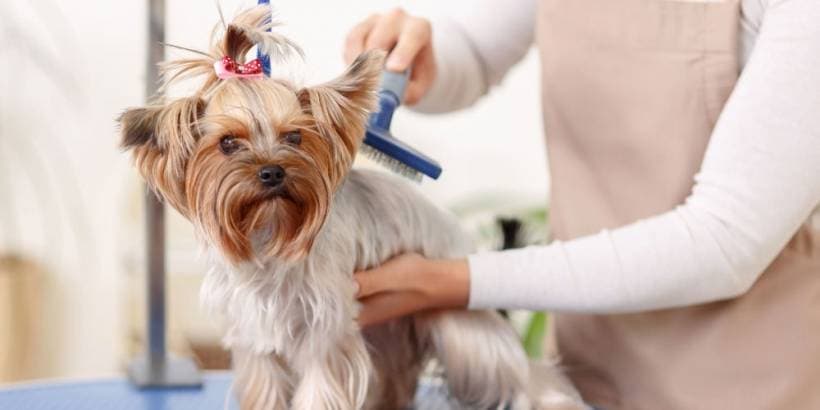
Professional grooming can help keep a coat manageable and make everyday care easier. The right service depends on the dog's coat, skin, age and tolerance of handling. There is no single haircut or three-week schedule appropriate for all dogs.
Mats and unusual shedding do not automatically indicate a vitamin deficiency. Coat changes may involve grooming technique, parasites, skin disease or other health problems. A groomer can notice concerns, but diagnosis and treatment belong with the veterinary team.
Different coats need different methods
Coats vary in length, texture, growth and undercoat. Some require regular clipping, while others mainly need brushing and removal of loose hair. The idea that dogs simply divide into those that shed and those that never shed is too simplistic.
A short-coated dog such as a Pug or Labrador generally does not need a routine haircut. A long or curly coat may mat without thorough maintenance. Discuss the actual coat rather than requesting a fashionable trim that may be unsuitable.
Clipping, scissoring and hand-stripping
Clippers and scissors shorten or shape hair. Blending creates a transition between lengths, while a show trim follows the requirements of a particular breed standard. A practical pet trim can prioritize comfort and easy maintenance instead.
Hand-stripping removes selected dead hairs from certain wiry coats. The American Kennel Club's explanation of hand-stripping describes why it differs from clipping. It should be performed by someone who understands coat condition and the dog's comfort, not by pulling indiscriminately at hair.
Not every pet requires hand-stripping, and a dog's age or skin condition may affect the choice. Ask how the proposed method will change texture, appearance and the care needed between appointments. Avoid treating show presentation as a medical necessity.
Feet, ears and delicate areas
Hair around pads, eyes or sanitary areas may need careful attention where it interferes with comfort or cleanliness. These are sensitive areas, and scissors close to skin can cause injury. Ask a professional to demonstrate any safe maintenance you will perform at home.
Hair inside a Poodle's ears does not mean routine plucking is mandatory for every dog. Ask a veterinarian about hair removal; VCA's ear-cleaning guidance also cautions against excessive cleaning. Pain, odor or discharge should be examined before cosmetic grooming proceeds.
Avoid tight bands, heavy ornaments or decorations that a dog may swallow. A topknot should not pull on skin or restrict vision. Remove accessories when needed for safety rather than assuming they can remain in place indefinitely.
Make appointments manageable
Introduce the puppy or adult dog to gentle brushing, paw handling and the sound of equipment gradually. Short introductory visits may be more useful than a long first appointment. Tell the groomer about pain, previous distress, allergies and any medical restrictions.
A severely matted coat may need clipping because prolonged brushing can hurt. Discuss the plan honestly and prioritize welfare over saving length. If the dog cannot tolerate the procedure safely, the groomer and veterinarian can help plan an appropriate next step.
Care between visits
Ask which brush or comb suits the coat and how to check beneath the surface for tangles. Keep sessions brief and reward cooperation. Regular home care makes salon visits easier, while changes such as sores, bald patches or persistent scratching should prompt veterinary advice.
Before booking, ask how the salon manages nervous dogs, breaks and unexpected health concerns. Agree on the intended length and any areas that should be avoided. Clear instructions reduce surprises and help everyone prioritize the dog's comfort.