A puppy's first weeks involve rapid physical and behavioral development. Timelines are useful guides, but littermates do not all reach milestones on the same day. Breeding and newborn care also carry real responsibilities: arrange veterinary support before a litter is expected rather than relying on the mother to manage every problem unaided.
Pregnancy and preparation
Female dogs usually have reproductive cycles at intervals of several months, with substantial individual and breed variation. Behavior alone cannot establish the fertile period or confirm pregnancy. Pregnancy timing is more predictable when measured from ovulation than from a mating date, so a veterinarian should help estimate the expected delivery window.
Prepare a clean, quiet whelping area and an emergency contact plan. Ask in advance which signs during labor require urgent assistance. Do not pull on a puppy, give medication or assume a long delay is harmless without professional advice. A mother who seems very unwell, has difficult breathing or cannot care for her litter needs prompt assessment.
Newborn needs
Newborn puppies have closed eyes and ear canals and depend heavily on warmth, milk and their mother. She normally stimulates elimination by licking them. Orphaned puppies or those not being cared for require a specific feeding, warming and toileting plan from the veterinary team.
Weigh each puppy consistently and keep individual records. Persistent crying, weakness, poor feeding or failure to gain weight can indicate a problem. A quiet puppy is not necessarily a healthy puppy if it is cold or too weak to nurse. Do not force-feed a cold or struggling newborn without advice, because feeding technique and temperature both matter.
Eyes, movement and weaning
Eyes begin opening during the early weeks, and hearing and coordination develop gradually. Never force eyelids open. Provide safe footing and an environment that expands with the litter's ability to move, without access to places where a puppy could become trapped or chilled.
Weaning is a gradual transition to suitable puppy food, not an abrupt change to pieces of meat or cow's milk. Discuss an appropriate complete growth diet and meal consistency with your veterinarian. Keep feeding equipment clean and observe whether every puppy gets access rather than judging the litter by the strongest eater.
Social learning starts early
The Merck Veterinary Manual describes important social development during the first months of life. Waiting until four to eight months to begin socialization misses much of the early sensitive period. Gentle handling and manageable exposure to household sights and sounds should start while puppies are still with the breeder or caregiver.
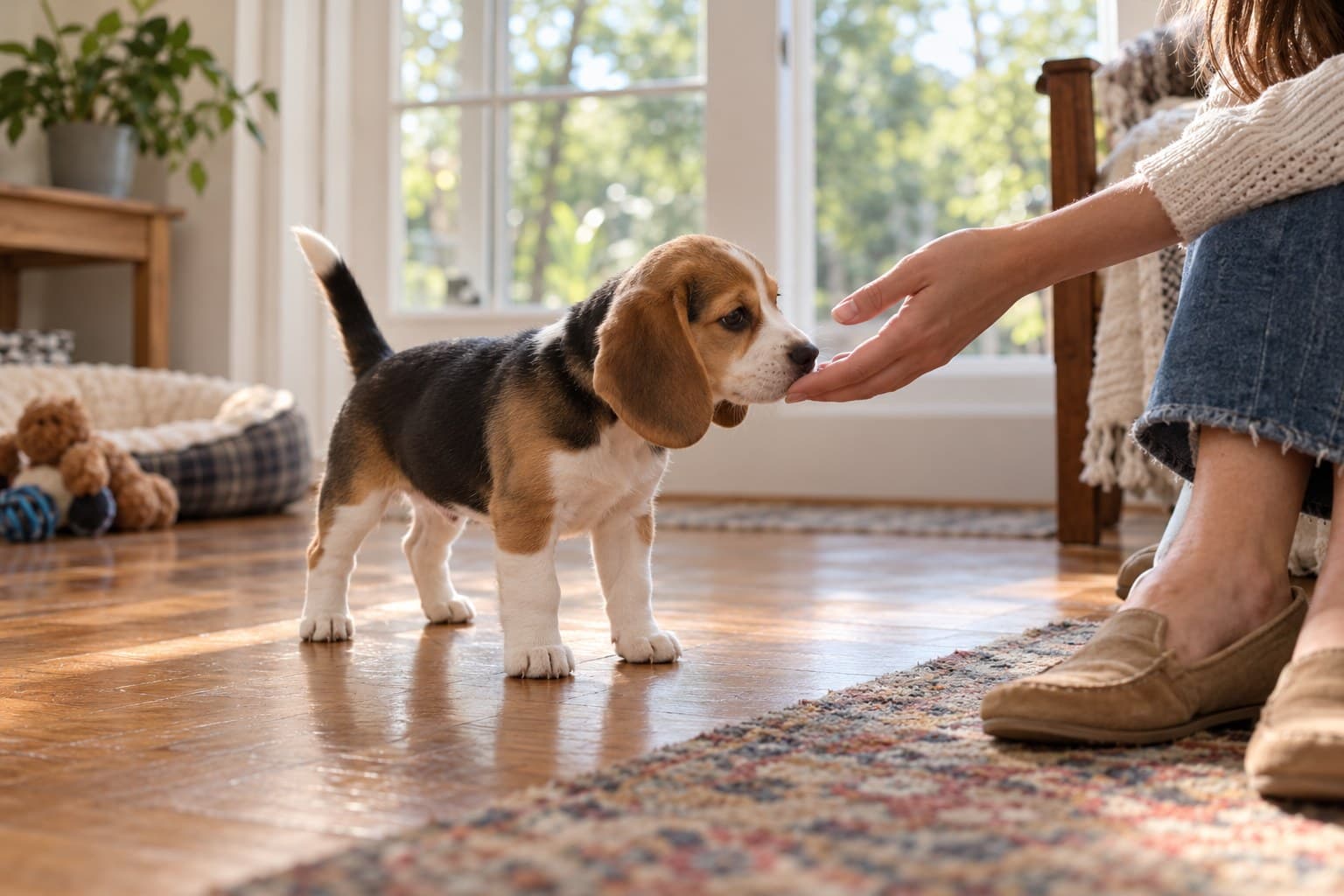
Balance disease prevention with safe learning experiences according to veterinary advice. Socialization is not a requirement to meet every dog or tolerate frightening situations. Let puppies explore at a comfortable pace and avoid overwhelming noise, rough handling or forced greetings.
Moving to a new home
Puppies benefit from appropriate time with their mother and littermates and should not be separated simply because they have started eating solid food. Discuss readiness and applicable rehoming requirements with the breeder, rescue and veterinarian. Collect feeding, vaccination, parasite-control and identification records before arrival.
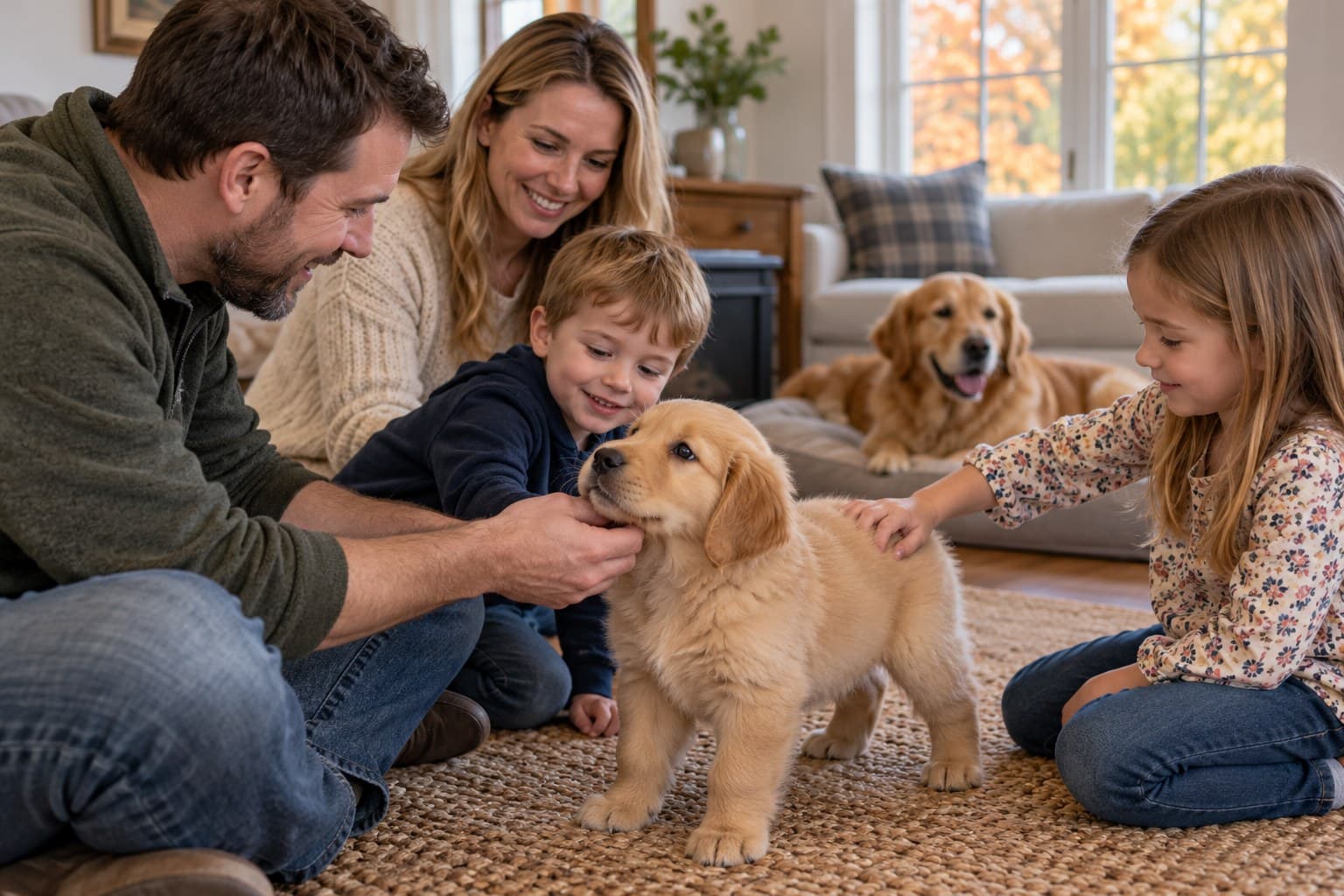
A new household should provide predictable meals, frequent toilet opportunities, safe play and plenty of sleep. Continue gentle training with rewards and supervise interactions with children or other animals. Early experience matters, but it is not destiny: continued care and learning throughout life help a puppy develop into a confident companion.