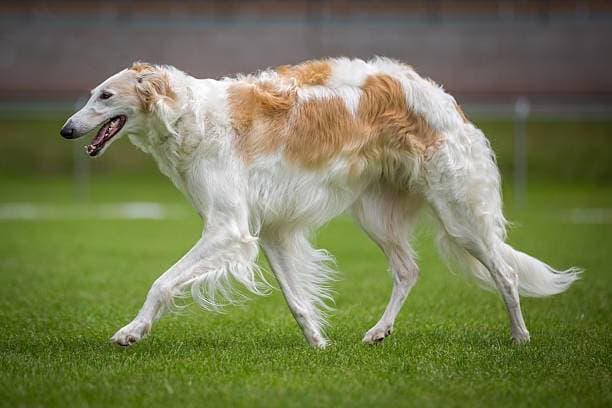
Afghan Hounds, Borzoi and Salukis share a sighthound background: they were developed to notice and pursue moving quarry. They are separate breeds, not longhaired varieties of the Greyhound. Their elegant appearance should be considered alongside chase instincts, handling needs and the practical work of coat care.
Afghan Hound
The Afghan Hound has a distinctive long, silky coat and an often independent manner. Coat maintenance can be demanding, with regular thorough grooming needed to prevent tangles. Ask an experienced groomer to demonstrate suitable brushing and bathing, including how to dry the coat without discomfort.
Many Afghans are affectionate with familiar people while reserved with strangers. Use patient reward-based training, clear routines and brief lessons. A dog that is not interested in repeating a task is not necessarily unintelligent; motivation and the setting matter.
Borzoi
The Borzoi is a tall sighthound with a long muzzle and a coat that can be silky, wavy or somewhat curly. It needs regular brushing, with extra attention to feathering and seasonal shedding. Provide a resting area with enough room for a large dog to stretch comfortably.
Some Borzoi are quiet indoors once their needs are met, but a calm appearance should not be mistaken for a weak chase response. Plan leash walks and secure opportunities to move freely. Consider how the dog's size will affect transport, furniture placement and routine veterinary handling.
Saluki
The Saluki has longstanding roots in the Middle East and occurs in both feathered and smooth forms. Feathering is most noticeable on the ears and tail; the entire coat is not long like an Afghan Hound's. Gentle combing of these areas helps prevent tangles, while the rest of the coat needs relatively simple care.
Salukis are swift, athletic dogs that can be reserved in unfamiliar situations. Give them time to approach new people and make training rewarding. Their lean appearance is characteristic, but weight and muscle condition should still be assessed individually with veterinary guidance.
Shared everyday needs
Use secure fencing and inspect gates and boundaries. A distant open field is not automatically a safe place to release a sighthound. Practice recall, but keep the dog leashed where a chase could lead to traffic, livestock or wildlife. Choose well-fitting equipment that is difficult to slip out of.
Build exercise gradually and adapt it to age, health and weather. Suitable supervised sports may offer an outlet for a mature, fit dog. Provide warm, comfortable rest and avoid treating repeated sprinting as the only way to meet its needs.
Supervise children and introductions to other pets. Some individuals can live with cats, while others cannot safely do so; breed labels alone do not settle compatibility. Before choosing a puppy or adult, ask about its actual history, relevant health screening and grooming tolerance. Meet the individual rather than relying on a photograph of a spectacular coat.