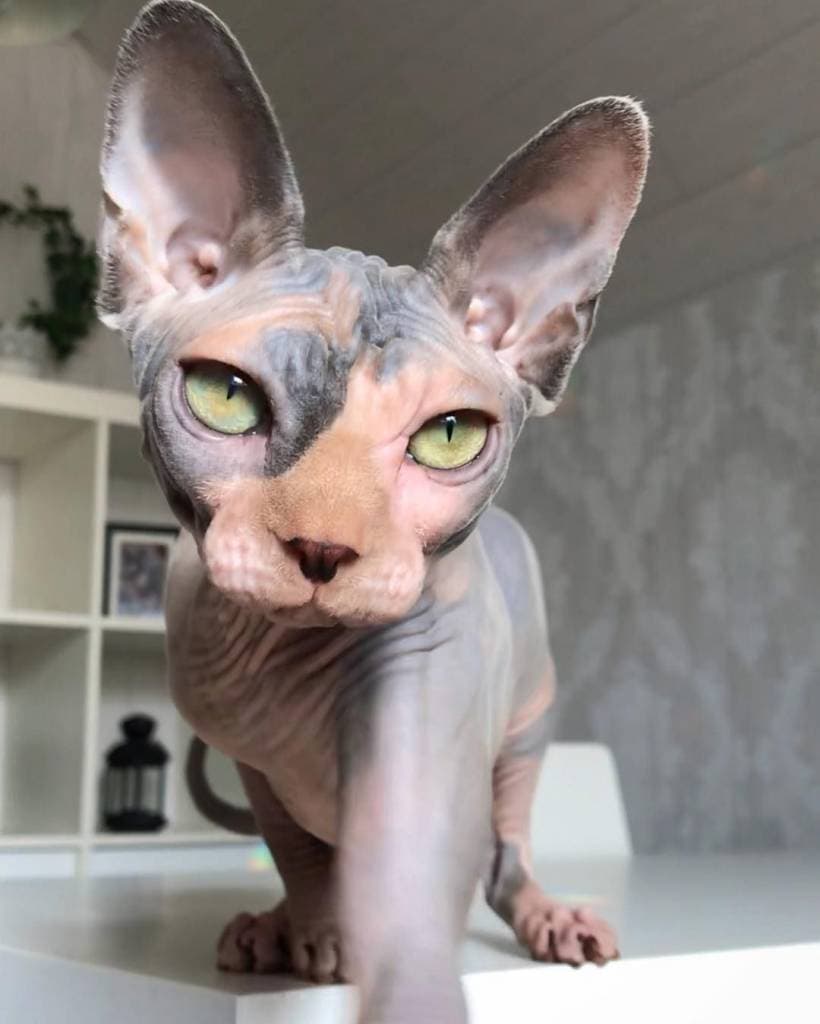
The Sphynx is a domestic cat known for large ears, prominent facial features and a body that appears almost hairless. Some have a fine down rather than completely bare skin.
A distinctive breed with a documented history
The Cat Fanciers' Association's Sphynx profile describes the development of the modern breed from naturally occurring hairless cats. Hairlessness is an inherited trait that breeders selected, not an unexplained magical property. Different hairless breeds should not automatically be treated as genetically identical.
Many Sphynx cats enjoy company, play and comfortable warm places. Individuals vary: a cat may be sociable without wanting to be carried, kissed or held tightly.
Skin care needs an individual routine
Without a substantial coat to absorb skin oils, some cats develop visible residue on bedding or around skin folds. Calling this brown residue simply "sweat" is misleading. Discuss gentle cleaning and bathing frequency with your veterinarian rather than assuming every Sphynx needs the same schedule.
Use products intended for cats and rinse carefully when bathing is advised. Excessive washing or harsh products can irritate skin. Redness, sores, persistent odor or scratching needs an examination, not increasingly frequent baths or home remedies.
Check the ears and the skin around the claws during relaxed handling sessions. Your veterinary team can demonstrate safe cleaning if necessary. Do not push cotton swabs into ear canals or apply human acne products, essential oils or creams without advice.
Warmth, sunshine and comfort
Offer soft washable bedding and a choice of comfortable resting places. Avoid direct contact with hot radiators, heating pads or other surfaces that could burn exposed skin. A cat should be able to move away from warmth freely.
Limit strong direct sun exposure and ask a veterinarian about safe protection if needed. Human sunscreen is not automatically suitable for a cat that will lick its skin. If clothing is used for warmth, check fit and comfort, supervise initially and remove it if it restricts movement or causes irritation.
Hairless does not mean allergy-free
Cat allergens are associated with proteins in saliva and skin secretions, not just visible fur. The American Academy of Allergy, Asthma and Immunology explains why pet allergy cannot be ruled out by choosing a particular coat type. A Sphynx may still trigger symptoms.
Anyone with allergies should discuss their circumstances with a clinician before acquiring a cat. A breeder's claim that a kitten is hypoallergenic is not a medical guarantee.
Food, play and preventive care
Feed a complete diet suited to age and health, and adjust portions to body condition rather than assuming the cat can eat unlimited amounts. Weigh the cat regularly and seek advice about unexplained weight change, poor appetite or persistent digestive problems.
Provide climbing spaces, scratching surfaces and daily interactive play. Ask a breeder about relevant health screening and the parents' medical history.