Wild cats include many species beyond lions, tigers and leopards. The six below occupy very different landscapes, from tropical forests to cold mountain country. They are wild animals with specialized ecological needs, not unusual domestic breeds or suitable household pets.
African golden cat
The African golden cat lives in tropical forest regions of Africa. It is compactly built with relatively short legs, and its coat may be reddish or greyish, spotted or fairly plain. The IUCN Cat Specialist Group describes significant variation and continuing gaps in knowledge. Forest loss and hunting pressure affect its habitat and prey.
Andean mountain cat
The Andean mountain cat occurs in parts of Argentina, Bolivia, Chile and Peru. Its dense greyish coat and long, ringed tail suit a striking mountain appearance. Rocky habitats and prey such as mountain viscachas are important to its ecology.
Kodkod or guiña
The kodkod is a very small South American cat associated with Chile and neighboring Argentina. Forest cover is important, and its climbing ability helps it use that environment.
Geoffroy’s cat
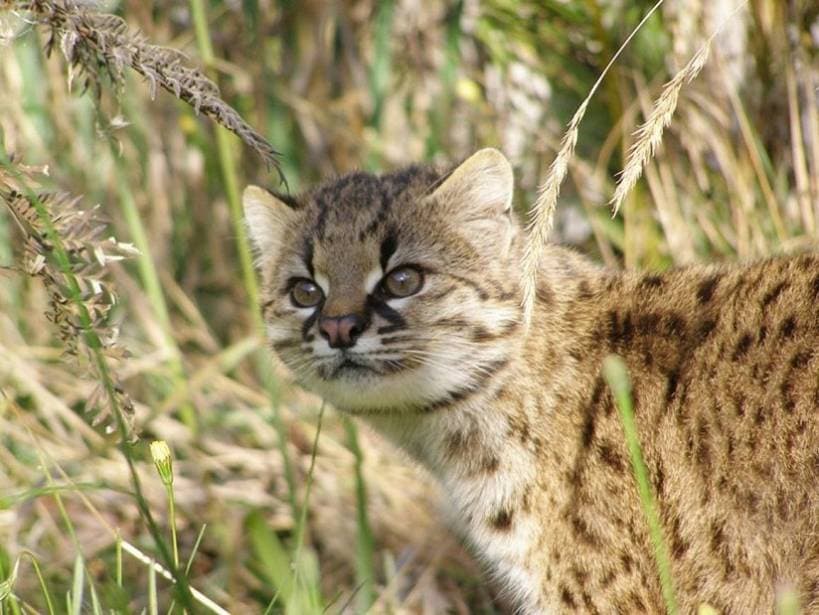
Geoffroy's cat occurs across parts of southern South America and uses a range of habitats, including grassland and woodland landscapes. It is usually spotted, although dark individuals also occur. The species is distinct from the kodkod and should not be described simply as a forest cat found everywhere in South America.
Bornean bay cat
The Bornean bay cat is endemic to Borneo, an island shared by Indonesia, Malaysia and Brunei. Reddish and grey color forms are known. It remains poorly studied, so confident stories about its usual prey or behavior can exceed the evidence. Protecting forest habitat is central to its conservation.
Rusty-spotted cat
The rusty-spotted cat is among the smallest wild cats. Its known range includes India, Sri Lanka and Nepal. A small body and delicate appearance do not make it a domesticated pet. It uses cover and hunts small prey; it should not be portrayed as spending almost its entire life in trees without qualification.
Learning without disturbing wildlife
Species names, range maps and conservation assessments can change as research improves. Use specialist sources and note the date of an assessment rather than repeating an old ranking as timeless fact. Responsible observation keeps distance and avoids baiting, handling or removing animals from the wild.
Supporting habitat protection and well-run local conservation projects is more useful than seeking a rare cat for private ownership. If you encounter an injured wild animal, contact the appropriate local wildlife professionals rather than attempting to keep it.