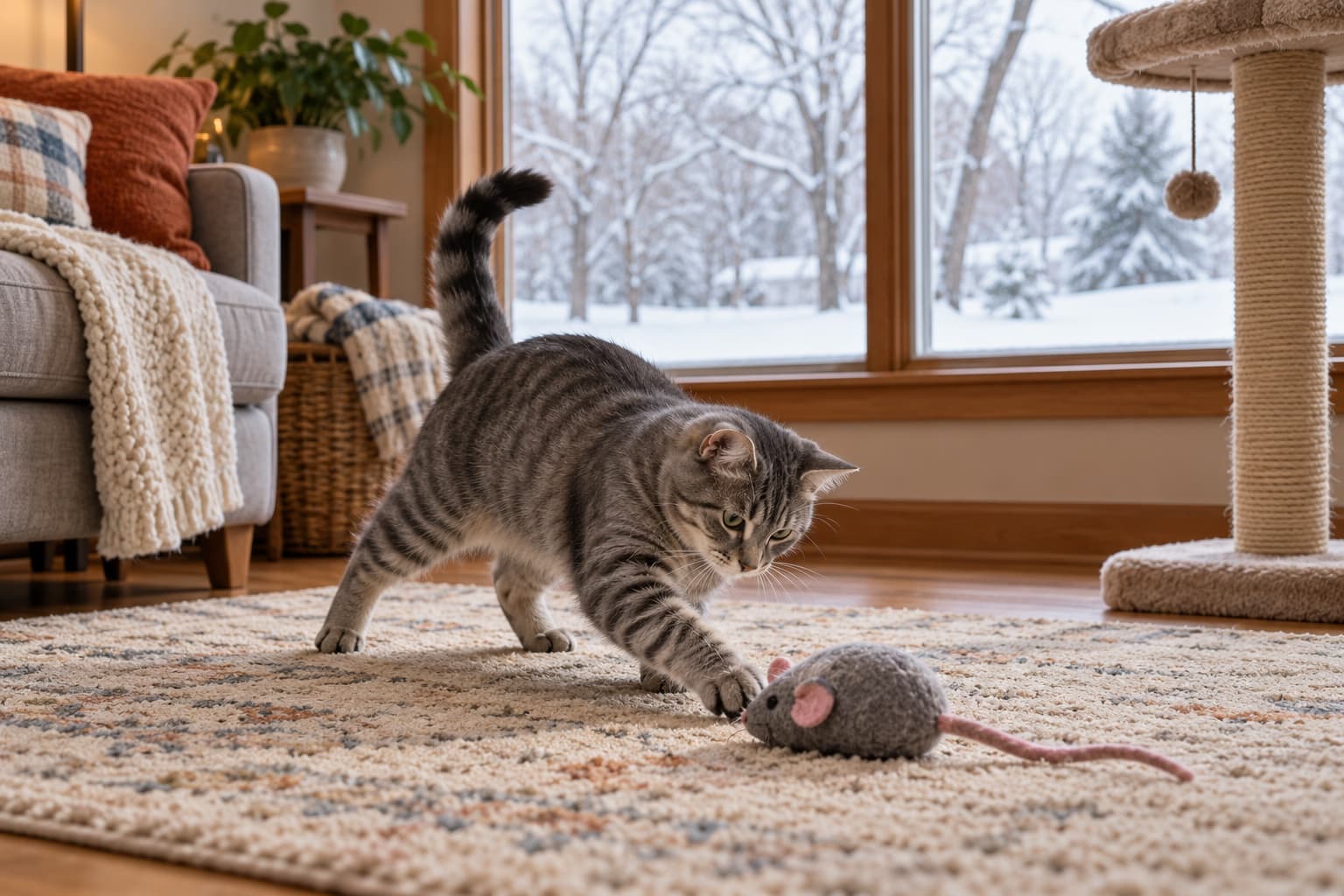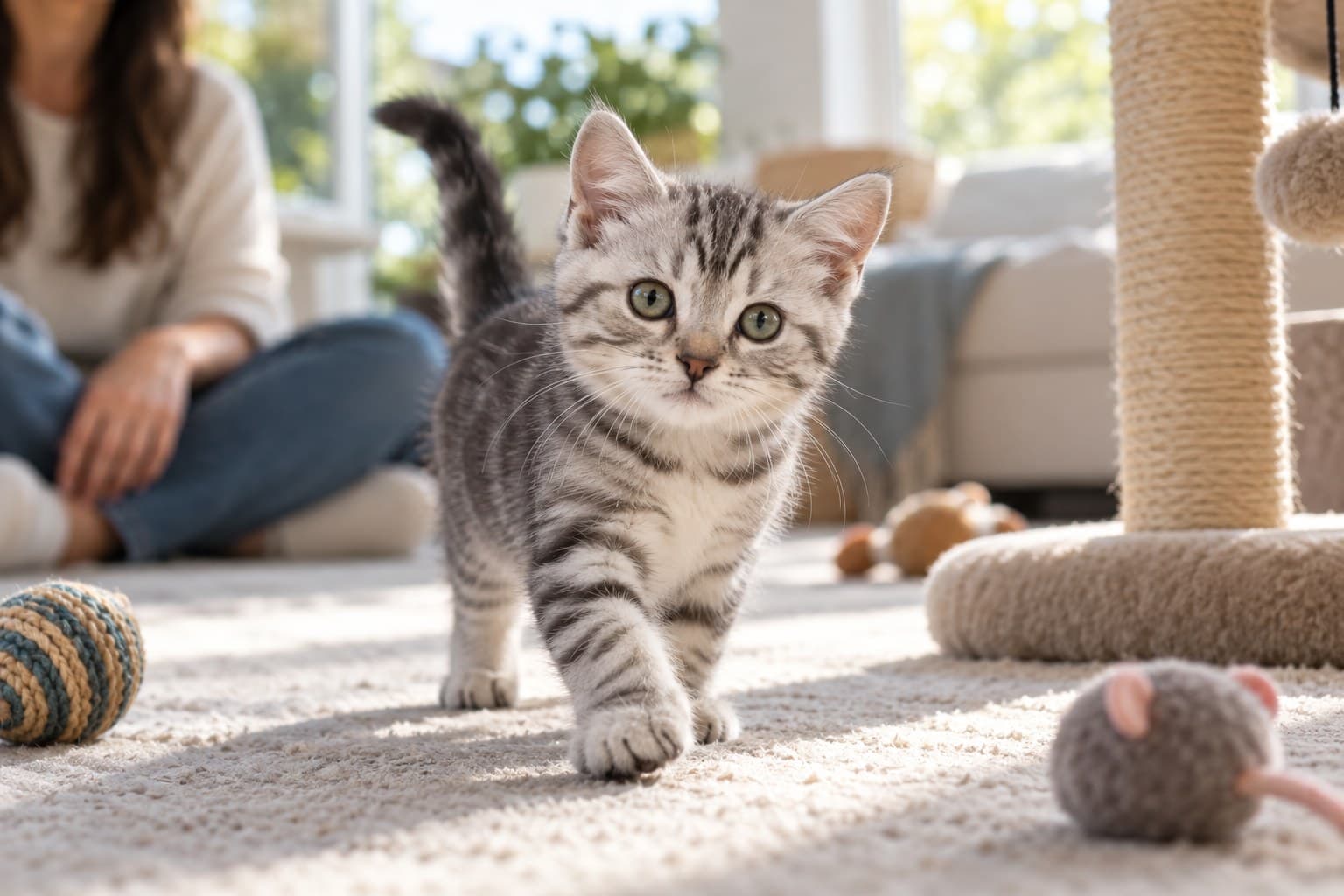
Play gives cats opportunities to explore, practice hunting movements and interact with their people. The most useful games suit the individual cat rather than keeping it moving until exhausted. A kitten, a shy adult and an older cat with stiff joints may enjoy very different speeds and sessions.
Make a toy act like prey
Move a wand toy away from the cat in short, irregular bursts, with pauses behind a box or cushion. Allow time to watch and stalk. Waving a toy continuously in the cat's face can be overwhelming, while dragging it along the floor often offers an easier invitation to join in.
Cats Protection's guidance on play recommends letting the cat catch the toy periodically and supervising toys that could be swallowed or cause entanglement. End with a successful catch and a chance to settle. Put string and wand toys away securely when the session ends, even if the cat seems to ignore them afterward.
Keep your hands and feet out of the role of prey. If a kitten grabs skin, stop the movement calmly and offer an appropriate toy at a distance. Everyone in the household should use the same approach so the cat is not encouraged to bite fingers during one game and punished for it during another.
Simple activities at home
A sturdy cardboard box can become a hiding place or a place to watch a rolling toy. Remove staples, loose tape and anything sharp, and leave easy exits. Use a stable layout that will not collapse onto the cat. A quiet observer may be enjoying the game even before making a visible pounce.
Roll a suitable cat ball slowly across a clear floor or offer a soft toy large enough to bat and grasp without swallowing. Check for detached eyes, loose stuffing and damaged seams. Candy wrappers, rubber bands and small household items are poor substitutes because they may be chewed or swallowed.
Food puzzles can add another kind of activity. Begin with an easy design and use part of the daily food allowance. Show the cat how food becomes available, then let it investigate without pressure. Keep ordinary food accessible if the cat cannot use the puzzle; a difficult toy should not become a barrier to eating.
Avoid preventable hazards
Do not leave plastic bags, loops, loose yarn or thread available as playthings. Cats Protection's home-safety advice highlights the danger of swallowed string. If you suspect ingestion, contact a veterinarian promptly. Do not pull string that is visible from the mouth or anus, because it may be caught internally.
Choose physical toys the cat can catch instead of relying on a laser dot. Never shine a laser into eyes. Stop games that lead to frantic searching, frustration or unsafe leaps, and offer a calm alternative. Clear slippery surfaces and keep play away from open windows, hot appliances and breakable objects.
Follow the cat's pace
Short sessions with breaks are often more successful than a long, repetitive workout. Rotate a few toys and notice which movements the cat chooses to follow. In a multi-cat household, provide separate opportunities so a confident cat does not monopolize every game or block a timid companion.
Keep older or less mobile cats involved with low, slow movements they can reach comfortably. A sudden loss of interest, reluctance to jump or change in movement deserves veterinary attention. The goal is enjoyable engagement: let the cat pause, walk away or simply watch without being pushed to continue.