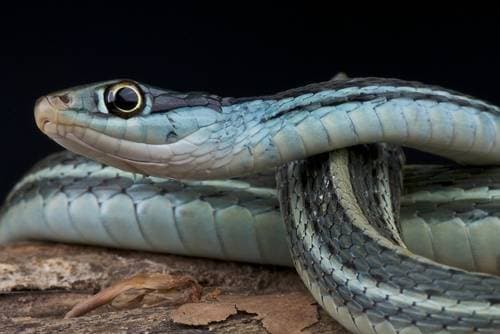
For most pet snakes, separate housing is the safest routine starting point. Two snakes sharing a hide or basking area are not necessarily enjoying companionship. They may simply be using the only place with suitable conditions.
Why sharing can cause problems
Snakes need access to suitable temperatures, retreats and clean water. In a shared enclosure, one animal may repeatedly occupy a preferred location while the other has fewer choices. Adding another bowl does not automatically solve a lack of space or secure hiding places.
Feeding creates additional risks. Two snakes may strike at the same prey, injure each other or swallow prey attached to another animal. Some species naturally eat other snakes, and a size difference can increase the danger. This is not adequately explained by calling one snake the leader of a group.
The Merck Veterinary Manual recommends individual housing for most nonbreeding pet snakes. Specialized breeding or research arrangements are different from routine companion-animal care and require species-specific knowledge, close supervision and a clear reason for bringing animals together.
Individual housing improves observation
When each snake has its own enclosure, a missed meal, abnormal dropping or regurgitated prey can be assigned to the correct animal. Keep simple notes on feeding dates, prey size, sheds and body weight. Without those records, a gradual decline may be mistaken for normal variation.
Separate housing also makes it possible to adjust care for different ages, health conditions or activity patterns. Two animals sold under similar common names may not have identical needs. Check scientific identification before choosing temperature and humidity targets.
Quarantine new arrivals
A snake can look healthy while carrying an infection or parasites. Discuss a quarantine plan and any recommended testing with a reptile veterinarian before adding a new animal to an existing collection. Separate equipment and careful handling order help reduce accidental transfer between enclosures.
Quarantine is more than placing cages side by side. Consider cleaning tools, water containers, waste disposal and hand hygiene. Seek advice promptly if several animals develop similar symptoms. Do not move furnishings between enclosures merely because they look clean.
Avoid unplanned breeding
Keeping males and females together can lead to mating before an owner has prepared for the consequences. Reproduction places demands on the female and requires suitable health, maturity and conditions. Sex should be confirmed by a qualified person; inexperienced probing can injure a snake.
Before acquiring another snake, budget for another complete setup, including heating controls and monitoring equipment. Test the enclosure before the animal arrives. If two snakes already share housing, arrange safe individual accommodation rather than waiting for visible injury or loss of appetite.
Make separation work well
A separate enclosure still needs enough room for normal movement, appropriate enrichment and more than an exposed empty floor. Check that doors close securely and that the snake can retreat from both handling and excessive heat. Review the setup as the animal grows instead of assuming that absence of conflict proves that its needs are met.