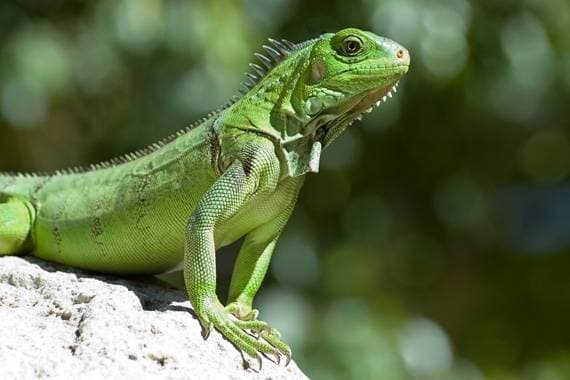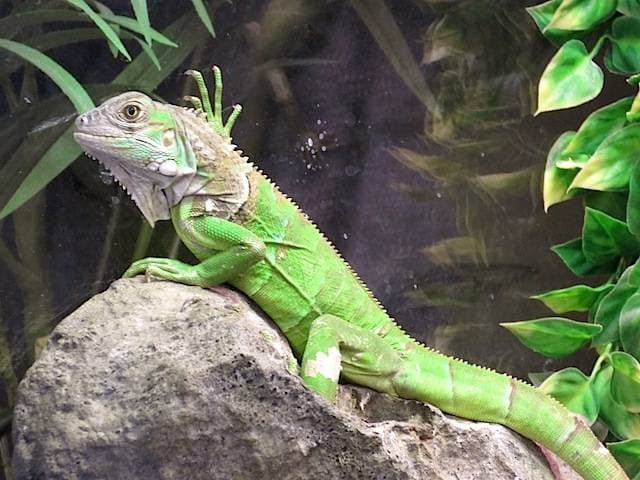
A green iguana is a large, long-lived lizard whose care becomes more demanding as it grows. A small aquarium is temporary juvenile housing, not an adult home. Before bringing one home, plan the full enclosure, equipment costs and access to a reptile veterinarian.
Build for an adult climber
Green iguanas need both floor space and height. Strong, securely fixed branches and broad resting shelves should support the whole animal without tipping. Arrange them so the iguana can move between warm and cooler areas, rest out of view and reach food and water easily. A tank's volume alone does not describe whether its shape allows these activities.
Choose surfaces that can be cleaned and inspect them for sharp edges. Secure doors, ventilation panels and fittings. Remove loose fibers or small objects that could be swallowed, and avoid placing heavy furnishings where they could fall. An adult iguana's tail also needs room to turn without repeatedly striking the enclosure.
Manage heat, UVB and humidity
The VCA housing guidance explains the importance of a basking area and ultraviolet light. Heat and UVB serve different purposes: a warm lamp does not necessarily supply useful UVB. Fit suitable reptile lighting at the manufacturer's recommended distance, accounting for mesh barriers, and replace lamps according to their effective service life.
Measure temperatures at the places the iguana actually uses, including the basking surface and cooler retreat. Use a thermostat and lamp guards to reduce burn risk. Do not rely on touching the glass or on one room thermometer. A reptile veterinarian can help set appropriate daytime and nighttime conditions for the individual animal.
Monitor humidity with a reliable meter and balance moisture with ventilation. Repeated spraying is not a substitute for measurements, clean water or a suitable enclosure. Keep any bathing container stable and accessible, replace dirty water promptly and clean it with equipment reserved for the pet.
Feed a varied plant diet
Offer a varied selection of suitable leafy greens and vegetables; fruit should be a small addition rather than the main meal. A bowl mostly containing apple, carrot or lettuce is not a complete diet. Chop food to a manageable size and remove leftovers before they spoil.
Do not use dog or cat food as an iguana staple. Ask the veterinarian to review the actual foods and quantities offered and advise on calcium and other supplements. Adding several products without checking their combined contents can create imbalances.
Watch daily habits
Record appetite, droppings, activity and changes in weight. Difficulty climbing, a swollen jaw, weakness or persistent refusal to eat warrants veterinary assessment. Do not pull away retained skin or force-feed a sick iguana without guidance. Regular observations make it easier to notice a change before the animal becomes severely unwell.