Puppy care is easier when it is divided into manageable daily habits.
Check the puppy during calm moments
Look at the paws, skin and coat after activity, and notice whether movement is relaxed. Brief regular checks help you recognize a change without turning every interaction into a lengthy examination. Reward calm participation and stop before the puppy becomes overwhelmed.
A new sensitivity to touch, limping or unusual tiredness may signal discomfort. Do not assume these changes are a normal part of growing up. Keep a short record and seek veterinary advice when they persist or are marked.
Groom according to the coat
Ask which brush or comb suits your puppy rather than choosing the stiffest bristles. Work gently in small sections on a safe surface and check areas where hair tangles. A brush that removes loose hair from one dog may irritate another's skin.
Introduce equipment gradually and avoid holding the puppy tightly by the collar for a full grooming session. Teach a brief comfortable touch, reward and release, then build duration. Help with tight mats is safer than trying to cut close to skin. Brushing can reduce loose hair in the home, but it cannot promise no shedding.
Support balanced growth
Feed a complete diet suitable for puppies and expected adult size. Replacing milk with increasing amounts of meat or fish does not create a balanced growth diet by itself. A homemade plan needs professional formulation, and supplements should have a specific reason rather than being added automatically.
Measure the daily allowance, including training treats, and review weight and body condition at veterinary visits. Large-breed puppies should grow steadily without being pushed to gain weight as quickly as possible. Food needs change, so adjust with evidence rather than simply adding more each month.
Make chewing safe
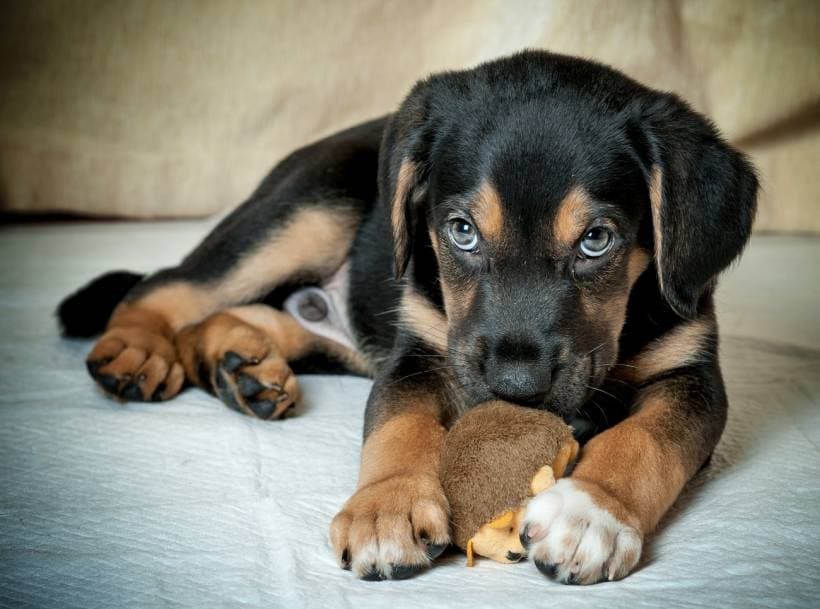
During teething, offer suitable flexible toys of a size the puppy cannot swallow. VCA's advice on puppy chew toys explains why hard objects can damage teeth. Bones, wooden blocks and loose pieces of rubber are not dependable choices. Supervise new items and remove them when damaged.
Keep shoes, cords and small objects out of reach. Redirect mouthing calmly and allow rest when excitement rises. Habits do not always disappear automatically with age; consistent management and rewarding appropriate choices help the puppy learn.
Include routine health care
Arrange vaccination and parasite prevention according to your veterinarian's plan and keep the records accessible. Introduce toothbrushing with dog-safe toothpaste, and ask for a demonstration of nail care. Do not use human medicines or unprescribed products to treat a problem noticed during grooming.
Repeated vomiting, significant diarrhea, refusal to eat, weakness or breathing difficulty requires prompt advice. Puppies can deteriorate quickly, so a sudden change deserves attention even if the previous day seemed normal.
Balance activity with sleep
Offer short play sessions, safe exploration and simple reward-based lessons. Provide frequent toilet opportunities and reinforce the correct place instead of punishing accidents. Protect a quiet resting area from interruptions by children or other pets.
Review the routine as the puppy grows. A little thoughtful practice each day is more useful than waiting until grooming, feeding or handling becomes a struggle.


