A suitable leash helps you manage distance and protect your dog around roads, people and other animals. Choose it for the dog's size, strength and behavior, as well as the place you will walk. No material or price tag makes a leash safe in every situation.
Start with a fixed-length leash
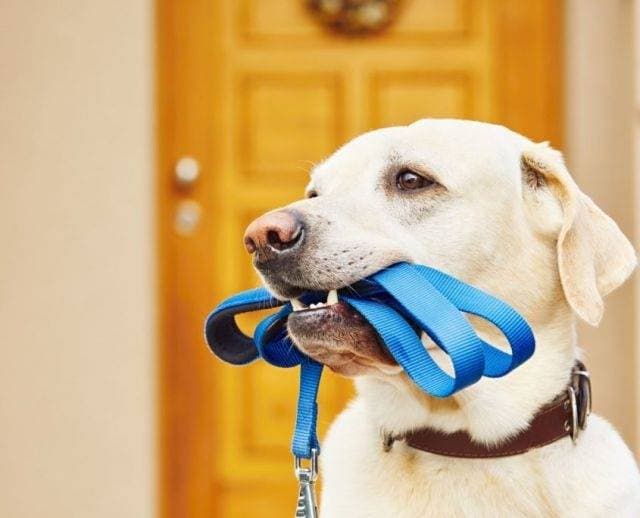
A comfortable fixed leash is a useful everyday option, especially for puppies and dogs still learning to walk calmly. It should allow normal movement without leaving so much loose material that it tangles around feet. The clip must fit the attachment point and close securely.
Nylon, other durable webbing and leather can all work when well made and maintained. Check stitching, clips and worn edges regularly. Wet or damaged equipment may behave differently from new equipment, so replace it before failure becomes likely.
A heavy chain is not a training solution for leash chewing. Instead, look at excitement, play habits and the need for appropriate chew outlets. Keep the dog safe while teaching an alternative, and seek help if chewing makes walks difficult.
Retractable designs need extra care
Retractable leashes allow distance to change quickly, but that can be a disadvantage near traffic or blind corners. Both cord and tape designs can cause friction injuries or entanglement. Tape is not harmless simply because it is wider than a cord.
Follow the manufacturer's size limits and instructions, check the locking mechanism and never grab a moving line. Do not allow the dog to round a corner ahead of you or approach people and animals without agreement. A dropped handle may also frighten a dog as it follows behind.
Use a fixed leash where close control is needed. The RSPCA's dog-walking guidance emphasizes protecting the dog, other animals and people, with the setting determining how much freedom is appropriate.
Long lines for suitable open spaces
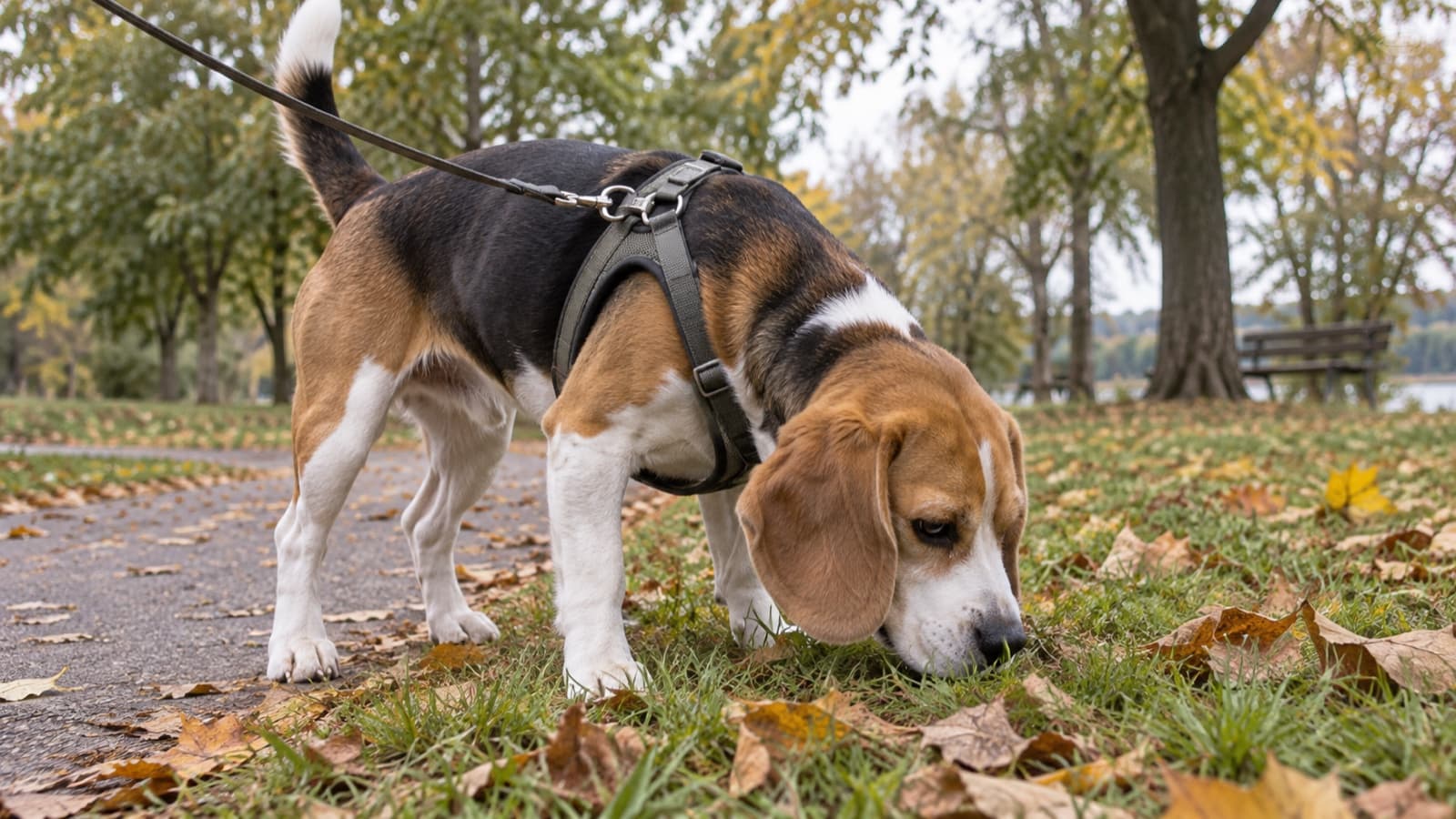
A long training line can help practice recall in a safe area while retaining a connection to the dog. Attach it to a well-fitting harness and learn to manage the spare length without wrapping it around hands or legs. Avoid roads, crowds and places where it may snag.
Begin with a manageable distance. A dog accelerating to the end of a long line can create a sudden force, so equipment choice and handling matter. A qualified reward-based trainer can demonstrate safe use if you are unfamiliar with it.
Fit and training complete the setup
Check harness or collar fit regularly while a puppy grows. Practice clipping on the leash and taking a few relaxed steps at home before adding busy surroundings. Reward walking near you rather than relying on repeated pulling or jerking.
Ask your veterinarian about appropriate outings during the puppy's vaccination course and about exercise for its age and health. Teach attention and recall, but use equipment and distance to prevent emergencies rather than expecting perfect obedience to resolve them. Check the attachment before opening a door or car, and carry a spare leash when practical.