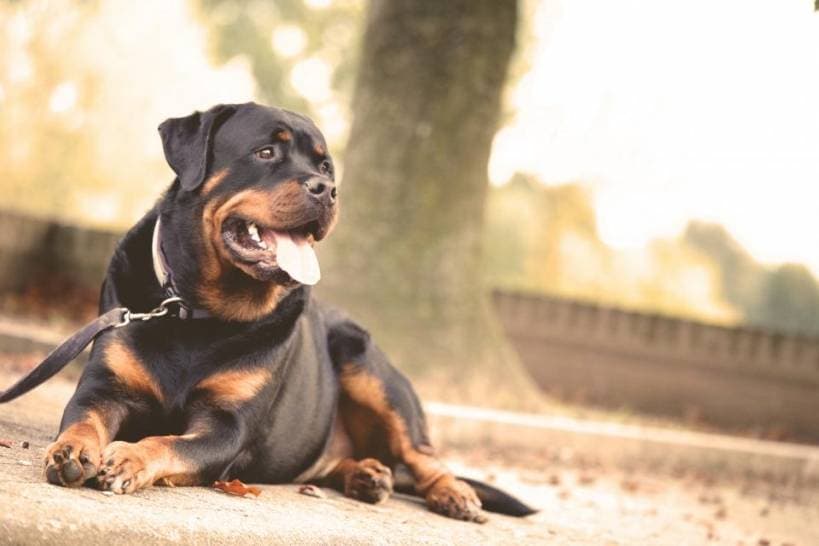
The Rottweiler is a strong working breed whose size makes everyday handling important. Its black coat with rust-colored markings is recognizable, but appearance does not reveal an individual's temperament. Neither loyalty nor safety can be guaranteed by a breed name.
Teach cooperation, not dominance
A Rottweiler does not need an owner to win a contest for leadership. Clear routines, rewards and sensible management teach the dog what works. The American Veterinary Society of Animal Behavior's training guidance supports humane, reward-based methods.
Start with a name response, loose-leash walking, recall and settling on a mat. Practice in easy surroundings before adding distractions. A growing puppy may look physically powerful before it has mature self-control, so keep expectations appropriate to its development.
Teach comfortable handling of paws, ears and mouth in brief sessions. If a dog growls or avoids contact, stop and consider fear or pain. Punishing warnings can make discomfort harder to recognize without resolving its cause.
Plan interactions carefully
Some Rottweilers are reserved with unfamiliar people. Manage arrivals with a barrier or separate room when needed, and do not require visitors to touch the dog. Reward calm behavior instead of encouraging suspicion or confrontation.
Children require active adult supervision around every dog. The claim that a Rottweiler will never hurt a child is unsafe. Protect the dog's bed and meals from disturbance, and separate children and pets whenever supervision is not possible.
Other animals should be introduced gradually with safe escape routes and separate resources. Familiarity in one setting does not guarantee compatibility in all circumstances. Ask a qualified professional for help if guarding, lunging or conflict develops.
Space, activity and companionship
A large yard does not replace daily activity or contact with the family. Provide walks, sniffing opportunities, appropriate play and rest. Secure fencing and reliable handling matter whether the dog lives in a rural property or a town home.
Select exercise for age, fitness and health rather than trying to produce maximum muscle or weight. Keep the dog at a healthy body condition and ask a veterinarian about lameness or reduced stamina. Size estimates in breed descriptions are not targets for every individual.
Food and preventive care
Feed a complete diet suitable for life stage and expected adult size during growth. An improvised mixture of porridge, meat and vitamins may be unbalanced. Measure portions and include training treats when reviewing the daily intake.
The American Kennel Club's Rottweiler profile includes breed-club health-testing recommendations. Request documented parental results before buying and discuss the dog's own preventive plan with a veterinarian. A pedigree cannot substitute for health screening.
Brush the coat, maintain teeth and nails, and check skin and ears regularly. Use parasite products according to veterinary advice and their labels; combining shampoos, drops and collars for extra certainty can be inappropriate. Provide suitable shelter and indoor comfort during extreme weather.