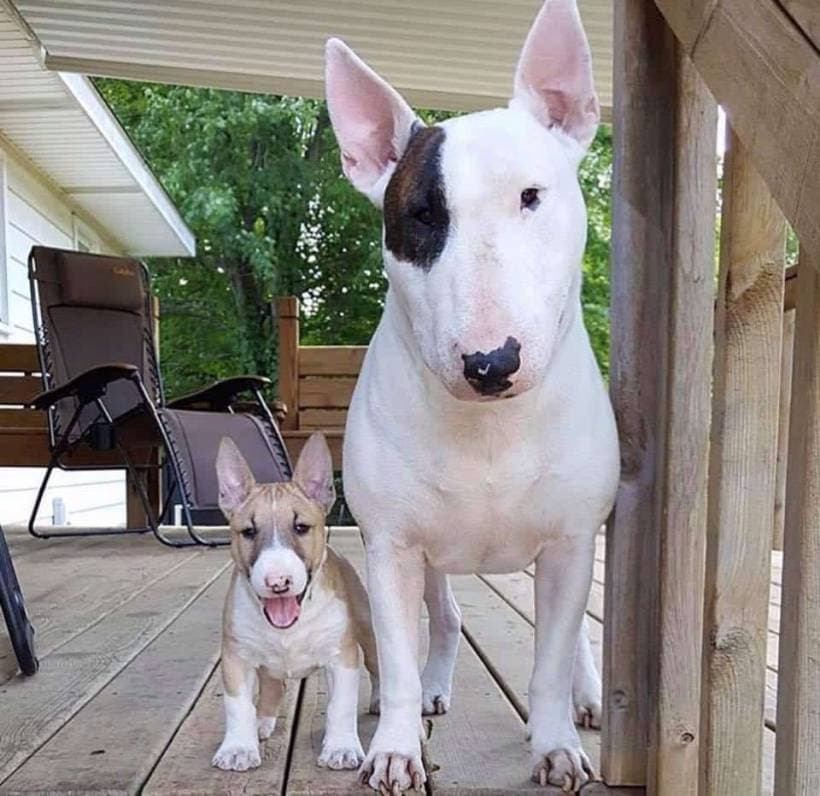
The Bull Terrier is a distinct breed recognized by its strong body and characteristic head. Its modern development is associated with the English breeder James Hinks, whose name is sometimes incorrectly given as Hanks. The AKC history of the Bull Terrier explains this background without making it a blueprint for the behavior of every present-day dog.
A lively, persistent companion can be enjoyable, but its needs should be considered realistically. Strength and enthusiasm make early teaching useful, while individual confidence, health and experience influence how a dog responds to the world. A breed description is a starting point for questions, not a promise of a particular personality.
A useful daily routine
Combine walks and sniffing with manageable games and short lessons. Teach coming when called, comfortable lead walking and settling on a mat before expecting those skills in busy places. Reward progress and reduce difficulty when the dog struggles. Repeating a cue more loudly or entering a physical contest is unlikely to clarify the task.
Provide suitable chewing opportunities and supervise toys that could be damaged or swallowed. Rotate activities to keep them interesting, but allow rest rather than trying to wear the dog out continuously. Puppies, older dogs and dogs with medical concerns need exercise suited to their condition. Sudden reluctance to play or move deserves attention.
People and other animals
Introduce visitors calmly and give the dog a place to retreat. Children need active supervision and should not climb on the dog or disturb meals and sleep. Gates and separate resting areas can make ordinary household life easier. A familiar dog can still become uncomfortable when crowded or handled roughly.
Compatibility with another dog cannot be guaranteed by choosing two females, two males or a mixed-sex pair. Assess the individuals, their histories and the setting, and seek qualified advice for difficult introductions. Some dogs need lasting separation from particular animals. Secure fencing and appropriate leads remain important wherever chasing or conflict could cause harm.
Health screening and observation
The Bull Terrier Club of America's health recommendations include checks for hearing, heart and kidney conditions, as well as patellar luxation. Ask for actual results tied to the dogs being discussed. BAER testing can assess hearing; a puppy appearing to respond to household sounds is not an equivalent test of both ears.
Review records with your veterinarian and ask about problems in close relatives. Screening provides useful information but cannot guarantee lifelong health. Keep up with routine examinations, parasite prevention, dental care and a complete diet suited to the dog's needs. Avoid arbitrary ingredient bans or supplements without a reason relevant to the individual.
Repeated tail chasing or tail biting should not automatically be dismissed as a funny habit. Veterinary advice can help identify medical or behavioral causes, especially when the behavior is new, intense or difficult to interrupt. Record when it occurs rather than deliberately encouraging it for a video.
Choosing thoughtfully
Meet the dog where possible and ask a breeder or rescue about handling, everyday routines and support after placement. Plan for secure transport, reliable care during absences and professional help if problems arise. A Bull Terrier needs patient teaching and realistic management throughout life, not an owner determined to prove authority.