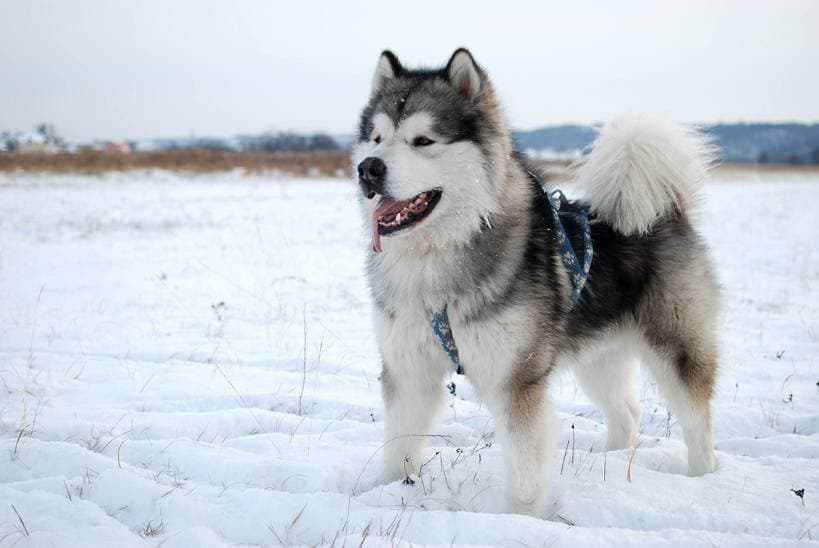
The Alaskan Malamute is a domestic dog, not a half-wolf. Its thick coat, upright ears and substantial build reflect a northern working background. The American Kennel Club describes the breed as a powerful sled dog developed for hauling loads. That history helps explain its strength, but it does not tell you everything about an individual dog's personality.
Plan for strength and stamina
An adult Malamute can be difficult to manage if pulling on the lead has become a habit. Start reward-based loose-lead practice early, using equipment that fits securely. Teach the dog to pause at doors and gates, and reward checking in with you before exciting situations become overwhelming.
Walks, sniffing and suitable activities should match age, fitness and weather. Growing puppies need opportunities to move and explore without being pushed through strenuous repetitive exercise. Organized pulling activities require appropriate equipment and guidance; attaching a heavy load to an unconditioned dog is not a safe shortcut to fitness.
A northern coat in everyday life
Regular brushing is important, with additional work when the dense undercoat sheds heavily. Check that the coat is comfortable beneath a harness and around areas prone to tangles. Plan time and space for grooming rather than expecting a quick weekly stroke to handle every season.
Warm weather calls for sensible changes to the routine. Exercise during cooler conditions, provide water and shade, and avoid hot surfaces. A thick coat does not make heat irrelevant. Unusual weakness, distress or difficulty breathing warrants urgent veterinary help rather than another attempt to finish the walk.
Living with other animals
Some Malamutes have a strong chase response, and compatibility with cats or small pets cannot be assumed. Use secure separation and carefully managed introductions. Even a dog that knows one household cat may react differently to an unfamiliar animal running outdoors.
Supervise children and dogs together and provide a quiet place to rest. Large, friendly movements can knock someone over without any aggressive intent. No dog should be expected to supervise children, and children should not climb on or disturb a resting animal.
Training without dominance myths
Clear routines, patience and useful rewards are more effective foundations than attempts to establish yourself as an "alpha." Practice coming when called, comfortable handling and settling indoors in manageable steps. Build time alone gradually and investigate persistent howling or destruction instead of assuming bad character.
Malamutes may vocalize in different ways; no breed label guarantees silence or an instant response to a stop cue. Before choosing one, meet adult dogs, discuss health screening with a responsible breeder or rescue, and consider how strength, shedding and companionship needs fit your daily life.