
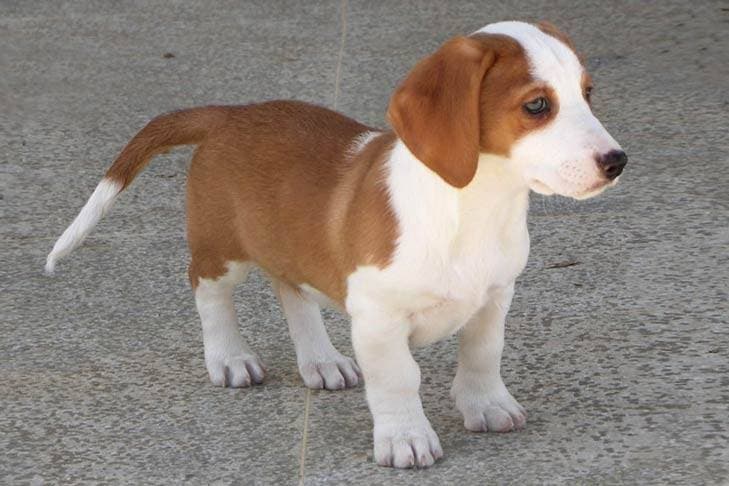
The Drever is a Swedish scenthound with a long body, short legs and a working dog's determination. The American Kennel Club's Drever profile describes a breed developed for tracking game. Its compact height should not be confused with a low need for activity or an automatic preference for life on the sofa.
A nose with a purpose
A Drever may become deeply interested in a trail and less responsive to familiar cues once it is following a scent. Plan walks with that tendency in mind. Use secure equipment and check fences and gates carefully. Letting a dog chase wildlife is neither necessary enrichment nor a reliable way to provide safe exercise.
Sniffing walks and simple scent searches offer useful outlets. Hide a toy or a few pieces of the dog's food in a manageable area and let it work at its own pace. Increase difficulty gradually, and separate animals if food or toys create tension.
Training that makes sense
Reward the behavior you want, including checking in during walks, returning when called and resting quietly. Practice recall first in a secure, low-distraction setting. A dog that responds in the kitchen may still need a lead near an interesting trail.
Keep sessions short and use rewards your individual dog values. A working hound benefits from clear routines, but harsh corrections can damage confidence and do not remove its interest in scent. Teach an alternative behavior and arrange the surroundings so the dog has a reasonable chance to succeed.
Home life and companionship
Some Drevers are sociable and affectionate, but no breed description guarantees that every individual will enjoy every child or unfamiliar dog. Introduce new companions gradually and supervise interactions. Provide a retreat where the dog can sleep without being disturbed.
Ask about vocal behavior before deciding whether this breed fits your building and neighbors. Hounds may use their voices readily, and being small enough for an apartment does not answer the question of noise or time alone. Build short absences carefully and arrange help when the working day exceeds what your dog can manage comfortably.
Routine care
The short coat usually needs straightforward regular brushing, with checks after walks for ticks, grass seeds and skin irritation. Look at the ears, paws and nails during calm handling. Persistent odor, redness or head shaking is a reason to consult the veterinary team rather than repeatedly cleaning deeper into the ear.
Feed an appropriate complete diet and adjust portions to body condition. Do not add calcium or vitamin supplements simply because the dog is active; unnecessary supplements can unbalance an otherwise suitable diet. Before acquiring a puppy, ask about health records, parental screening and early social experiences.
A Drever suits a household that enjoys working with a dog's natural interests. Secure exploration, patient training and enough companionship matter more than the size of the garden or a promise that the breed is easy in every situation.


