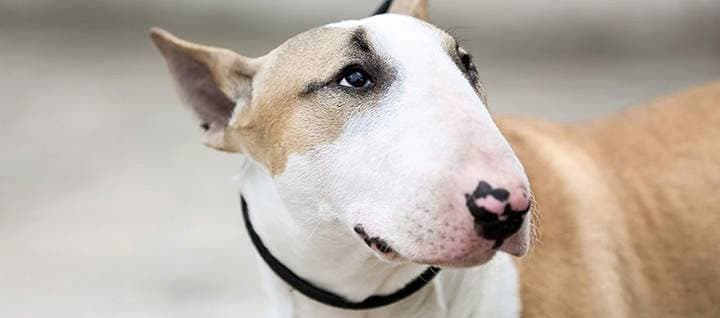
A Bull Terrier's strong jaws do not make its teeth immune to disease or injury. Dental care should focus on comfort and function throughout the dog’s life. A powerful appearance, a show-standard bite or a willingness to chew hard objects cannot prove that the mouth is healthy.
Teeth and bite development
Adult dogs usually have forty-two permanent teeth, while puppies have a smaller set of temporary teeth. During growth, a veterinarian should check that permanent teeth are erupting appropriately and that retained baby teeth or an abnormal bite are not causing injury.
A scissor bite is a breed-standard feature, but the important health question is whether teeth contact soft tissue painfully or interfere with eating. Toys, bones and supplements cannot reliably correct an abnormal jaw relationship. Seek advice early if a tooth seems misplaced or the puppy resists having its mouth touched.
Build a brushing routine
VCA's toothbrushing guidance recommends gradual introduction with products suitable for dogs. Begin when the dog is relaxed: briefly touch the lips, reward cooperation and progress to a small area of the outer tooth surfaces. Use a soft brush and dog toothpaste. Human toothpaste is unsuitable, and some products contain ingredients dangerous to dogs.
Aim for a regular routine that the dog can tolerate comfortably rather than a forceful cleaning session after weeks of neglect. If the gums are painful, bleeding or the dog suddenly resists, arrange an examination before continuing. Never hold the jaws shut or pry the mouth open to prove control.
Keep supplies in one convenient place and let household members follow the same gentle steps. A few successful seconds can be a useful beginning. Build duration gradually as the dog learns that handling is predictable and rewarding.
Choose chews carefully
Beef bones are not essential for tooth development and can fracture teeth, splinter or cause other injuries. Very hard chews, antlers and unsuitable objects also carry risks. Sticks may splinter, while bottles and damaged toys can release sharp or swallowable pieces.
Ask your veterinarian about products appropriate to the dog's size, dental condition and chewing style. The Veterinary Oral Health Council lists accepted products with evidence for specified plaque or tartar claims. Acceptance does not make a product suitable for every dog or replace supervision and brushing.
Remove a chew when it becomes small enough to swallow or develops sharp edges. Count edible chews within daily food intake. During tug, keep play controlled, avoid lifting the dog by its mouth and stop if it appears uncomfortable.
Food and professional assessment
A complete diet appropriate to life stage should not routinely need added mineral or vitamin mixtures. Extra calcium does not repair a bite problem and can be harmful when it unbalances nutrition. Discuss any supplement with the veterinary team instead of treating it as a requirement for a strong jaw.
Bad breath, drooling, broken teeth, facial swelling or changes in chewing deserve assessment. Dogs may continue eating despite dental pain. Professional dental treatment may be needed even when brushing is regular, especially for disease below the gumline.
Arrange routine oral checks and follow the veterinarian's plan for further investigation or cleaning. The goal is a comfortable mouth and useful teeth, not simply a white smile or success in the show ring.