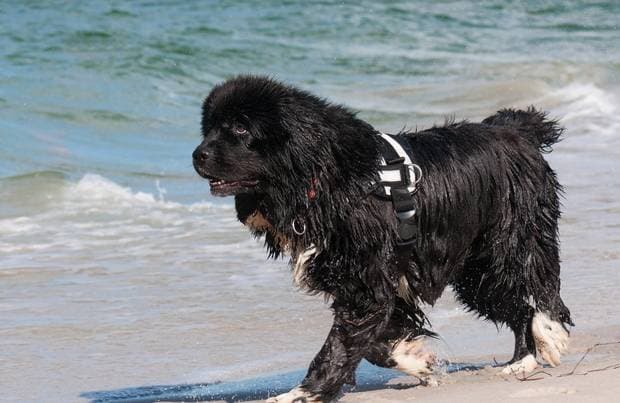
The Newfoundland is a large working dog associated with the Canadian island whose name it carries. Many are affectionate, steady companions, but no breed is suitable for every household. Their strength, coat and care costs deserve as much thought as their appealing reputation for gentleness.
A working history, with some uncertainty
Newfoundlands became known for work around fishing communities and for their ability in water. Accounts of their ancestry include several theories about local dogs and animals brought by European visitors. These should not be turned into a precise family tree without evidence, or used to claim a proven direct descent from Tibetan Mastiffs.
The breed's history is connected with the island's changing communities and maritime life.
Black-and-white Newfoundlands are often called Landseers, associated with the painter Edwin Landseer. Registry terminology matters: the FCI also recognizes the Landseer European Continental Type as a separate breed. A color description and a separate registry breed should not be treated as interchangeable in every country.
Size and temperament
The AKC Newfoundland profile describes a substantial working companion. An adult's size makes everyday manners essential, even when the dog is friendly. A happy greeting, a sudden turn or a pull toward water can knock a person off balance. Bigger is not automatically healthier, a better swimmer or a more capable protector.
Meet adult dogs and ask how they behave around visitors, children and other animals. Supervise contact with children and provide a quiet resting place where the dog is left undisturbed. Gentleness is a valued breed characteristic, but it is not permission to climb on a dog, disturb its food or leave it responsible for a child.
Begin reward-based training in puppyhood. Teach recall, loose-leash walking, calm greetings and comfortable examination of paws, ears and mouth. Early learning does not require demanding physical exercise; waiting until the dog is enormous makes ordinary handling more difficult for everyone.
Water ability needs training and safety
The Newfoundland Club of America's water-work information describes organized exercises that develop and demonstrate skills. A breed reputation for rescue does not make an untrained pet a lifeguard. Even a dog that enjoys swimming needs gradual instruction, conditioning and a capable handler.
Introduce water gently in a safe location with an easy exit, and never throw a dog in. Use appropriate flotation equipment and supervision, check conditions and avoid dangerous currents, contaminated water and exhaustion. Do not create a pretend emergency by putting a child or inexperienced swimmer within reach of an excited dog.
Swimming may be an enjoyable activity for a suitable individual, but it is not automatically safe rehabilitation for every joint problem. Ask a veterinarian before using it as treatment or beginning strenuous work. Some dogs need a controlled rehabilitation setting rather than open-water exercise.
Growth, movement and health screening
A growing Newfoundland needs appropriate movement, rest and a complete diet suitable for large-breed growth. Restricting all movement does not prevent hip dysplasia. Avoid overfeeding and uncontrolled high-impact activity, and discuss an individual exercise plan with your veterinarian. Keep the puppy lean rather than trying to maximize its weight.
The Newfoundland Club of America's health recommendations include screening hips, elbows, heart and cystinuria status in breeding dogs. Request the actual results and ask what they mean. A screening program reduces uncertainty but cannot guarantee that a puppy will never develop illness.
Learn the signs of urgent problems as part of routine veterinary discussions. Repeated unproductive retching with a swollen abdomen, collapse or difficulty breathing requires immediate veterinary attention. Keep transport arrangements and an emergency clinic's contact details accessible, particularly when caring for a dog too heavy to lift alone.
Coat care and life at home
Work through the dense coat regularly, checking behind the ears, around the legs and other areas prone to tangles. Shedding periods may require more frequent attention. After bathing or swimming, dry the coat thoroughly and inspect the skin. Ask a groomer to demonstrate a manageable routine rather than allowing mats to build up.
Provide cool resting places and adjust exercise during warm weather. A thick coat and working background do not protect a dog from overheating. Plan for wet fur, drool, muddy paws and bedding that needs regular washing, along with nail care and dental attention.
Before bringing a Newfoundland home, check your vehicle, floor space and ability to manage stairs as the dog ages. Budget for food, grooming and veterinary care, and identify someone who can help during travel or illness. A well-chosen Newfoundland can be a devoted companion when the household is prepared for the practical work behind that relationship.