The Doberman Pinscher, Giant Schnauzer and Pomeranian all have German connections, but their size, coat care and daily needs differ considerably. A breed's working history can help explain its tendencies; it cannot promise how an individual dog will behave with strangers, children or other animals.
Doberman Pinscher
The Doberman developed in Germany in the late nineteenth century and takes its name from Louis Dobermann. Later breeders helped establish the recognizable breed. Describing all Dobermans as unstable or likely to bite their owners is inaccurate and unhelpful.
The American Kennel Club describes the Doberman Pinscher as an athletic working dog. Its short coat needs relatively straightforward grooming, but its exercise and training needs are substantial. Walks, scent games and structured activities should be combined with opportunities to rest near the family.
Choose a breeder who discusses inherited conditions openly and provides relevant parental health results. Heart disease is an especially important topic to discuss with a veterinarian when considering this breed. A puppy's appearance or a champion pedigree cannot substitute for health screening.
Color terminology and permitted colors vary between registries. For buyers seeking a registered dog, the applicable breed standard is the right reference; an unusual color should never be presented as proof of better health or quality.
Giant Schnauzer
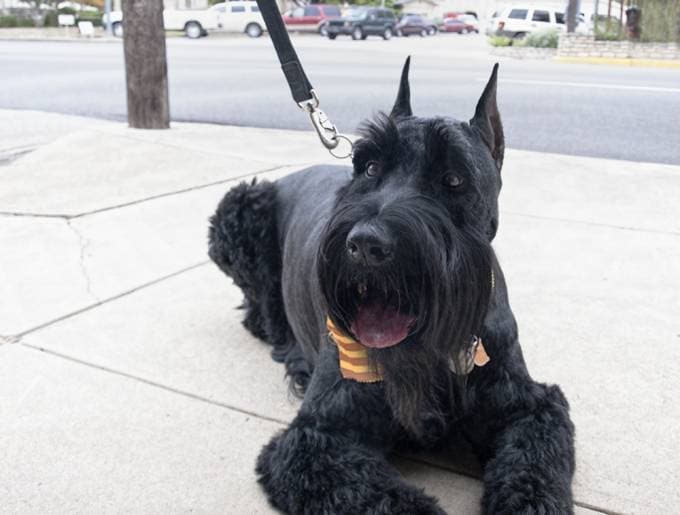
The Giant Schnauzer developed as a larger working relative of the Standard Schnauzer. Its history includes livestock work and guarding. The wiry coat, beard and prominent eyebrows give it a distinctive appearance, but they also require regular maintenance.
A Giant needs more than a large yard. Many enjoy active training, searching games and a task shared with their handler. Teach loose-leash walking while the dog is young enough to handle comfortably, and reward calm behavior around visitors instead of encouraging suspicion.
The beard can collect food and water, while tangles can develop around the legs and body. Discuss brushing, trimming and any hand-stripping requirements with a groomer familiar with the coat. Miniature, Standard and Giant Schnauzers are separate breeds, not interchangeable labels for one dog's growth stages.
Pomeranian
The Pomeranian is a small companion belonging to the spitz family. Its upright ears, plumed tail and abundant double coat reflect that heritage. It is not correct to treat every German Spitz variety as a Pomeranian or to assume that their size standards are the same.
Small size does not remove the need for training and activity. Pomeranians benefit from short walks, play and gentle practice with everyday handling. Their coat sheds and needs thorough brushing; the claim that they rarely shed can leave owners unprepared for grooming.
Protect a small dog from falls and rough handling. Children should interact at floor level under adult supervision, and a dog should be allowed to step away. Barking deserves attention to its cause rather than punishment or an assumption that all small dogs are naturally difficult.
Which would fit your home?
Compare an ordinary weekday for each dog. Consider who will provide exercise, how long the dog must be alone, whether visitors arrive frequently and what grooming you can afford. An energetic large working dog and a tiny coated companion create very different practical demands.
Meet adult dogs where possible and ask about behavior in a home, not only in a show ring. A rescue's observations or a responsible breeder's detailed knowledge of a litter can help identify a suitable individual. None of these breeds should be selected solely for looks or a promise of protection.
All three need clear routines, reward-based teaching and veterinary care tailored to their age and health. If a dog develops sudden fear, irritability or reluctance to exercise, seek an assessment rather than attributing the change to breed character. Pain and illness can alter behavior in any dog.