
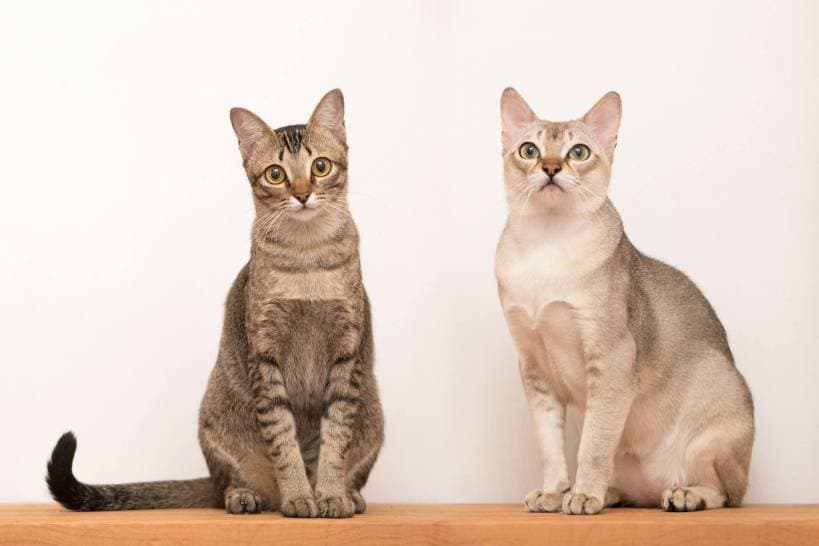
The Singapura is a small domestic cat with large eyes, prominent ears and a short, finely ticked coat. Its name is associated with Singapore. Small size is part of its appeal, but choosing a companion should also involve temperament, health and the practical care the individual needs.
Appearance and size
Singapuras are among the smallest recognized cat breeds, but adults vary in weight and build. A fixed upper weight of 2.3 kilograms does not describe every healthy individual. Assess body condition with a veterinarian rather than trying to keep a cat unusually light to fit a record or an advertisement.
The characteristic coat is sepia agouti: hairs have alternating bands of color, creating a warm, ticked appearance. The underside is lighter. Eyes can be green, hazel or yellow rather than exclusively deep green. A random-bred cat from Singapore is not automatically a pedigreed Singapura simply because it comes from the same country.
Personality and home life
Many Singapuras are curious, energetic and interested in household activity. They may follow familiar people and enjoy interactive play, although no breed promises a cat that likes every visitor or tolerates all handling. Let the cat approach and give it space to withdraw when it wants a break.
Provide scratching posts, secure climbing furniture and short play sessions throughout the day. Lightweight toys can be useful, but remove strings and small detachable pieces after supervised play. Children should learn to interact with toys and gentle touch rather than picking up or chasing a small cat.
Introduce other pets gradually, beginning with separate rooms and controlled exposure. Individual compatibility matters more than a claim that the breed gets along with everything. Distribute food, water, beds and litter trays so each animal can reach essentials without conflict.
Grooming, food and comfort
The short coat usually needs only gentle brushing to remove loose hair and check the skin. Inspect nails and ears regularly, and introduce toothbrushing in small steps. Persistent discharge, scratching or sensitivity deserves a veterinary check rather than extra cleaning alone.
Feed a complete diet suitable for the cat's life stage. Seafood is not a special dietary requirement, and fish alone is not a balanced menu. Measure portions, provide fresh water and monitor weight. Offer warm, comfortable resting spots while allowing the cat to move away from heat sources.
Before choosing a kitten or adult
Ask for veterinary records, relevant family health information and any recommended inherited-disease screening. Have an independent veterinarian explain what the results do and do not show. Avoid selecting a kitten solely for extreme smallness or assuming a high price guarantees good breeding.
Check current availability and any transport requirements directly rather than relying on old price ranges or claims of a universal export ban. A responsible breeder or rescue should discuss the cat's habits honestly and help you plan a calm transition into its new home.