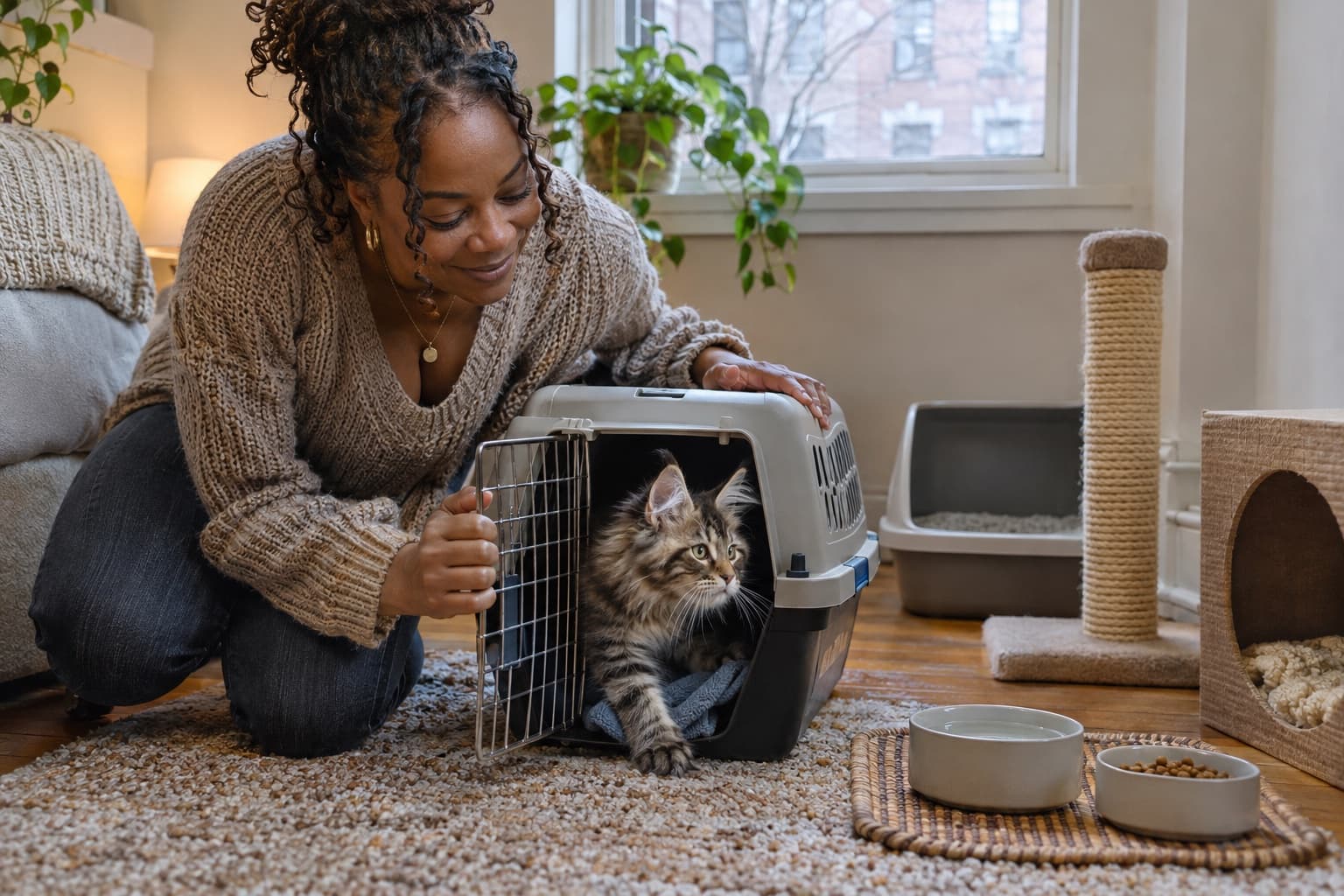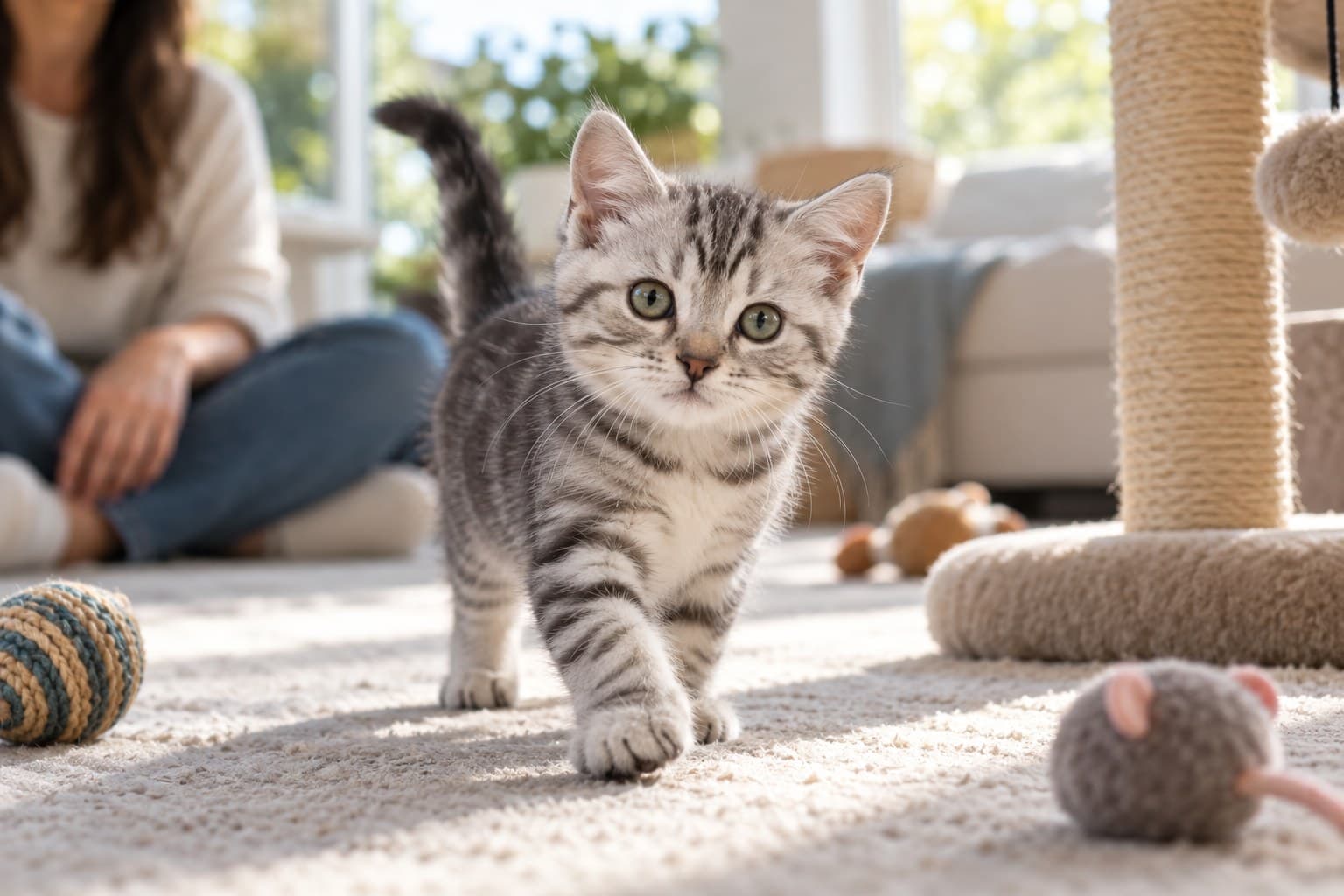

Understanding a cat begins with observation, not a fixed translation for every meow or tail movement. One cat may enjoy sitting on a lap, while another prefers a nearby chair. A kitten that wants to explore is not rejecting its owner. Let the animal choose whether to approach and how long to remain in contact.
Let the cat guide contact
Offer a quiet opportunity to come closer, then try a brief stroke in an area the cat usually enjoys. Pause and see whether it stays relaxed or asks for more. Turning away, becoming tense, flicking the tail or attempting to leave are reasons to stop. Do not hold the cat in place to make it accept affection.
Cats Protection's guidance on exposed bellies explains that this posture is not automatically an invitation to rub the abdomen. The same caution applies to combing: a cat lying on its back may feel comfortable without wanting grooming there. Choose handling based on the individual response, not the assumption that all cats enjoy the same touch.
Look at the whole situation
Ears, posture, movement and facial tension provide clues together. Pupil size also changes with light, so it cannot be interpreted in isolation. A cat turning its back may simply be looking elsewhere or settling into a comfortable position; it does not prove one precise emotional state.
Purring can accompany relaxation but is not proof that a cat is free from pain or stress. Watch what else is happening. If the cat is hiding, eating less or moving differently, seek advice even if it still purrs during contact. Familiar behavior can occur alongside an emerging problem.
Check resources without guessing
Vocalization or following may relate to food, play, company or another need, but some cats remain quiet even when something is wrong. Keep a reliable routine for meals, fresh water and clean litter boxes instead of waiting to be asked. In multi-cat homes, check that each animal can reach resources without being blocked.
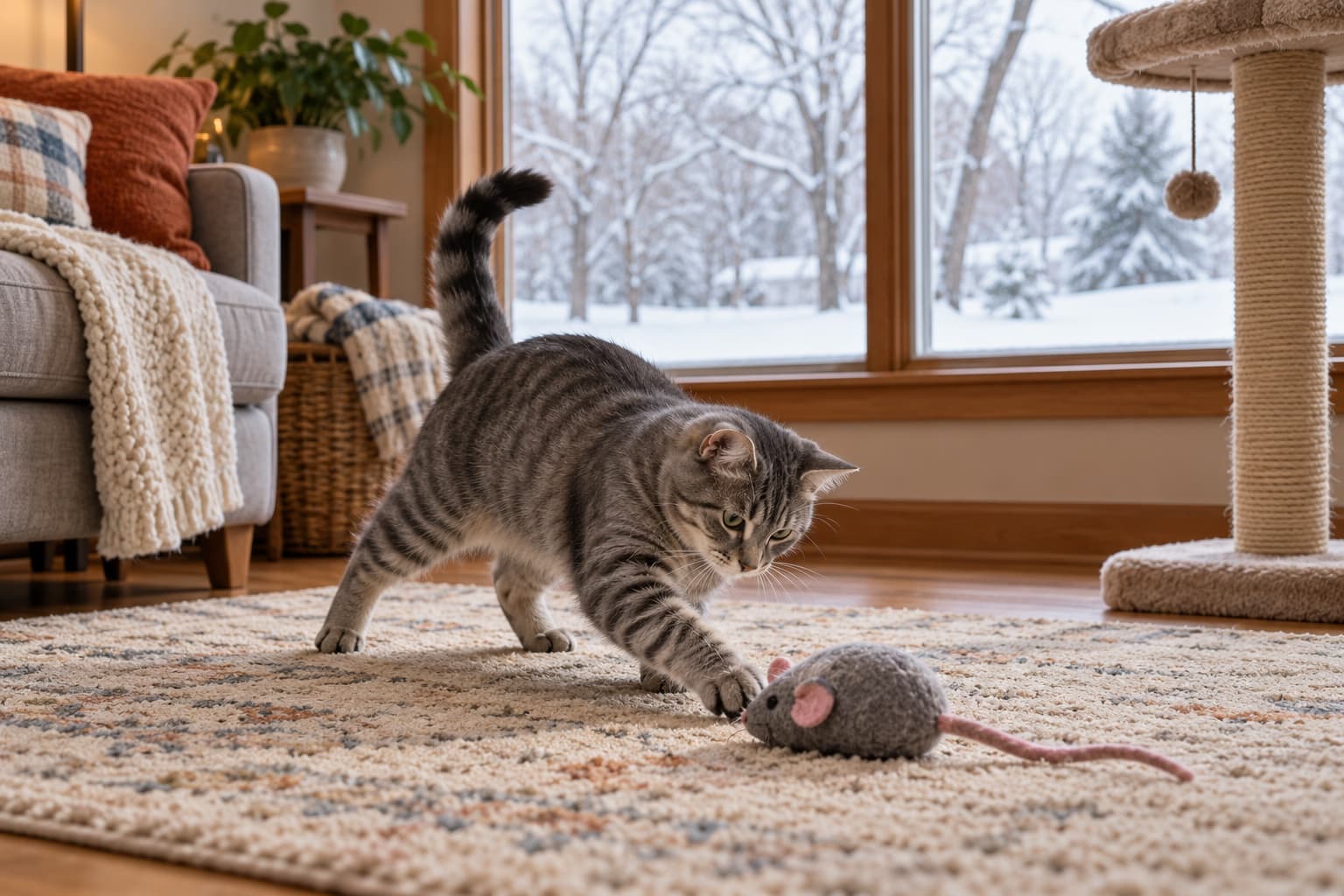
Provide places to hide, climb, scratch and rest. Offer short play sessions with appropriate toys and allow the cat to disengage. Keeping a brief note of activity and preferences can help you distinguish normal patterns from a new change.
Respond to changes
Sudden avoidance of touch, unusual calling, restlessness or withdrawal deserves attention. Pain, illness and environmental stress can change social behavior. Tell your veterinarian when it began and what else changed, using a video if it can be recorded without provoking distress. Understanding improves when you combine knowledge of your cat with respect for uncertainty, rather than assuming every action has an obvious meaning.