A British Shorthair kitten's round face and dense coat can be irresistible, but a photograph is only the beginning of a responsible purchase. Focus on the kitten's welfare, the breeder's transparency and the care you can provide. No marketplace listing or cattery name is a guarantee that an animal will remain healthy.
Understand the breed without judging too early
CFA's British Shorthair standard describes a compact, well-balanced cat with a broad chest, rounded head and dense short coat. The breed develops slowly; CFA notes that full maturity can take three to five years. A young kitten will not necessarily have the proportions or coat of a finished adult.
Color and eye appearance can change during development, and accepted varieties differ between registries. Ask which standard the breeder follows. A kitten should not be bred merely to complete its physical development, and females do not need a first litter to become properly mature.
Avoid treating cheek size, a particular shade or a promise of exceptional weight as the main measure of quality. Comfortable movement, breathing and normal everyday behavior matter more. Pet suitability and show prospects are different questions, and no seller can guarantee every detail of adult appearance.
Meet the breeder and the kitten
Ask where the kitten was born and raised, who its parents are and how it has been introduced to ordinary household experiences. Arrange to see it in a familiar environment and, when possible, with its mother. A relaxed conversation should give you time to ask questions without pressure to pay immediately.
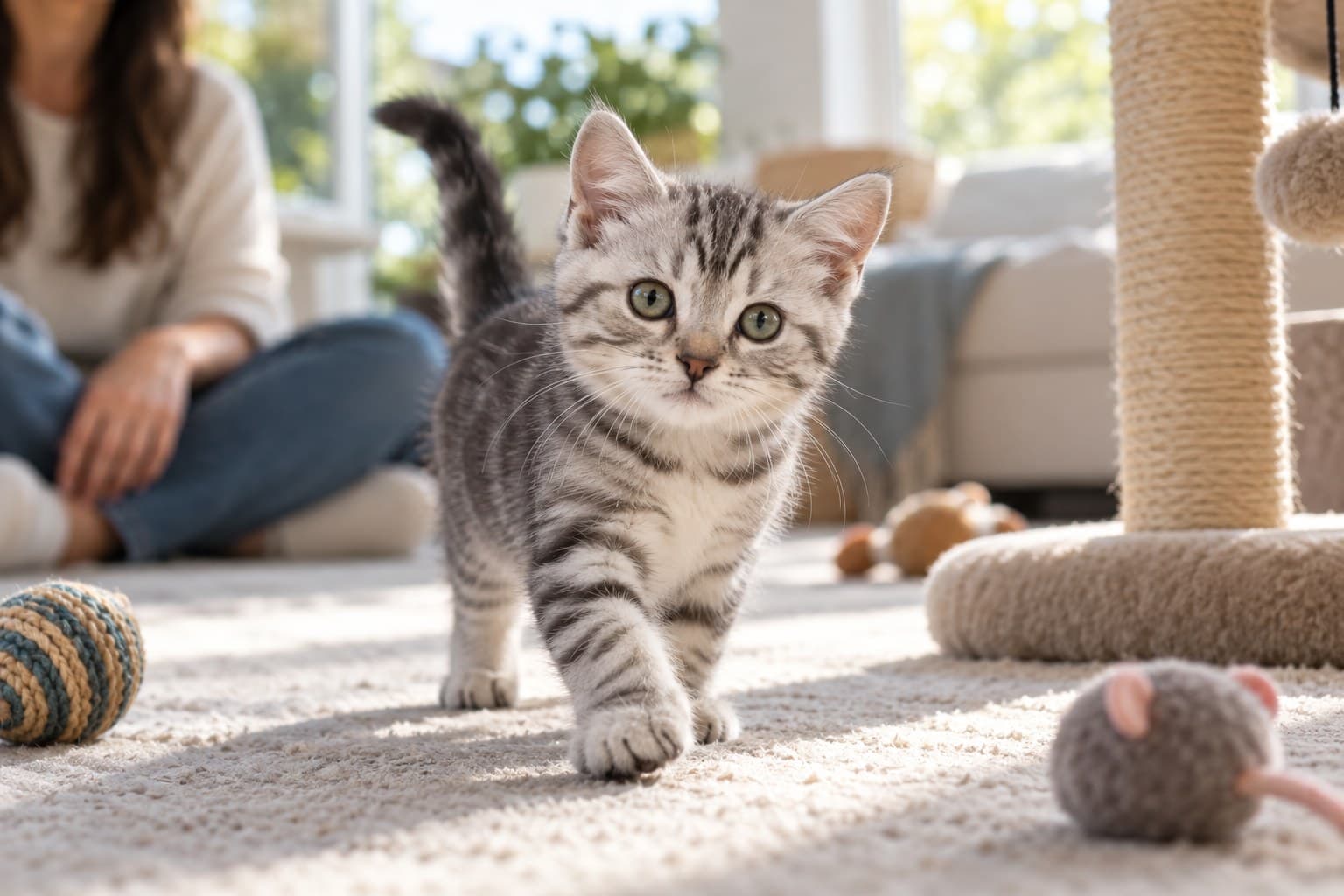
Observe the kitten walking, playing and resting. It should not need to be frightened or restrained for a temperament test. Ask about any sneezing, eye discharge, diarrhea or treatment within the litter. A kitten that appears well still needs documented veterinary care and an examination by your own vet after purchase.
If the breeder cannot show the mother, ask for a clear explanation and supporting information. A live video call can be useful during an initial enquiry, but a collection in an unrelated car park does not show how the kittens were raised. Compare names, photographs and records for consistency.
Ask specific health questions
Request the kitten's examination and vaccination records, parasite-treatment history and microchip information where relevant. Check which appointments or treatments remain due. A broad statement that the parents are checked every year does not tell you whether relevant inherited conditions have been considered.
Cornell's information on polycystic kidney disease notes that the condition can occur in British Shorthairs as well as Persians. Ask what screening has been performed and have your veterinarian explain the results and any limits. A negative result for one condition does not rule out every other health problem.
Do not attempt to diagnose a bite problem by forcing the mouth open or to assess a tail by bending it. Ask the breeder about anything unusual and arrange professional examination. A written contract should explain what happens if your veterinarian identifies a concern soon after collection.
Read the paperwork before paying
Confirm the registry, the parents' registered names and the process for transferring the kitten's registration. Get promised documents and delivery dates in writing. There should be a clear distinction between proof of ancestry, veterinary records and any contractual health guarantee.
Review the total price, deposit terms, collection date, neutering conditions and any restrictions on breeding or showing. Make sure you know whom to contact if plans change. Save the advertisement and correspondence, and do not send additional money merely because a seller introduces unexpected delivery or paperwork charges.
A responsible breeder should also ask about your household and be willing to discuss whether a particular kitten suits it. Consider walking away from claims of perfect health, guaranteed rare color or urgent scarcity that cannot be supported.
Prepare for daily life together
Ask for the kitten's current food, litter and routine so the move does not involve every possible change at once. Set up a quiet room with hiding places, a scratching surface and separate areas for eating and toileting. Use a secure carrier and let the kitten explore gradually.
British Shorthairs still need play, grooming and weight monitoring. Introduce combing and nail care in short, pleasant sessions. Supervise children and let the kitten choose when to approach. A thoughtful purchase process and a manageable care routine are more valuable than promises that any breeder can supply a flawless pet.