Domestic cats share their homes with people while retaining many behaviors useful to small predators. Their ancestry, coat patterns and daily activity are fascinating, but not every attractive explanation is supported by evidence.
Where domestic cats came from
The domestic cat descends from the African wildcat lineage. Researchers continue to investigate how relationships with people developed and how cats spread between regions. Archaeological association with humans is not always the same as evidence that an animal belonged to the ancestry of modern domestic cats.
A 2025 ancient-genome study in Science analyzed 87 ancient and modern cat genomes. It suggested that domestic cats entered Europe around 2,000 years ago, probably from North Africa, rather than spreading there with Neolithic farmers. This refines the history of their dispersal; it does not settle every question about the earliest stages of domestication.
Modern breeds are a different part of the story. Selective breeding has emphasized particular coats, shapes and other traits. A breed's name or resemblance to an ancient image is not sufficient proof of a direct, unchanged line from that place or period.
Coat colors have genetic explanations
Spots and stripes can influence how visible an animal is against a background, but a claim about a particular pattern's evolutionary purpose needs evidence. Tortoiseshell coloring should not be explained simply as a special disguise created for mothers protecting kittens.
Research reported by Stanford Medicine in 2025 identified a mutation associated with sex-linked orange coloration. The connection to the X chromosome helps explain why orange cats are often male and tortoiseshell cats are usually female. Patterns involving orange and non-orange patches reflect genetics and gene activity, rather than a cat's role as a parent.
Color is also an unreliable shortcut to personality. A coat pattern does not tell you whether a cat will enjoy handling, tolerate another pet or behave confidently in a new home. Observe the individual and its experiences instead of treating appearance as a behavioral diagnosis.
Be cautious with stories about anatomy
The relatively sparse fur between a cat's eyes and ears is not established proof of a false-eye defense that fools predators while the cat sleeps. Normal variation in fur density should be distinguished from new hair loss, irritation or skin disease. Ask a veterinarian about sudden or uneven changes.
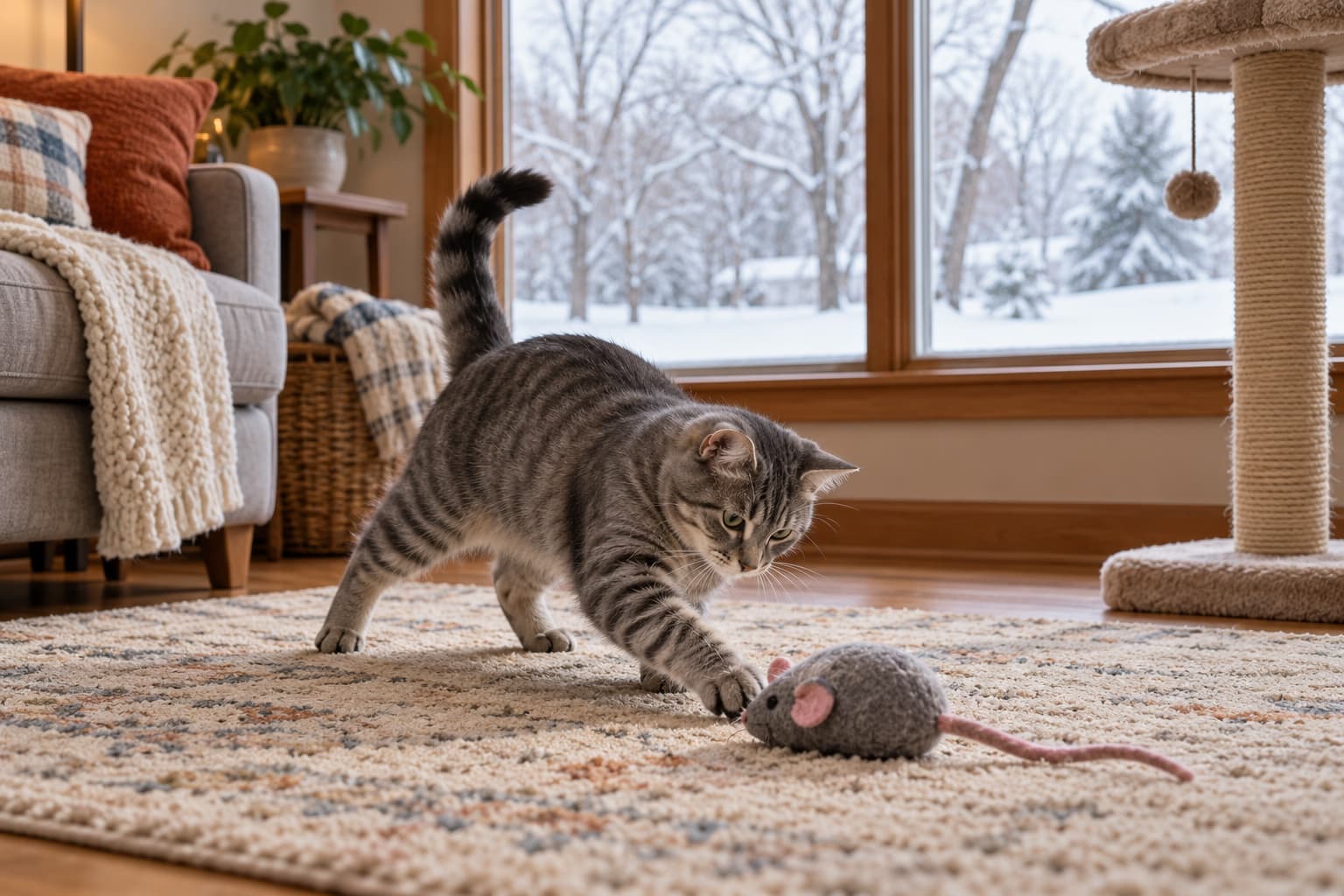
Cats are not simply animals that sleep all day and hunt only at night. Activity varies with environment, opportunity and routine. Indoor cats still need play, resting places and the ability to observe their surroundings, even when meals arrive in a bowl.
Translate biology into sensible care
Coat length alone cannot tell you which temperatures a cat can safely tolerate. Provide comfortable shelter and adjust care to the individual. Longhaired cats need regular grooming, while cats with little hair may need additional protection from cold and sun. Seek professional advice before clipping a coat or applying a skin product.
Understanding ancestry can make familiar behavior more interesting, but it should not be used to justify exposing a pet to unnecessary hazards. Offer safe climbing, scratching and hunting-style play at home. Curiosity about evolution is most useful when it leads to careful observation and better care.