Housetraining depends on giving a puppy frequent opportunities to succeed and preventing avoidable accidents. Young puppies have limited bladder and bowel control, so a fixed rule such as five trips a day will not suit every age. Expect the routine to change as the puppy grows and learns.
Choose a suitable toilet place
Ask your veterinarian about safe outdoor access while the vaccination course is underway, taking local disease risk into account. A private clean area may offer different risks from a heavily used dog park. Do not assume that every shared patch of ground is equally suitable for a young puppy.
Take the puppy to a consistent area after waking, eating, drinking or energetic play, and whenever you see sniffing, circling or restlessness. Keep the trip calm and allow time to investigate. Stay nearby so you can reward the puppy immediately after it finishes, rather than waiting until you return indoors.
VCA's housetraining guidance recommends supervision, predictable opportunities and rewards. Use a tiny suitable treat or another reward the puppy enjoys; candy is not appropriate. If you add a toilet cue, say it quietly as the puppy is about to go, instead of repeating it continuously while nothing happens.
Supervise and make a workable schedule
Watch the puppy closely while it is loose indoors. Gates and a safe puppy area can help when you cannot follow every movement. A comfortably introduced crate may be useful for some puppies, but it is not a way to make a young animal hold on for an entire workday. Arrange help and toilet breaks that match the puppy's needs.
Keep a brief record of meals, naps, successful trips and accidents. If accidents regularly happen shortly after play, add a trip at that point. Respond to the pattern rather than waiting for the puppy to develop an unmistakable signal. Some puppies initially give very subtle signs.
Provide access to drinking water and discuss any special overnight arrangement with your veterinarian. Do not withhold water to make housetraining easier. Increased thirst or unusually frequent urination may be a health concern that needs assessment.
Handle mistakes calmly
If you notice the puppy starting indoors, guide it outside calmly when possible and reward completion there. If you discover an accident later, simply clean it with an appropriate enzymatic product according to the label. Keep the puppy away until the area is safe to use again.
Scolding, rubbing the nose in waste or frightening the puppy does not explain where to toilet. It may encourage hiding or make toileting near people worrying. Review supervision and timing instead. A setback is information about the routine, not proof that the puppy is being spiteful.
Moving from an indoor toilet area
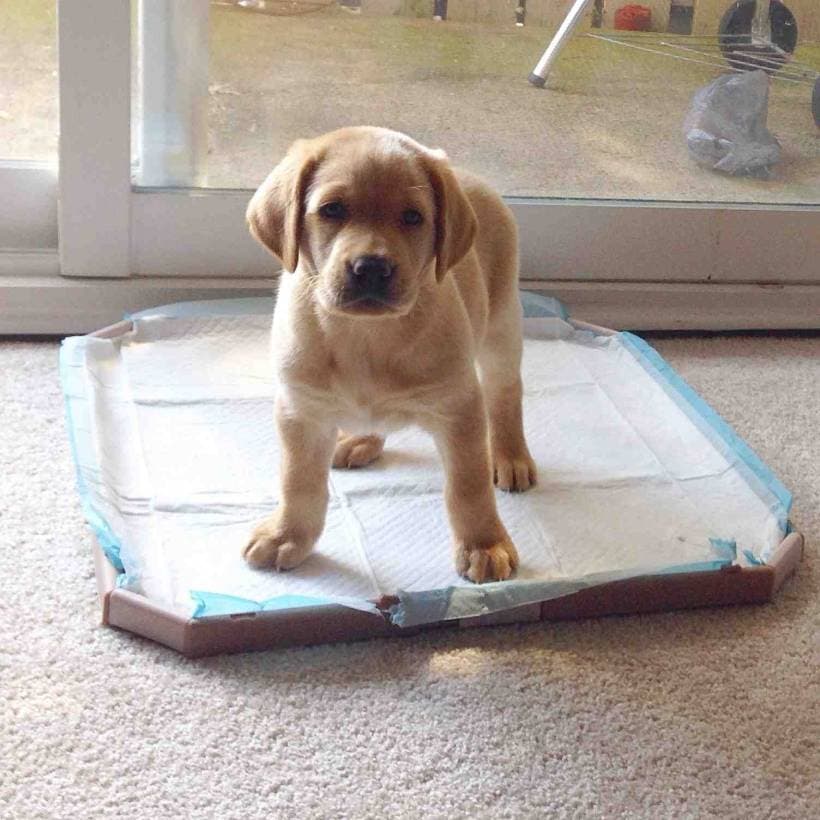
Pads or an indoor toilet may be useful in some homes, but they are not a compulsory first stage. If you use them, make their location clear and reward the chosen surface. When moving toward outdoor toileting, increase well-timed outdoor opportunities and reduce indoor options gradually as the puppy succeeds.
Allow extra support during travel, illness or changes of home. Seek veterinary advice for straining, pain, blood, diarrhea, sudden regression or lack of progress. Repeated attempts to urinate with little or no urine require urgent attention. A comfortable, healthy puppy is better able to learn a reliable routine.