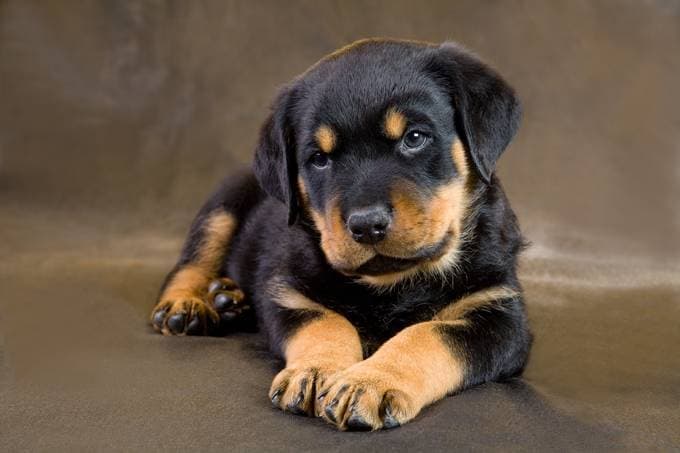
The Rottweiler is a substantial working dog associated with cattle-driving and guarding work around the German town of Rottweil. Its strength deserves respect, but descriptions of an inevitable warrior or a dog that always fights to the death are misleading. A companion should be assessed as an individual.
History and appearance
The AKC Rottweiler profile outlines the breed's working background. Accounts often connect its ancestry with Roman drover dogs, but a simple, fully documented recipe of ancient fighting dogs and modern breeds should not be presented as established fact.
The recognized appearance includes a black coat with clearly defined rust or mahogany markings, a strong body and a broad head. Grey and red are not alternative standard base colors. Adult size varies, and males are generally larger, but sex alone does not establish aggression or suitability for family life.
Choose comfortable movement and functional structure over exaggerated bulk. Registration, a large head or an impressive pedigree cannot prove that a dog will be healthy, stable or easy to manage. Ask to see relevant health and temperament information.
Training begins with ordinary life
Teach attention, recall, loose-leash walking and calm behavior at doors. Reward cooperation and practice in manageable settings before adding distractions. A powerful dog benefits from learning how to wait and settle, not from being encouraged to confront people.
Do not attempt to create aggression as a shortcut to protection. Reliable specialist work requires appropriate selection and professional training, while family life depends on predictable routines and safe management. A dog cannot be expected to distinguish every genuine threat from an unfamiliar but harmless visitor.
Introduce people and environments gradually. Watch for tension or avoidance and allow distance rather than forcing contact. If handling tolerance changes suddenly, ask a veterinarian to assess pain or illness before assuming the dog is challenging authority.
Exercise and household safety
Provide daily walks, sniffing and mentally engaging activities alongside rest. Match exercise to age and fitness; growing puppies should not be pushed through repetitive high-impact work. Build demanding activities gradually with veterinary guidance where appropriate.
Supervise children actively and prevent disturbance around food, toys and sleep. Give the dog a retreat behind a barrier when needed. Introduce other animals carefully and use separate resources if conflict is possible. Neither a breed's reputation nor early friendliness guarantees every later interaction.
Before buying or adopting, check current housing, insurance and local requirements for your circumstances. Plan who will handle the dog and provide care during absences. Everyone involved should be comfortable with the animal's size and routine.
Health and everyday care
Request the parents' recommended health-screening records, including relevant orthopedic and cardiac assessments, and discuss their meaning with your veterinarian. A routine puppy check is valuable but does not replace inherited-disease screening.
The short coat needs regular brushing, and nails, ears and teeth need attention too. Feed measured portions of a complete diet and maintain a suitable body condition. Notice persistent limping, reduced stamina or changes in appetite and behavior. Responsible care is built from these ordinary habits, not from myths about an invulnerable guard dog.