A dog and a young child can share a home, but safety depends on adult management. Training cannot promise that conflicts will never happen. A familiar, affectionate dog may still become frightened, uncomfortable or protective of something it values. Plan the environment before expecting either the dog or the child to understand new rules.
Prepare before the baby arrives
Dogs Trust's guidance on preparing for a baby recommends helping the dog adjust to changes gradually. Introduce equipment, altered walking arrangements and separate resting spaces in advance. Maintain predictable opportunities for exercise, food and attention, and arrange extra help when the household becomes busy.
Teach useful skills such as settling behind a gate or resting on a mat while you are nearby. Make those spaces comfortable with positive experiences rather than using them only when the dog has done something unwanted. Check that barriers are secure and that adults can operate them easily while carrying the baby.
Supervision means active attention
Never leave a baby or young child alone with a dog, even briefly or with a dog described as excellent with children. If the supervising adult needs to cook, answer the door or sleep, separate them safely. Being in the same room while distracted may not allow enough time to prevent an incident.
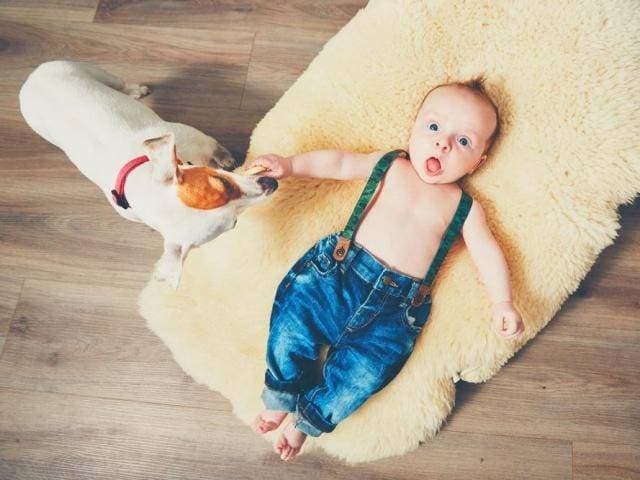
Avoid putting a baby's face close to the dog's face for a photograph. Let the dog choose distance, and stop interaction when it moves away, stiffens or appears worried. A crawling baby creates different challenges from a newborn, so review the arrangement as the child becomes more mobile.
Leave meals and valued objects undisturbed
Do not ask a child to stroke a dog while it eats, reach into its bowl or take food away. These are not safe ways to teach tolerance. Dogs Trust's resource-guarding advice supports using distance and barriers to prevent conflict around food and objects.
Feed the dog in a separate area and remove the empty bowl when it has finished and moved away. Keep children away from chews, beds and toys the dog values. Adults should avoid forcing objects from the mouth; teach exchanges in easy situations with professional guidance when needed.
Growling is information that the dog needs space. Punishing the warning can make the situation harder to read without resolving the concern. If guarding occurs, prevent access to the trigger and seek veterinary and qualified behavior support. Do not recreate the event to test whether the dog has improved.
Teach children simple habits
As children become able to understand, teach them to invite rather than pursue contact. They should leave sleeping, eating or hiding dogs alone and avoid hugging, climbing, grabbing tails or pulling ears. Adults remain responsible for enforcement; a toddler cannot carry the burden of keeping an interaction safe.
Include gentle, supervised activities suited to both participants, such as an older child tossing a toy under adult direction. End before excitement becomes difficult to manage. The dog should always have a route to a quiet area that the child cannot follow into.
A new change in behavior deserves attention, especially sensitivity to touch or reluctance to move. Pain can affect tolerance. With veterinary care, sensible barriers and realistic routines, families can reduce risk while protecting the dog's welfare and the child's safety.