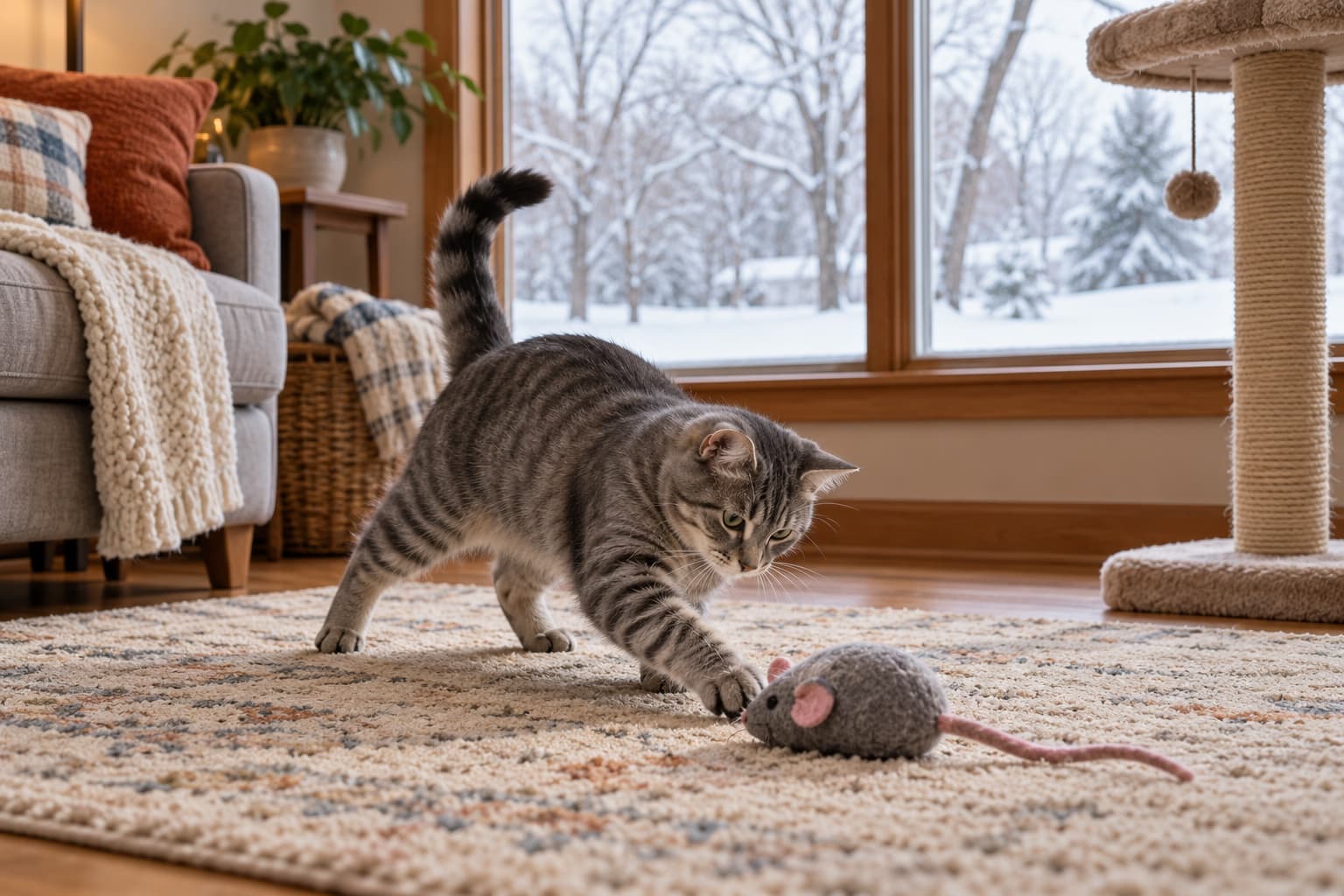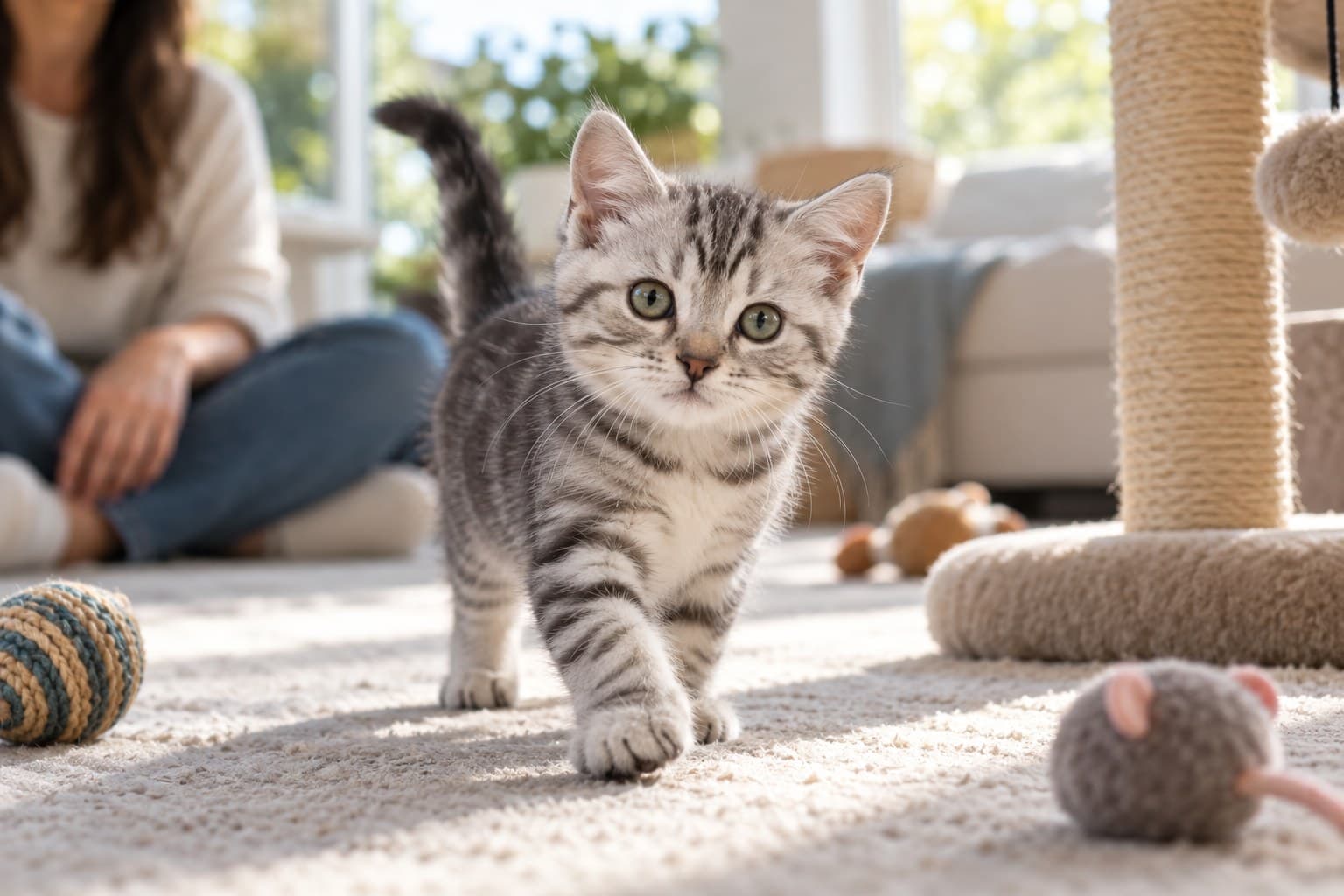
Play gives indoor cats opportunities to stalk, chase, explore and solve small problems. Preferences differ: one cat may pursue a rolling ball while another waits quietly to ambush a wand toy. Offer choices and adapt the game rather than expecting every cat to enjoy the same activity.
Follow the cat’s pace
Begin with a short session when the cat is awake and interested. Move a toy away from the cat like prey rather than repeatedly pushing it into its face. Include pauses and chances to catch it. Stop if the cat walks away, becomes frustrated or appears uncomfortable.
Older cats may still enjoy play, but slower games close to the floor can be more suitable than repeated leaps. A sudden loss of interest or difficulty moving deserves a veterinary review. Do not assume reluctance is laziness or force exercise through pain.
Wand toys and chasing games
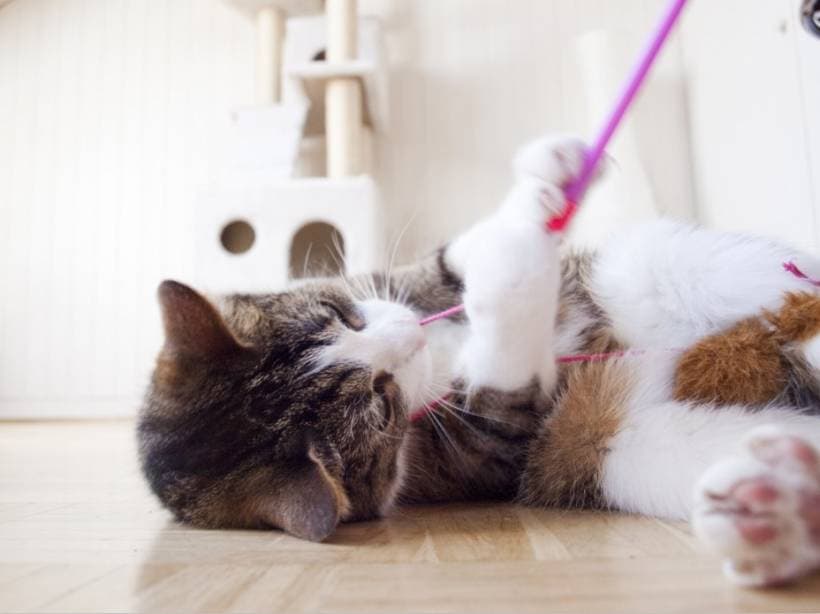
Use a purpose-made wand with secure attachments and supervise throughout. Drag it around a corner or partly behind a cushion, allowing stalking before a short chase. Keep jumps low and avoid slippery surfaces or obstacles that could cause a fall.
String, ribbon, elastic and detached feathers can be dangerous if swallowed. Put these toys away after the session, even if the cat seems careful. Candy wrappers and improvised small decorations are poor substitutes because pieces can break off or be ingested. Hands and feet should not become targets in play.
Balls and toys to bat
Choose lightweight toys too large to swallow and inspect them for loose parts. Roll one gently and observe whether the cat wants to follow. A noisy toy may delight one cat and frighten another, so introduce it at a distance rather than assuming more stimulation is better.
Rotate a few safe toys instead of leaving every option out permanently. Check under furniture for damaged or lost pieces. A toy that was safe when new may need replacing after chewing or repeated use.
Cardboard hideouts and tunnels
Plain boxes can provide useful hiding and exploring opportunities. Remove staples, tape loops and loose packaging. Make openings comfortably large enough for the cat to pass through, with more than one exit when several cats share the space.
Keep structures stable and low unless they are designed to support climbing safely. Do not stack loose boxes into a tower that could collapse. Paper bags can be offered with handles removed, but plastic bags create entanglement and suffocation hazards and should be kept away.
Food searches and quiet games
Hide a few pieces of the normal food ration in easy-to-find places or use a beginner food puzzle. Increase difficulty only when the cat succeeds comfortably. Food games should not make a cat go hungry because it cannot solve a task, and extra treats still count toward daily intake.
Cats Protection's play advice supports providing varied activity that reflects natural behavior. For a multi-cat home, offer separate sessions if one cat monopolizes toys or makes another reluctant to approach. Watch for comfortable participation rather than measuring success by speed or exhaustion.
Finish with a catch, a small food reward if appropriate and time to settle. Keep a simple note of favorite toys and locations so other household members can provide enjoyable, consistent sessions too.
Keep water and resting places available during play. If a game repeatedly leads to grabbing or conflict, make it shorter and easier, and give each cat more space. Enjoyment matters more than following a fixed exercise target.