Some cats behave differently after a familiar person or animal dies. They may search the home, vocalize more, withdraw or change their sleeping and eating habits. These observations can be consistent with distress after a loss, although we cannot know exactly how a cat understands death.
Other cats show little visible change, or appear more relaxed if their relationship with the missing animal was difficult. Observe the individual rather than expecting a particular display of sadness.
Check health as well as behavior
VCA's guidance on helping a grieving pet describes changes that can follow a companion's absence. However, illness and pain can produce similar signs. Arrange a veterinary assessment for persistent withdrawal, reduced grooming, unusual vocalizing or a significant change in activity.
Poor appetite deserves prompt attention in cats. Do not wait several days on the assumption that grief alone explains it, especially if the cat is also vomiting, weak or losing weight. Tell the clinic what it has eaten and when the change began.
Keep a simple daily record of meals, drinking, litter-box use, play and sleep. This can reveal trends that are difficult to notice during a stressful period and helps the veterinarian distinguish an adjustment from a developing medical problem.
Keep familiar routines
Continue meals, play and quiet household activities at roughly familiar times. Where possible, avoid combining the loss with an unnecessary rearrangement of the home. Keep access to the cat's usual beds, hiding places, scratching surfaces and litter boxes.
Offer company without insisting on contact. Sit nearby, speak gently and let the cat approach. Picking it up repeatedly or preventing it from resting can add stress, even when the intention is to comfort it. Groom gently only if the cat normally enjoys that attention.
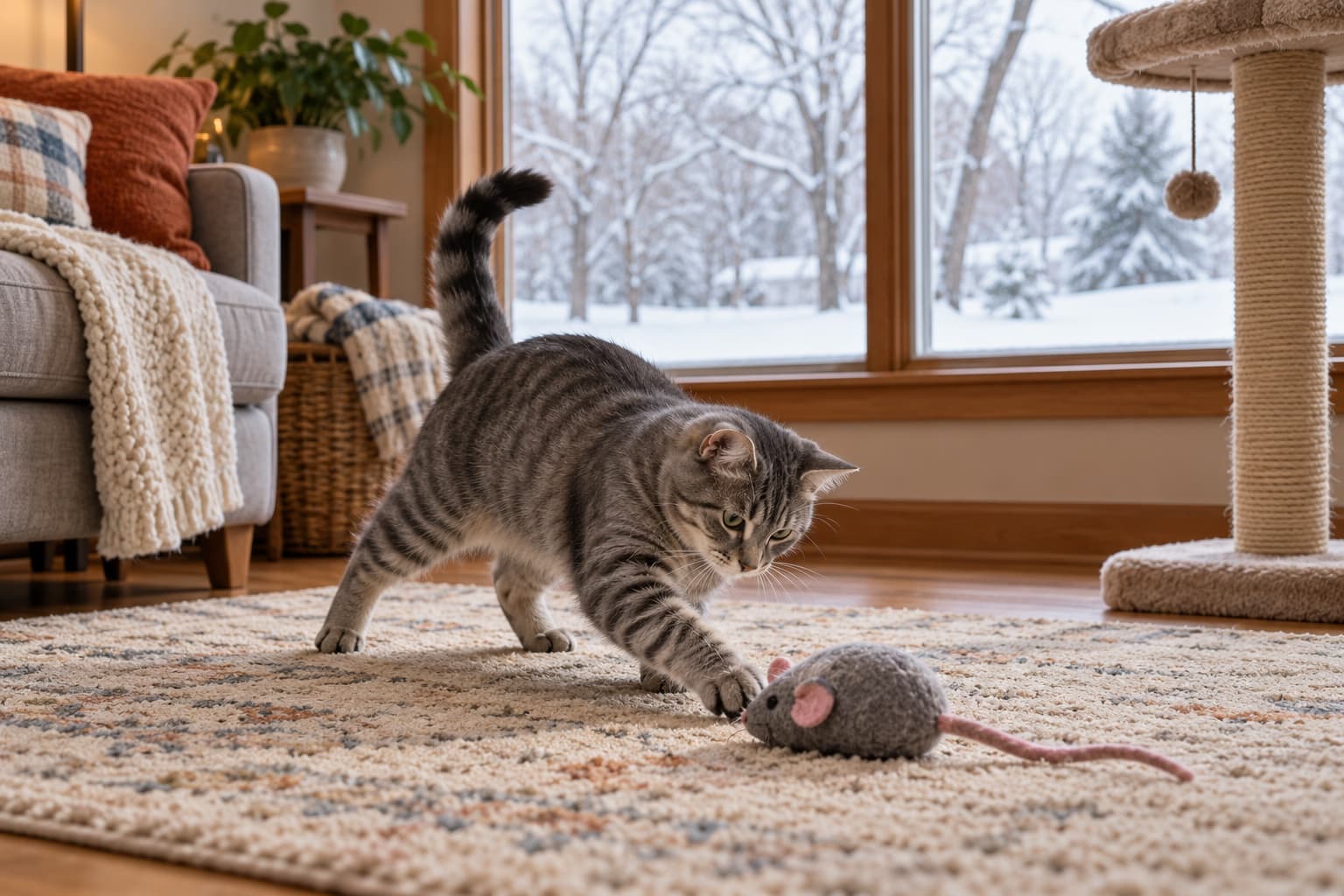
Short play invitations, a familiar food puzzle or a comfortable window perch can provide interest. Stop when the cat loses interest rather than trying to fill every moment with activity. Rest and the option to retreat are part of feeling safe.
Be careful with food and medication
Offer the usual complete food and ask your veterinarian about ways to encourage eating if needed. Constantly introducing rich treats or unfamiliar meals may cause digestive upset and make intake harder to assess. Do not force-feed without professional guidance.
Human sedatives, antidepressants and essential oils are not home treatments for feline distress. Persistent anxiety may benefit from a veterinary behavior plan, and medication is appropriate in some cases when prescribed for that individual.
Do not rush to acquire another cat
A new animal is not a replacement for the lost companion, and immediate introduction may increase stress. Consider the resident cat's social history, health and response to change before deciding whether another pet would be welcome.
If you later adopt, provide separate resources and use gradual introductions rather than expecting instant friendship. The household's people may also need time to grieve. Supporting both the cat and its carers is easier when expectations remain patient and realistic.
Ask a trusted person to help maintain meals or appointments if your own grief makes daily tasks difficult. Reliable practical care matters as much as extra affection, and seeking support does not diminish the bond you had with the pet that died.