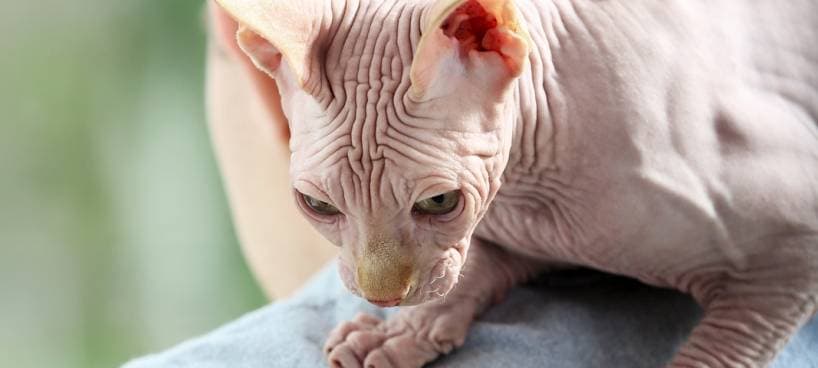
The Sphynx is often described as hairless, although many have a fine covering that feels soft to the touch. Its unusual coat means owners need to pay attention to skin care and temperature, but it does not make the cat maintenance-free. A comfortable routine should be tailored to the individual rather than copied from a rigid bathing schedule.
Skin care without overcleaning
The Cat Fanciers' Association's Sphynx profile discusses the breed's grooming needs. Skin oils may build up on the body and bedding because there is little coat to absorb them. A brownish residue is not simply sweat that must be scrubbed away every day. Persistent odor, redness, itching or sores need veterinary assessment.
Ask your veterinarian how often your cat needs bathing and which product to use. Prepare a warm room, lukewarm water and a nonslip surface. Use a cat-appropriate cleanser as directed, keep it away from the eyes and ears, rinse well and dry gently. Frequent harsh washing can irritate the skin rather than improve it.
Do not squeeze blackheads or use alcohol, household degreasers, human acne treatments or essential oils. Baby wipes, lotions and human shampoos are not automatically suitable for cats, which may lick residues from their skin. If a product is needed for a diagnosed condition, follow the veterinary instructions instead of adding several treatments at once.
Ears, eyes and nails
Look at the ears regularly without digging into them. VCA's instructions for ear cleaning in cats advise against cotton-tipped applicators because they can injure the canal or push debris deeper. Use only the cleaner and method recommended for your cat, and stop if handling is painful. Redness, head shaking, discharge or a strong smell should be checked before more cleaning.
For minor debris around the eyes, ask your veterinary team to demonstrate gentle external cleaning. Do not put chamomile tea, antiseptic solutions or leftover eye medication into the eyes. Squinting, redness, a cloudy surface or unusual discharge may indicate a painful problem that needs prompt examination.
Keep nails at a comfortable length, taking care not to cut the quick. Introduce paw handling in small, rewarded steps. If there is material around the nail folds, ask how to remove it gently; inflammation or discharge is not a reason to scrape harder. Clean bedding regularly so the cat is not repeatedly lying on accumulated oil and dirt.
Warmth and sunlight
Offer soft resting places away from drafts, with options to move to a cooler area. Clothing is optional and should fit comfortably, permit normal movement and be removed if the cat dislikes it or the fabric irritates the skin. Check underneath garments instead of allowing them to hide developing sores.
Avoid prolonged direct sun and access to hot surfaces. Choose shade and an indoor environment that allows the cat to regulate its comfort. Do not apply human sunscreen without veterinary advice. Any heating device must be safe for pets, used as directed and arranged so the cat can move away; direct contact with hot equipment can burn skin.
Food and preventive care
Feed a complete diet appropriate to age and health, adjusting portions to body condition with veterinary guidance. Hairlessness does not justify unlimited feeding. Avoid cooked bones, including chicken necks, which can splinter or cause obstruction; they are not an appropriate substitute for dental care. Discuss toothbrushing and suitable dental products instead.
Arrange routine veterinary checks, vaccination and parasite prevention according to your cat's needs. Ask breeders for documented health screening, including advice about heart disease in the breed. An apparently energetic kitten and a pedigree alone cannot establish lifelong health.
Hairlessness does not prevent allergies
The American Academy of Allergy, Asthma and Immunology explains that pet allergens come from proteins associated with sources such as saliva and skin, not just visible fur. A Sphynx can therefore cause allergic reactions. Someone with allergies should seek personal medical advice before making an adoption decision.
Make care predictable and gentle. Brief practice, rewards and breaks help the cat participate willingly, while sudden changes in grooming tolerance may signal discomfort. The aim is healthy skin and a relaxed companion, not a perfectly oil-free appearance at any cost.