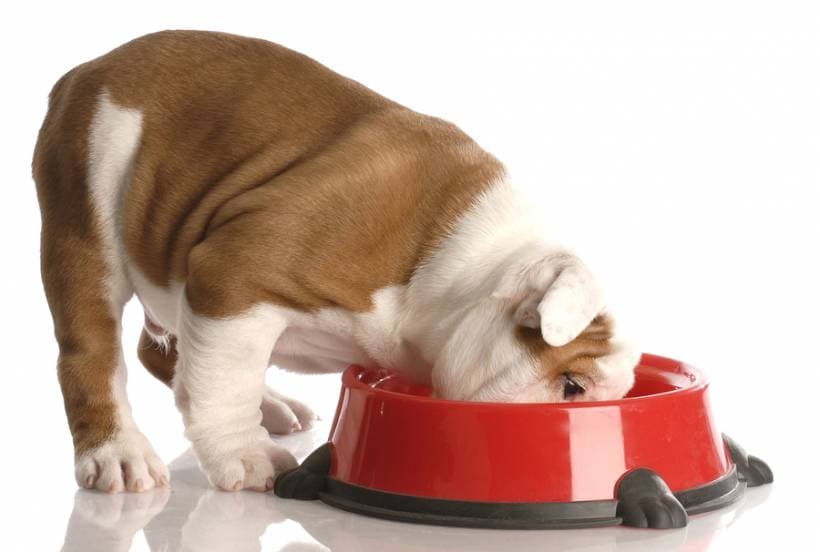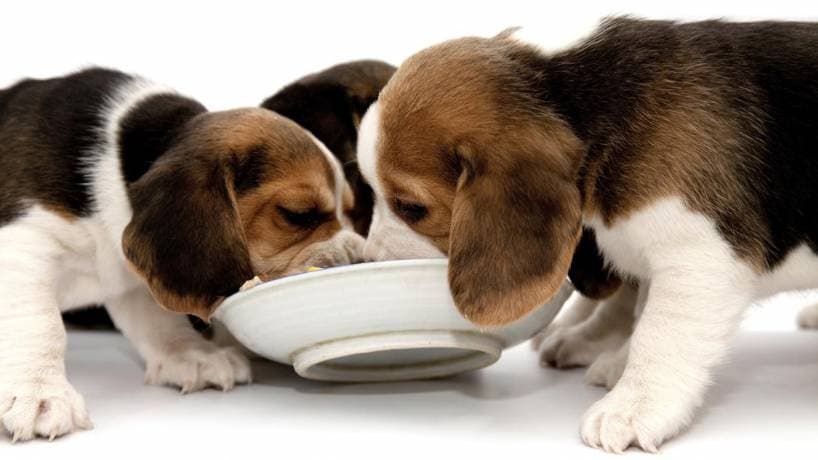
Bringing a puppy home involves more than choosing a bowl. A useful feeding plan tells you what food to offer, how much to measure, when meals fit into the day and what changes deserve advice. Start with the breeder's or rescue's records and review the plan with your veterinarian rather than replacing everything on the first evening.
Keep the first meals familiar
Ask for the exact product name, daily quantity, meal schedule and any history of digestive problems. Keeping a familiar suitable food initially can reduce one source of change while the puppy settles. If a change is needed, make it gradually according to professional and product guidance unless a medical reason requires another approach.
Record what the puppy actually eats. A bowl left down all day can make intake hard to assess, especially with other animals in the house. Give meals in a quiet place and provide fresh water. Follow food-safety instructions for opened cans, prepared meals and moistened dry food.
Choose a complete growth diet
Look for nutritional suitability for growth and, where relevant, growth of large-sized dogs. Adult-maintenance and complementary foods are not necessarily suitable as the sole diet for a puppy. The FDA's explanation of complete-and-balanced claims helps clarify what the label establishes in the United States.
The ingredient list alone does not show whether the whole recipe meets the puppy's needs. Ask who formulates the food, what quality controls are used and whether detailed nutritional information is available. Wet and dry foods can both be appropriate when the formulation and portions suit the animal.
A homemade diet needs a properly formulated recipe from a qualified veterinary nutrition professional. Adding meat, rice and vegetables in apparently sensible proportions can still leave deficiencies or excesses. Variety is not a substitute for balance during growth.
Measure the daily amount
Use the feeding guide as a starting point and adjust with the veterinary team according to growth and body condition. The total allowance includes treats, chews and food used for training. A kitchen scale can make small portions easier to measure consistently than an overflowing scoop.
Divide the daily amount into meals suitable for age, size and health. Many young puppies need several meals, and some small or medically vulnerable puppies need additional care with timing. There is no single birthday on which every puppy should suddenly move to the same adult schedule.
Do not assume that begging proves hunger or that a particular breed has no ability to feel full. Review the routine and actual intake. Equally, a new loss of appetite should not be dismissed as attention-seeking, especially in a young puppy.
Use treats safely
Reserve some of the normal food for training or choose suitable small treats within the overall allowance. Avoid bones, hard objects and pieces that could be swallowed whole.
Keep chocolate, grapes, raisins, products containing xylitol and other unsafe foods out of reach. If you suspect ingestion, contact a veterinarian promptly with the product details and estimated amount. Do not wait for symptoms or induce vomiting unless specifically instructed by a professional.
Teach children and visitors to ask before feeding the puppy. Keep bins and food-preparation areas secure so the plan is not undermined by scavenging. In a multi-pet home, separate meals when necessary to ensure each animal gets its own portion without pressure.
Supplements are not automatically helpful
A complete food should provide essential nutrients when used appropriately. Do not add calcium, vitamins or oils merely to make a puppy grow faster or improve the coat. Extra nutrients can upset the balance, and large-breed puppies particularly need controlled growth rather than maximum speed.
Bring any supplement packaging to veterinary appointments and discuss whether there is a specific need. If a puppy repeatedly eats nonfood items, prevent access and seek advice; the behavior is not a reliable test for a particular deficiency.
Monitor and revise
Track weight, body condition, stool and appetite, and take the record to routine visits. A growing puppy's requirements change, so the initial allowance should not remain fixed indefinitely. Ask when to transition to an adult diet based on expected maturity rather than a universal age.
Repeated vomiting, significant diarrhea, weakness or refusal to eat requires prompt advice. A consistent record helps the veterinary team distinguish a feeding issue from illness. Your aim is steady healthy development and an enjoyable routine, not the fastest possible growth or a promise that food alone prevents every future disease.