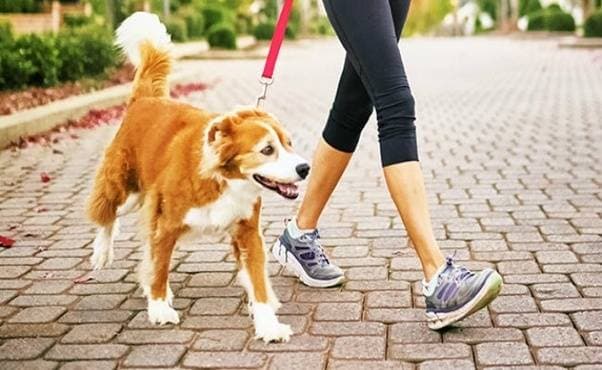
A walk offers more than a toilet break. It gives a dog opportunities to sniff, move, explore and spend time with a familiar person. The right outing depends on the dog's age, fitness, health and confidence, as well as weather and local conditions. A fixed distance or strict marching pace will not suit every dog.
Prepare before leaving
Check that the collar or harness fits securely without rubbing or restricting comfortable movement. Different dogs need different designs; a properly fitted harness is not inherently harmful to the spine. Ask for help with fitting if equipment slips, twists or leaves sore areas. Check clips, stitching and the leash before each outing.
Use a fixed-length leash where you need close control. Hold it securely without wrapping it around your wrist, arm or fingers, because a sudden lunge can cause injury. Carry waste bags, suitable rewards and water when needed. Keep identification and microchip contact details current in case the dog becomes separated from you.
Allow enough time to attach the leash calmly. A dog that rushes the doorway can practice waiting briefly behind a gate or closed door while you organize yourself. Reward manageable steps rather than demanding a long wait from an already excited puppy.
Teach a comfortable pace
Start in a quiet place. Reward the dog for checking in and moving with slack in the leash. If pulling begins, pause when it is safe, invite the dog back toward you and reward a few easier steps. Increase distractions gradually. Repeated jerks may hurt or frighten a dog without teaching the walking pattern you want.
A dog does not have to remain beside your knee for the entire walk. Give permission to sniff in suitable areas and shorten the leash gently when passing hazards. Walking ahead does not prove that the dog is trying to dominate you. Choose positions that make the surroundings easier to navigate safely.
The RSPCA's guidance on walking dogs emphasizes responsible control and consideration for other people and animals. Follow local leash rules, avoid disturbing wildlife and give livestock plenty of space. Use secure enclosed areas when practicing off-leash skills rather than testing an uncertain recall beside traffic.
Manage meetings thoughtfully
Do not assume another dog wants to greet yours. Ask the handler and allow space for either dog to decline. If your dog becomes tense, fixates or repeatedly barks, increase distance and choose an easier route. For persistent fear or lunging, seek help from a qualified professional who uses reward-based methods.
Children should not approach, hug or grab an unfamiliar dog. Adults remain responsible for handling decisions; a child should not hold a dog they cannot safely manage. Near roads, shorten the working length of the leash while keeping enough slack to avoid constant pressure.
A well-fitted basket muzzle can be a useful safety tool when introduced gradually with rewards. It does not cause aggression by itself. The dog should be able to pant and receive rewards comfortably, and the muzzle does not replace distance, supervision or behavior support. Restrictive grooming muzzles are unsuitable for exercise.
Adjust for weather and health
The AVMA's warm-weather advice recommends avoiding the hottest periods and bringing water. Heat, hot surfaces and humidity can make an otherwise familiar route unsafe. Shorten or postpone strenuous exercise, seek shade and turn back if the dog is struggling. Never use exhaustion as the measure of a successful walk.
In darkness, use visible clothing and reflective or illuminated equipment while watching for traffic and uneven ground. Check paws afterward for debris, soreness or irritating substances. Older dogs and growing puppies may need shorter outings with more breaks; sudden exercise intolerance warrants veterinary advice.
End with time to settle and access to fresh water. A useful walk leaves the dog with appropriate activity and positive experiences, not a requirement to cover the same distance regardless of how the animal feels.