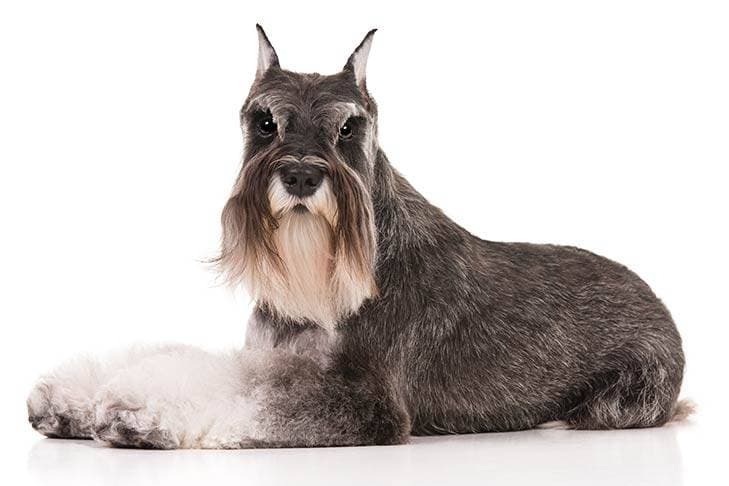
Schnauzers are recognizable by their beards, eyebrows and wiry coats. The Miniature, Standard and Giant are distinct breeds rather than simple growth stages of one dog. Their shared appearance should not hide differences in size, background and practical care.
This comparison focuses on the Miniature and Standard. Both can be engaging companions, but prospective owners should meet adult dogs and consider the routine they can provide rather than choosing from a puppy's face alone.
Shared roots in Germany
The Standard Schnauzer developed as a versatile farm dog in Germany, with work that included ratting and guarding. The American Kennel Club describes it as the original Schnauzer from which the smaller and larger breeds developed.
The Miniature was developed as a smaller dog with its own breeding history and standard. Accounts describe contributions from other small breeds, but an exact recipe should not be presented as certain without records. The modern breed is not merely a Standard puppy that remains small.
The name Schnauzer is associated with the German word for muzzle. Its distinctive facial furnishings make the connection understandable, although Schnauzers are far from the only dogs with beards or mustaches.
Size and appearance
Miniatures are compact, sturdy dogs, while Standards are noticeably larger and more substantial. Consult the relevant registry's standard for exact measurements and permitted colors. Standards differ between organizations, so one quoted height is not a universal rule for every country.
A pet's healthy body condition and comfortable movement matter more than aiming for the maximum size. A dog outside a show measurement is not automatically unhealthy, while a dog that meets a visual standard is not automatically suitable for breeding.
Descriptions should not treat tail docking or ear cropping as instructions for owners. These procedures are not routine home care, and legal rules differ by location. Discuss health and welfare with a veterinarian and evaluate the dog as an individual.
Character and training
Both breeds can be alert, active and interested in their surroundings. Some individuals announce visitors enthusiastically; others are more reserved. Teach an alternative response to door activity before repeated barking becomes the only practiced behavior.
Use short reward-based lessons for coming when called, walking on a loose leash and relaxing near the family. Do not assume intelligence means the dog will automatically understand household rules. Consistent cues and practice in manageable situations make learning clearer.
Introduce children and other pets thoughtfully. A breed's reputation for friendliness does not remove the need for supervision or a quiet retreat. Small animals may need secure separation from a dog with a strong interest in chasing.
Grooming the wiry coat
The beard and leg hair can collect moisture, food and tangles. Regular brushing and combing should reach through the furnishings gently, not just smooth the surface. Ask a groomer to demonstrate suitable tools and check friction areas frequently.
Hand-stripping and clipping produce different results. The choice depends on coat condition, the owner's goals and the dog's comfort. A twice-yearly trim alone may not meet an individual's needs, and a neat salon haircut does not eliminate care between visits.
Clean and dry the beard when needed, maintain nails and introduce toothbrushing with dog toothpaste. Ear odor, skin irritation or unusual hair loss requires assessment rather than more vigorous grooming. Avoid applying human products or supplements without advice.
Health questions for prospective owners
Ask for screening appropriate to the exact breed, not a generic statement that all Schnauzers are healthy. The American Miniature Schnauzer Club's health statement and the Standard Schnauzer Club of America's guidance outline concerns and recommended checks.
A DNA panel cannot rule out every disease, and a routine puppy examination is different from parental breeding-health screening. Ask which tests were performed, when they were done and how the results can be verified. Discuss the family's medical history as well.
Food, activity and the right match
Feed a complete diet suited to age and health, with measured portions adjusted to body condition. There is no meaningful universal allowance such as "one and a half standard feeds." The amount depends on the food's energy content and the dog receiving it.
Walks, sniffing games, training and comfortable rest should fit into an ordinary weekday. Budget for professional grooming, preventive care and help during absences. The best choice is the individual dog whose needs you can meet reliably over its lifetime.