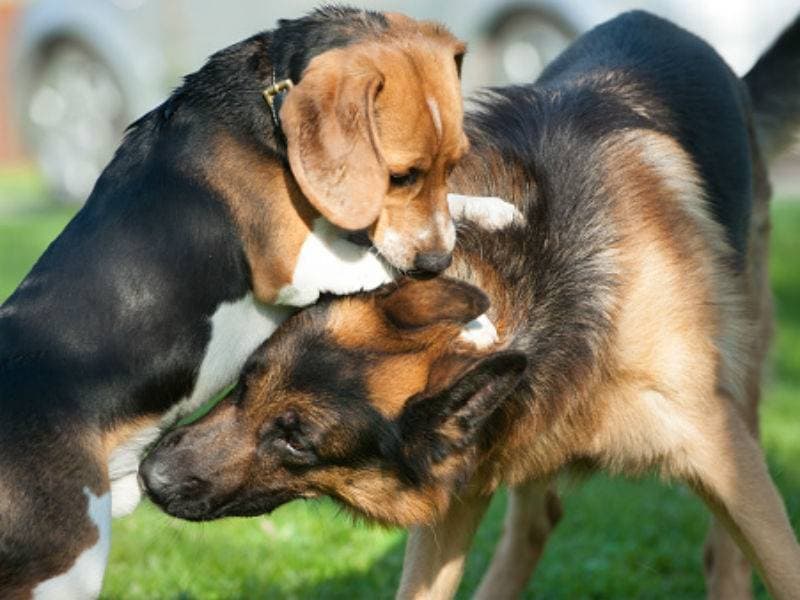
Dogs may fight for several reasons, and calling every conflict jealousy or a struggle for leadership can hide the real problem. Food, resting places, access to a person, fear, pain and overexcitement can all be involved. The useful question is what happened before the tension increased and how to prevent that situation from recurring.
Identify the circumstances
Record where an incident occurred, what each dog was doing and which people or objects were nearby. Note early changes such as staring, hovering over an item, blocking a doorway or becoming still. A growl is information that the dog is uncomfortable, not an invitation to punish it.
VCA's guidance on aggression between household dogs explains the importance of assessing the context and possible medical contributors. An older dog with painful joints may react when a younger dog bumps into it. A sudden change in tolerance warrants a veterinary examination rather than an assumption that the dog has become spiteful.
Avoid testing a suspected trigger. Repeatedly moving a bowl, taking toys or bringing the dogs close together to see what happens can create another dangerous encounter. Write down naturally occurring observations and keep the animals safely separated while seeking advice.
Reduce competition over resources
Feed dogs in separate, secure areas when there is tension around meals. Remove empty bowls before bringing them together again, and give valued chews only where each dog can enjoy them without being approached. Do not expect sharing to develop through forced exposure.
Provide several comfortable resting places and clear routes through the home. Narrow passages, doorways and crowded greetings can make avoidance difficult. If access to a person triggers conflict, change the routine so attention can be offered safely without the dogs crowding together.
Treat the needs of both animals seriously. The dog that reacts visibly is not necessarily the only one contributing to the situation. A quieter dog may repeatedly approach, block or disturb the other, while pain or fear may affect either animal's response.
Use management before training
Barriers, separate rooms and carefully planned routines can prevent rehearsal of conflict. Check that gates and doors are secure and that everyone in the household understands the arrangement. Separation should include comfortable resting areas and individual attention, rather than leaving one dog isolated without care.
Reward calm, useful behavior in situations where the dog can succeed. Practice settling, coming when called and moving to a designated space separately before using those skills around another dog. Ordinary obedience does not by itself resolve fear, guarding or pain.
Do not shake collars, use leash jerks, pin dogs or demand that the older animal dominate. Intimidation can increase arousal and create negative associations with the other dog. The AVSAB humane-training statement supports reward-based approaches and appropriate professional help.
Introduce new dogs thoughtfully
A resident dog does not automatically want a companion. Consider age, health, activity and previous social experience when choosing another animal. A puppy's persistence may be particularly difficult for a dog that needs quiet rest.
Plan gradual introductions with knowledgeable support, space to move away and secure handling. Keep early interactions brief and avoid adding food or prized toys. Some dogs can learn to coexist comfortably, while others need ongoing separation or a different living arrangement.
Do not promise that time alone will solve repeated conflict. Increasing intensity, injuries or an inability to relax should prompt a reassessment. A qualified professional can help evaluate welfare and the practical limits of the household's management plan.
Protect people during an incident
Never put hands between fighting dogs or grab near their mouths. A dog can redirect a bite toward a nearby person, including its owner. Move children and bystanders away and seek emergency assistance when the situation cannot be managed safely.
After separation, keep the dogs apart and arrange veterinary assessment for injuries. Punctures can be easy to miss beneath the coat. Do not immediately reunite the dogs to test whether they have made up; arousal and pain may remain after the visible fight ends.
Before any further contact, ask for an individualized safety plan. A properly introduced basket muzzle may form part of professional management, but it does not make forced interactions comfortable or remove the need for separation.
Review health and progress
Keep a factual log of triggers, distance, warning signs and recovery time. Share it with the veterinarian and behavior professional. Changes in sleep, appetite, mobility or medication may also be relevant, even if they seem unrelated to the conflict.
Choose goals that reflect the dogs' welfare, such as resting calmly in separate areas or passing at a comfortable distance. Friendship is not a requirement for successful management, and close contact should not be forced to satisfy human expectations.
Prepare secure separation routines for busy days, visitors and changes of caregiver.