A dog's mouth can be involved in play, exploration or a response to discomfort. The circumstances matter, but even a playful bite can cause injury. Do not assume that contact is harmless because the dog is young or that every bite proves poor training or mistreatment.
Puppy mouthing and excited play
Puppies explore with their mouths and may grab hands, clothing or shoelaces. Offer suitable toys before play becomes frantic, keep hands out of rough games and pause calmly when teeth contact skin. Provide enough rest and timely toilet breaks; an overtired puppy may become harder to redirect.
Avoid teasing with food held just out of reach or encouraging the puppy to chase moving hands. Reward calm behavior and appropriate play. If mouthing repeatedly becomes intense or difficult to interrupt safely, ask your veterinarian or a qualified trainer for help.
Fear, pain and guarding
A dog may bite when it feels trapped, is hurt or is worried about losing a valued item. Sudden sensitivity to touch can be a medical concern. An adult dog that begins snapping during grooming, lifting or movement needs veterinary assessment rather than an assumption that it is becoming dominant.
Leave eating and sleeping dogs undisturbed and give them an easy way to move away from contact. Do not reach into the mouth to retrieve an object unless an immediate emergency leaves no safer option. Teach trading in low-pressure situations with professional guidance if guarding is a concern.
Notice the earlier signals
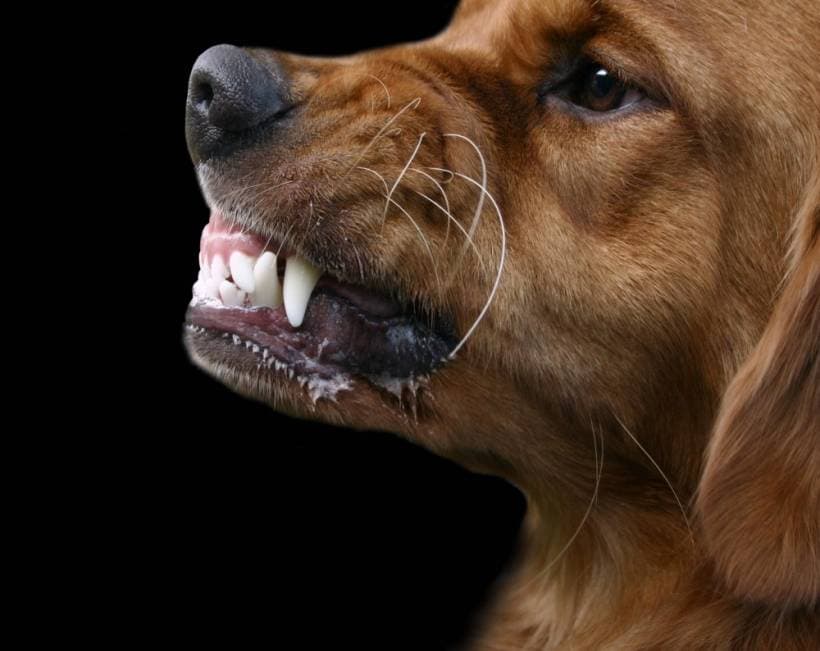
Turning away, becoming still, stiffening, growling or showing teeth can indicate that an interaction should stop. Signals vary and may be subtle. A wagging tail does not guarantee comfort, and a dog that tolerated handling yesterday may not feel the same today.
Punishing warnings can hide information without resolving the underlying problem. The American Veterinary Society of Animal Behavior supports reward-based training rather than methods involving fear or pain. Create distance and review the situation instead of trying to prove authority.
Make the situation safer
Use gates, doors and separate areas to prevent predictable conflict while arranging help. Children should have active adult supervision and should never be expected to manage a dog that has bitten. Stop games that lead to unsafe contact and protect the dog's resting area.
A veterinarian can assess health and refer to a qualified behavior professional. Describe what happened before the bite, where people were and how the dog responded afterward. Do not recreate the event for a video or test whether the dog will bite again.
If skin is broken
Separate safely, clean the wound and obtain medical advice. Deep wounds, uncontrolled bleeding or serious injury need urgent care. A healthcare professional can assess infection and any tetanus or rabies precautions relevant to the circumstances.
Calm behavior after the event does not erase the need for a plan. Progress comes from understanding triggers, preventing further incidents and teaching comfortable alternatives with appropriate support.