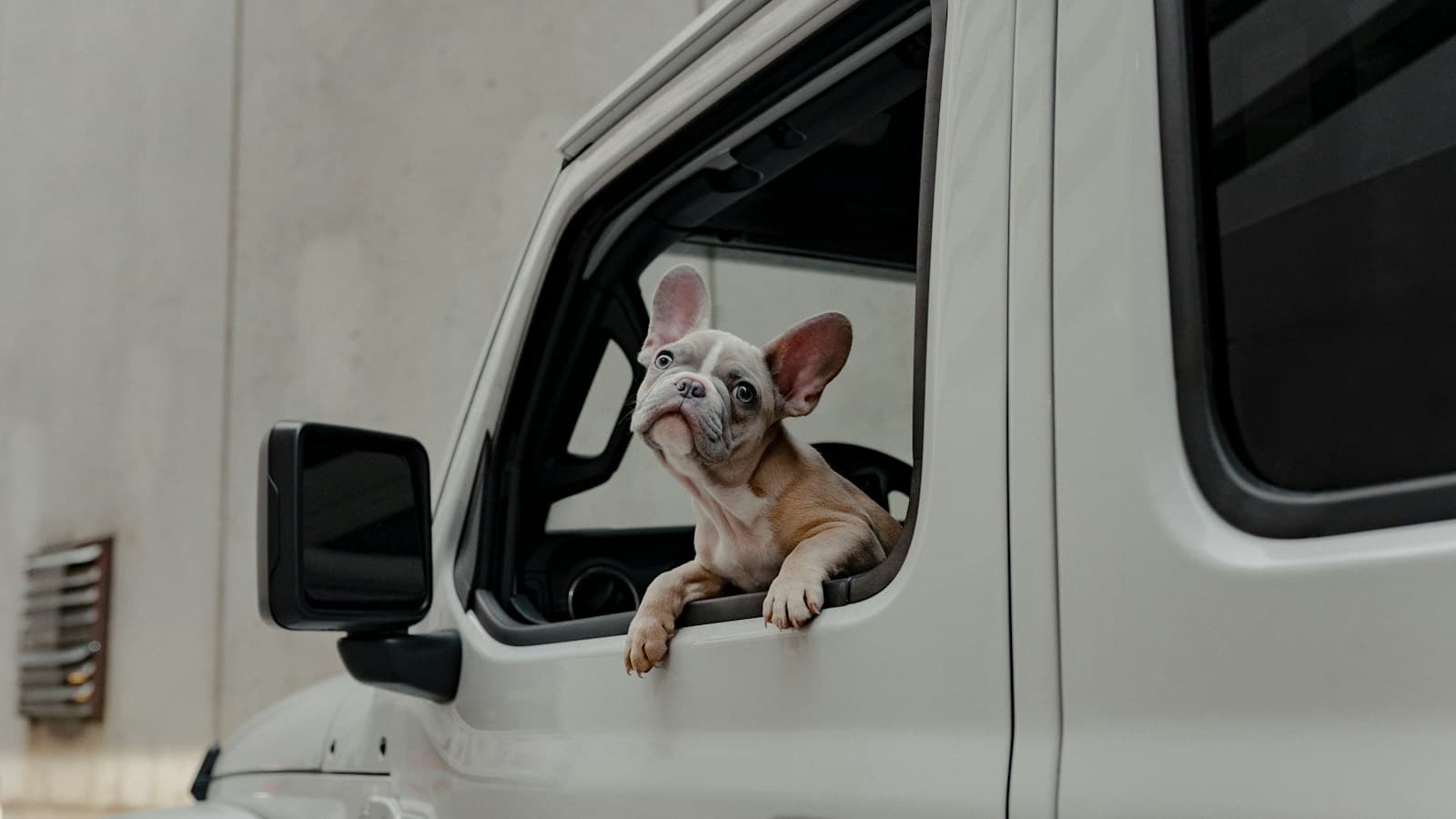
Dogs communicate through movement, posture, facial tension, sounds and distance. No single gesture works like a word with one fixed meaning. To understand a dog, look at the whole body, notice what is happening nearby and consider how its behavior changes over time.
Start with the overall picture
A comfortable dog often moves loosely and can look away or leave without difficulty. A worried or highly aroused dog may stiffen, freeze, lower its body or lean forward. Raised hair can accompany arousal of different kinds; it does not by itself prove confidence, dominance or an intention to attack.
Dogs Trust's body-language guide illustrates useful signals to notice. Turning the head away, licking the lips outside a food context or repeatedly trying to move away can indicate discomfort. One yawn may simply be tiredness. A cluster of changes during an interaction gives more information than an isolated sign.
Tails need context
Wagging shows activity and arousal, not a guarantee of friendly intentions. Consider the tail's height, stiffness and speed alongside the dog's face and body. A high, rigid tail with a tense posture deserves a different response from loose movement through the whole body.
A tucked tail may accompany fear, but natural tail shape and carriage vary. Curled tails still move and contribute to communication; short tails do not remove the need to read the rest of the dog. Compare the animal with its own relaxed baseline rather than applying one diagram mechanically to every individual breed.
Do not use the direction of a wag as a practical safety test. Research about population patterns cannot tell a visitor that an unfamiliar dog is safe to touch. Give the dog space and ask its handler before attempting contact.
Greetings and play
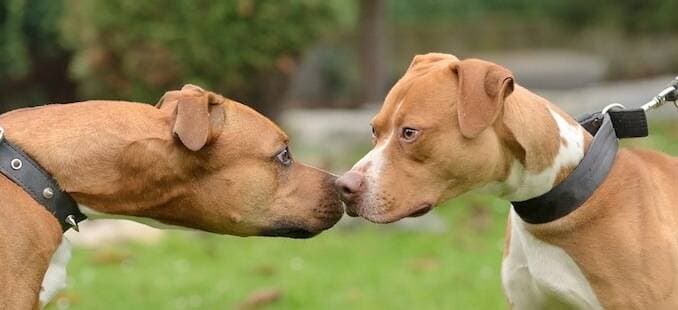
Sniffing can help dogs gather information, but a greeting is not necessarily a contest to decide who is in charge. Some dogs prefer distance. Keep introductions brief and give both animals a way to disengage instead of holding tight leads while forcing nose-to-nose contact.
A play bow often invites interaction, especially when followed by loose, bouncy movement. Healthy play should include pauses and opportunities for both dogs to stop. If one repeatedly hides, freezes or tries to escape while the other pursues, interrupt calmly and create space.
Rolling onto the back is not always a request for a belly rub. It can occur during play or when a dog is uneasy. There is no rule that another dog will never bite an animal lying down, so do not rely on this posture to make an unsafe encounter harmless.
Respond before signals escalate
If a dog turns away or becomes tense during handling, pause. Let it move off and reconsider whether the interaction is necessary. Children should be taught to call an adult rather than approach a dog that is resting, eating or trying to avoid contact.
Growling is information that an interaction needs attention. Stop crowding the dog and seek professional support for repeated or serious concerns; punishment may suppress a warning without resolving the cause. Sudden changes in tolerance can also reflect pain and merit a veterinary examination.
Learning body language is an ongoing habit of observation. Notice what helps your own dog relax, arrange easier situations and reward voluntary cooperation. Respecting small signals makes everyday handling and shared activities more comfortable.